Tag: horror

  • Surprising Connections Between Horror and Romance

    Surprising Connections Between Horror and Romance

    At first blush, horror and romance might seem as far apart as two genres can be. But on closer inspection, the genres exhibit many similarities.

    Beyond the story-level connections, the readerships of these two genres share a protectiveness born from the feeling others look down on their genre of choice as being of low merit, of not being literary enough, of being trashy, even. Sometimes the reaction is just a dismissive curl of the lip.

    Horror and romance contain both purely entertaining page-turners and examples of high “literary” merit (the quotes here suggesting “whatever the hell that means” and “but that’s a topic for another day”).

    In my experience people will often look down on horror and romance in a way they wouldn’t about mysteries or suspense, so that sense of protectiveness is understandable. This snobbishness might be more true in the past, and both genres might be more widely accepted today than ever before, but the attitudes still seem to exist, at least on some level.

    Horror and romance are cherished by their readerships, and these stories help readers process their lives. They act as a salve in troubled times. Sometimes they simply entertain and are in fact trashy in the best way. And there’s nothing wrong with that.

    All About a Feeling

    It’s been said by Tananarive Due and others that horror is an emotion, and this defines the genre in a special way and in fact makes the genre hard to define (and also more expansive). Romance is certainly all about love and the associated emotions.

    So at the heart of both genres is the evocation of feeling in the characters, and not just feeling, but intense, life-altering feeling.

    In “Horror and Romance: Doppelgangers in Need,” horror writer L. Marie Wood talks about how need (want, desire, yearning) is essential to both genres, and it’s a fascinating piece.

    Which Genre Are We Talking About Again?

    If you think about a force that insinuates itself in people’s lives and begins to change them, begins to affect them in physical ways (raised heartbeat, shortness of breath), begins to draw them toward something close to an obsessive relationship, you might be excused if you aren’t sure whether we’re talking about horror or romance.

    This force might be evil in horror and love in romance, but in both it’s a force that cannot be shaken, that persists, that holds the promise of forever.

    HEA and HEN

    A romance without a happily ever after (or a happy for now) is not a romance. That’s part of the promise to the reader, and romance writers feel the heat if they break that promise.

    Horror contains something you might call a happily ever never. While a character might in the end triumph over the evil in question, that triumph often comes at a great cost, and there’s usually the sense that the evil hasn’t been truly vanquished, that it’s only been momentarily thwarted before it rises again.

    Meet-Cute and Meet-Brute

    A romance needs a meet-cute to introduce the love interests and set them on the path toward romance. Well-deserved praise to romance writers coming up with fun and innovative meet-cutes that go beyond the characters literally bumping into each other.

    In much the same way, the protagonist in a horror story needs a meet-brute (yeah, I don’t think this term has much chance of catching on, but thanks for humoring me) to expose characters to the presence of evil. In both romance and horror, characters’ first reactions are often to flee from this scary force (“I don’t have room in my life for a relationship!” or “I don’t want to be consumed by this demon!”).

    This is another good point to emphasize again the physical responses in horror and romance. In romance, the mere touch of a new love interest (and it might be the slightest brushing of hands) draws an outsize physical reaction from the character, who consciously acknowledges the reaction or tries desperately to dismiss it.

    In horror the racing pulse or shortness of breath at that first touch of evil is just as present, and it will only get worse. That’s also a promise to the reader.

    Isolation

    In horror characters are often isolated in ways that make them more vulnerable to evil and that connect them closely to primal childhood fears, such as being lost in a forest or shopping mall. The character may be physically stranded in a cabin or cave, or they may be emotionally stranded when no one around them believes that true evil is present.

    Romance also often isolates its love interests to make them more vulnerable to the force of love working its magic on them. They may, in fact, be snowed in at a cabin. Or they may be forced to share a bed. Or any number of other scenarios. But that isolation is often key.

    Teasing Out the Romance / Showing the Monster

    In one of my favorite podcasts about horror movies, Pod Mortem, the hosts talk about how part of the reason movies such as Nightmare on Elm Street and Child’s Play work so well (and specifically the first film in each series) is because the creators know to use Freddy and the evil doll sparingly, that giving them too much screen time, too early, spoils the fear.

    Similarly, romance often works best when the characters are kept from that full-fledge romance for as long as possible, because throwing them right together can spoil that delicious sense of tension and Will they or won’t they? (though of course we know they will).

    Don’t Go in the Basement: Tropes, Tropes, Tropes

    Horror and romance are often filled with tropes, conventions, and obligatory scenes, and each does well when it addresses these in new and interesting ways.

    Is there a compelling reason for the character to go into the basement when common sense is screaming to do anything but? Is the third-act breakup drawn from compelling character motivations or thrown in unrealistically because the author is at the 75 percent mark?

    The Grand Gesture / Sacrifice

    In romance a character often makes a grand gesture to win back their love interest after the aforementioned third-act breakup. This works best when the character gives up something they thought they needed because they’ve realized what it is they actually need.

    In horror a character will often need to make a great sacrifice, possibly their life or even their soul, to defeat evil. (And knowing that evil never dies we can say only, Hey, good luck with that.)

    I Love You / I’m Going to Tear Your Soul Apart

    Horror and romance might seem strange bedfellows, but thinking about the connections between the two is a lot of fun, and we didn’t even bring into the mix Gothic literature, which excels at entwining romance and dread. Are there any other connections that spring to your mind?


    Further Reading:

    Wood, L. Marie. “Horror and Romance: Doppelgangers in Need.” Chosen Realities 1 (Summer 2020).
  • My Webinar on Editing Horror

    My Webinar on Editing Horror

    The recording of my webinar on editing horror is now available for purchase at Club Ed at the following link:

    Editing Horror with James Gallagher 

    This one-hour webinar is for people interested in learning how to edit the horror genre. 

    The class covers the following:

    • What is horror?
    • Brief history of the genre
    • Subgenres
    • Horror beats and tropes
    • Character: protagonist v. the monster
    • Setting
    • Controlling theme: from life to death to damnation
    • The unknown
    • Reader immersion
    • Editorial concerns for problematic tropes


    I am a lifelong horror fan, and this webinar was a blast to prepare and present. Even better, I was able to do it over at Club Ed Freelancers, run by the great editor and editorial trainer Jennifer Lawler.

    I’ve taken numerous classes with Jennifer, and she and Club Ed have been an important part of my development as an editor.

    Long live horror!

  • Scene It First with L. Marie Wood (Ep. 8)

    Scene It First with L. Marie Wood (Ep. 8)

    On August 23, 2023, award-winning psychological horror author L. Marie Wood joined me for the eighth episode of the Scene It First series, sponsored by Fictionary. In this series, I speak with bestselling, award-winning authors to talk about first scenes, share secrets of writing craft, and celebrate the stories that thrill and inspire us all.

    In this episode, we talked about the similarities of horror and romance, psychological horror, Black women in horror, and the first scene of her novella Telecommuting. See more about Lisa below.

    Upcoming interviews can be joined live by registered members of the Fictionary community, and it’s always free to register.

    In addition to hosting the Scene It First series, James Gallagher is the owner of Castle Walls Editing, a Fictionary-Certified StoryCoach Editor, and the copy editor, developmental editor, or proofreader of more than 300 books.

    About L. Marie Wood

    Lisa has written six novels, 150 short stories, seven feature-length screenplays, and several short screenplays.

    Lisa’s novel The Promise Keeper won the Golden Stake Award for Literature at the International Vampire Film and Arts Festival. Lisa won Best Horror Screenplay at the NOVA International Film Festival, Best Afrofuturism/Horror/Sci-Fi Screenplay at Urban Media Makers Film Festival, and Best Short Screenplay Indo-Global International Film Festival.

    Lisa’s first novel and first short story collection were on the long list for the coveted Bram Stoker award. Her short story “The Ever After” was part of the Bram Stoker Finalist anthology Sycorax’s Daughters, and Lisa was recognized in The Mammoth Book of Best New Horror, Vol. 15 (2004) and as one of the 100+ Black Women in Horror Fiction (2018).

    Website: Lmariewood.com

    About Fictionary

    Fictionary is a story-editing software that allows writers and editors to glean insights and perform developmental edits on their works using Fictionary’s 38 story elements for character, plot, and setting.

    The software also provides attractive visual reports, including the story arc (showing location of the inciting incident, plot point 1, midpoint, plot point 2, and climax), as well as reports illustrating such items as the story map, character list, and word count per scene.

    More information can be found at Fictionary.co.

    The Fictionary community can be found here (free to register).

  • Scene It First Interview with Mary SanGiovanni (Ep. 6)

    Scene It First Interview with Mary SanGiovanni (Ep. 6)

    On July 12, 2023, the queen of cosmic horror, Mary SanGiovanni, joined me for the sixth episode of the Scene It First series, sponsored by Fictionary. In this series, I speak with bestselling, award-winning authors to talk about first scenes, share secrets of writing craft, and celebrate the stories that thrill and inspire us all.

    In this episode, Mary talked about her fiction, author collaborations, cosmic horror, and her recent novel in the Alien universe: Alien: Enemy of My Enemy. (You’ll also want to watch for a quick cameo from a certain horror legend.)

    Upcoming interviews can be joined live by registered members of the Fictionary community, and it’s always free to register.

    In addition to hosting the Scene It First series, James Gallagher is the owner of Castle Walls Editing, a Fictionary-Certified StoryCoach Editor, and the copy editor of more than 250 books.

    About Mary SanGiovanni

    Mary SanGiovanni is an award-winning American horror and thriller writer of over a dozen novels, including the Hollower trilogy, Thrall, Chaos, the Kathy Ryan series, and others, as well as numerous novellas, short stories, comics, and nonfiction. Her work has been translated internationally, and she has a master’s degree in writing popular fiction from Seton Hill University, Pittsburgh, and is currently a member of the Authors Guild, International Thriller Writers, and Penn Writers.

    Mary was a cohost on the popular podcast The Horror Show with Brian Keene and her own podcast-turned-blog on cosmic horror, Cosmic Shenanigans, and she is currently a cohost of The Ghost Writers Podcast. She has the distinction of being one of the first women to speak about writing at the CIA Headquarters in Langley, Virginia, and she offers talks and workshops on writing around the country. Born and raised in New Jersey, Mary currently resides in Pennsylvania.

    About Fictionary

    Fictionary is a story-editing software that allows writers and editors to glean insights and perform developmental edits on their works using Fictionary’s 38 story elements for character, plot, and setting.

    The software also provides attractive visual reports, including the story arc (showing location of the inciting incident, plot point 1, midpoint, plot point 2, and climax), as well as reports illustrating such items as the story map, character list, and word count per scene.

    More information can be found at Fictionary.co.

    The Fictionary community can be found here (free to register).

  • Scene It First with Jonathan Janz (Ep. 1)

    Scene It First with Jonathan Janz (Ep. 1)

    The first episode of the Fictionary Scene It First interview series kicked off with my interview of horror author Jonathan Janz on January 25, 2023.

    Janz is one of my favorite authors, so it was a true pleasure to speak with him about his celebrated career, his upcoming works, and his insights on scene construction.  

    Upcoming interviews can be joined live by registered members of the Fictionary community, and it’s always free to register. 

    In addition to hosting the Scene It First series, James Gallagher is the owner of Castle Walls Editing, a Fictionary-Certified StoryCoach Editor, and the copy editor of more than 250 books.

    About Fictionary

    Fictionary is a story-editing software that allows writers and editors to glean insights and perform developmental edits on their works using Fictionary’s 38 story elements for character, plot, and setting.

    The software also provides attractive visual reports, including the story arc (showing location of the inciting incident, plot point 1, midpoint, plot point 2, and climax), as well as reports illustrating such items as the story map, character list, and word count per scene.

    More information can be found at Fictionary.co.

    The Fictionary community can be found here (free to register).

  • Four on the Floor with Gwendolyn Kiste

    Four on the Floor with Gwendolyn Kiste

    Gwendolyn Kiste is the Bram Stoker Award–winning author of The Rust Maidens, from Trepidatio PublishingAnd Her Smile Will Untether the Universe, from JournalStone; and the dark fantasy novella Pretty Marys All in a Row, from Broken Eye Books.

    Her short fiction has appeared in Nightmare MagazineBlack Static, Daily Science FictionShimmerInterzone, and LampLight, among others. Originally from Ohio, she now resides on an abandoned horse farm outside of Pittsburgh with her husband, two cats, and not nearly enough ghosts. Find her online at gwendolynkiste.com.

    James Gallagher: Why is horror such a powerful medium for delving into the human condition?
     
    Gwendolyn Kiste: Horror is such a visceral, unapologetic genre. It isn’t afraid to expose the things that unsettle and haunt us. This allows us as horror writers to stare down aspects of being human in an unvarnished and often wrenching way.

    Also, because horror so often features a supernatural element, the genre can explore the human condition in strange and symbolic ways. In that regard, horror can work in the same way as dreams: to give us an outlet to dive into our fears while not being in any actual danger.

    Despite its reputation for just being “blood and guts,” horror can help us feel less alone in our trauma because it can show us that there are others out there who share our same pain and experience. That can be such a tremendously comforting feeling, especially when the world is at its darkest and most hopeless. Horror can be that light to get us through.
     
    JG: Are there any persistent themes you find recurring in your work?
     
    GK: Absolutely. Outsiders trying to find their place in the world is one of the major themes that I tackle. My stories frequently feature characters who are fighting for somewhere to belong or fighting to escape the past or an oppressive world.

    I also often write stories that deal with sisters, loss, rebirth, hauntings as well as birds, though usually not all of those things in the same story. Body horror and fairy tales both serve as pretty big inspirations for me too.

    At times, it’s a strange, primordial vat of ideas and imagery that I’m pulling from, but I like to believe that it all works once I get it on the page!
     
    JG: What role does editing play in your writing process?
     
    GK: To me, editing is where the proverbial magic happens in the writing process. While early drafts of a story help to get the plot and characters down, it’s the editing phase where the prose really comes to life.

    Editing gives you a chance to take your vision and really refine it and get it right. On average, I usually do anywhere from two to four drafts of a given story. Each version gets a little closer to what I want to say, with the last draft being the smallest amount of fine-tuning.

    Again, though, that’s where the story really happens. I’ve had works I’ve nearly given up on but that I stuck with through one more draft of editing, and it was that last round of fine-tuning that finally brought the story together. Editing can be so remarkable in that way.
     
     JG: Are there any recent TV series, books, or movies that you’ve found particularly compelling?
     
    GK: I’m a huge Sharon Tate fan, so Once Upon a Time … in Hollywood was a really unusual experience for me as a viewer. I had tremendous reservations about the film prior to its release, and it still has its fair share of issues, but overall, I adored the nostalgic and loving nod to the late 1960s and the way that the film honors Sharon’s life rather than focusing on her death.

    I’m still holding out hope for the forthcoming Sharon Tate biopic that’s been rumored for a couple of years, but until then, Once Upon a Time … in Hollywood was an auspicious step in the direction of reclaiming Sharon’s legacy.

    Also, while I’m talking about Sharon, I always love to recommend her film Eye of the Devil, which is a strange and dreamy folk-horror film that’s all about the occult, witches, and family secrets. A great offbeat film for horror fans as well as classic film fans.
     
    As for recent books, I was lucky enough over the summer to read advanced copies of Sarah Read’s collection, Out of Water, and Sara Tantlinger’s vulture-horror novella, To Be Devoured. Two incredible horror books and both highly recommended!
     

    Don’t forget to follow Gwendolyn on Twitter (@GwendolynKiste)!

  • Four on the Floor with Preston Fassel

    Four on the Floor with Preston Fassel

    Bio: Preston Fassel is an award-winning journalist and author whose work has appeared in Rue Morgue magazine, in Screem Magazine, and on Cinedump.com. He is the author of Remembering Vanessa, the first published biography of British horror star Vanessa Howard, printed in the spring 2014 issue of Screem Magazine. His first novel, Our Lady of the Inferno, was the recipient of the Independent Publisher Book Award for Horror and was named one of Bloody Disgusting‘s 10 Best Horror Books of 2018.


    James Gallagher: Our Lady of the Inferno goes to some really dark places, and there are scenes that must have been gut-wrenching to write. Was it difficult to move on from these characters after finishing the novel? 
       
    Preston Fassel: It was, though not for the reason a reader might expect. For as dark and gritty as the story was, I really fell in love with Ginny, and I missed being in her headspace. She started out in the development process as a much more sinister, less redeemable character, and through writing her I discovered this great depth of beauty and spirituality and vivaciousness. 

    As soon as I was done working on the book I actually started writing another Ginny story just because I didn’t want to leave her behind. I’ve also always been fascinated by 42nd Street as a location, that it was this kind of Kingdom of the Damned with its own subcultures and unspoken rules and weird hierarchies, and that’s just such fertile ground for a writer. 

    I stopped working on the second Ginny story because I realized it was distracting me from getting this book out into the world, but I’m going to go back to her again one day. I have at least one more Ginny story to tell, if not a few more. 

    James: Horror fans will eat up the movie references in Our Lady. What’s the first horror film that you remember having a profound influence on you? 

    Preston: I saw them around the same time, so I can’t say which was first, but it’d either be Beetlejuice or Ghostbusters. I had to have been three or four, and it started what became a pattern in my life of being drawn to something macabre, watching it obsessively, getting traumatized by it, not watching anything scary again for a while, and then seeking out something horrifying again. 

    The Librarian Ghost and the Beetlejuice snake terrified me. I’d hide my head under the covers and have nightmares. And then I’d go back and watch the movies again. I was more fascinated by those worlds and characters and creatures than I was scared.

    James: What has been the role of editing in your development as a writer? 

    Preston: Editing was a big part of the development of Our Lady of the Inferno and is a big part of anything I write, due to my literary style. My influences in terms of style are E.L. Doctorow, Michael Cunningham, Virginia Woolf, and Jane Austen. 

    I sit at the keyboard and let the words flow out, and I’m a big fan of free indirect discourse, so you’re reading a third-person account focalized through a character’s mind. The results can be a sentence that runs an entire paragraph or a compound-complex sentence with a dozen semicolons in it. Which of course requires a good editor to make sure that the text is remaining true to my style and my literary vision, but is also readable by someone picking this up for enjoyment. 

    Every time I write something, it goes through multiple rounds of edits. I always do the first edit myself so that I can pick up any continuity errors and make sure that character voices are consistent at the same time I’m correcting for grammar, spelling, etc. 

    Then I’ll turn it over to my wife for a second round of edits. She has an English degree and used to work as a writing center tutor, and is currently a high school English teacher. She also knows my writing style and my literary voice, so she can help maintain that authenticity at the same time she’s telling me, “This sentence is too long, you need a comma here, you need a colon here,” etc. 

    Then I’ll go back in and do a second edit of my own. This is both reviewing her changes and also making any last-minute tweaks or additions to the story. 

    In the case of Our Lady, the original manuscript was 125,000 words long. I was afraid it was too bloated and might turn people off, being a first novel, so during the second editing process I cut it down to 100,000 words. The bulk of what I deleted was descriptions of places in and around 42nd Street and local color and history that didn’t have much to do with the actual story itself.

    The description of the Colossus theater, for example, originally included a complete history of the building, and I had an entire backstory for why Ginny frequents the diner where she takes Mary. At the same time I also added in small character touches here or there; it was during my last round of edits that I wrote the “goodbye” scene between Ginny and Trish near the end of the book. 

    After my second round of edits, I turn my work over to a third party, who goes into the book completely blind. This is so that a fresh set of eyes is seeing the text, and that person will be able to pick up on any minutiae that my wife or I missed during our edits. 

    This is usually stuff like minor misspellings or small punctuation errors. Our Lady actually had two people do additional edits at the behest of my publisher—first a woman named Majanka Verstraete, who did a hard punctuation edit, and then a woman named Francie Crawford, who also double-checked the layout and typesetting. 

    Majanke helped rein in a lot of my wilder stylistic choices. At one point there was a stream-of-consciousness sentence that ran for an entire page, which she encouraged me to break up. 
      
    James: What recent movies, books, or TV series are you particularly excited about?
      
    Preston: There’s a lot I want to be excited about, but we’ve reached a point of such saturation that it’s difficult for me to really get interested in something new, because I get fatigued with all the news stories, and think pieces, and hot takes, and overmerchandising. 

    I loved the first season of Stranger Things, but I quickly got worn out by the cultural domination of it. I want to be excited about the new It, but ditto. 

    It’s easier for me to get really excited about something old and ostensibly lost that, say, Arrow Video or Scream Factory is salvaging and rereleasing. I like to be able to consume books or movies or TV shows in and of themselves and think about them myself without getting hit from every single angle with tie-in merch or commentators condemning it for being “problematic” or treating it like it’s some sort of cultural revelation. 

    Every piece of media now is either a fantastic cultural event or the worst thing that’s ever happened—until the next event or worst thing comes out and then it’s forgotten. It’s an exhausting treatment of media, and it’s diluting the value of things that are either truly great or truly horrible.

  • Book Review: ‘Our Lady of the Inferno’ by Preston Fassel

    Book Review: ‘Our Lady of the Inferno’ by Preston Fassel

    Along with the much-anticipated rebirth of Fangoria magazine came Fangoria Presents, a publishing venture that launched with the release of 2018’s critically acclaimed Our Lady of the Inferno by Preston Fassel.

    With its splashy neon-pink-accented cover art and the all-but-flickering “Fangoria Presents” signage in the paperback’s upper-right corner, Our Lady has much of the same irresistible appeal that readers of a certain age will remember from garishly designed VHS tapes in their local video-rental store.

    (Another pink book, Autumn Christian’s wonderful Girl Like a Bomb, is basking in similarly positive reviews, making one wonder if pink has become horror’s new black.)

    The Setting

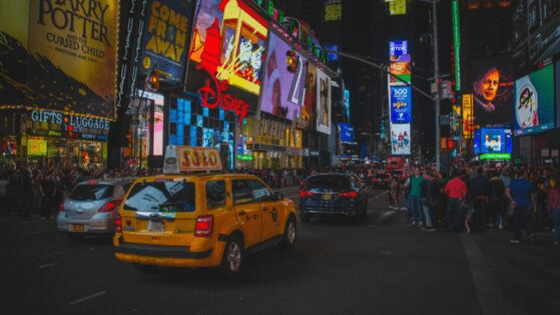
    Fassel’s tale takes place over nine days in June of 1983 and is set largely on New York’s Forty-Second Street, otherwise known as the Deuce. The nineties had yet to see Times Square turned into a place where tourists could safely swing into an Applebee’s (shudder), and you were more likely to run into hookers, drug dealers, and porn theaters than a “three-for” app combo.

    For most, eighties nostalgia is a joyful blast from the past, and, as we know, it’s everywhere, seen particularly in films like It and the at-least-partly It-inspired Netflix series Stranger Things

    Readers, however, should not expect a glut of “fun” references to that decade, which isn’t to say that Our Lady doesn’t skillfully reference the eighties. It does, and talk of exploding heads and summer camp slashers attest to Fassel’s knowledge and love for the genre. But the novel is more Taxi Driver than Friday the Thirteenth, and references to Flashdance and Sally Ride and the X-Men’s Jean Grey are both intentional and essential to the story and its lead character.

    The Plot

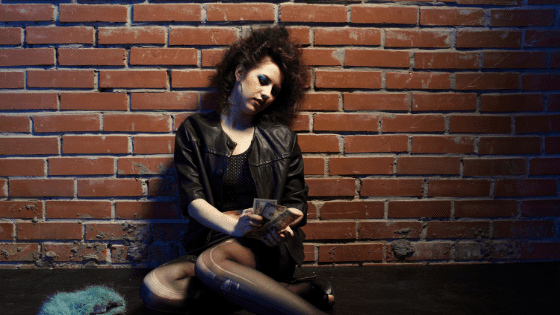
    Our Lady centers on Ginny Kurva, the bottom girl (a sort of fixer) for a group of prostitutes living at the seedy (and aptly named) Misanthrope. Having maneuvered her way into a position of influence with a grotesque pimp known as the Colonel, Ginny is able to care for her younger sister (wheelchair user Tricia) and run a type of school for the Colonel’s hookers, even as Ginny herself is subject to the pain and degradation inflicted by the life.

    Ginny has also struck up a friendship of sorts with horror-film fanatic Roger Neiderman, who tips her off to a predator stalking girls on the Deuce. We learn that the predator, assumed male, is in fact Nicolette, who works at the Staten Island Landfill by day and creates there a kind of killer-dog-prowled, Thunderdome-esque labyrinth by night, with Nicolette the Minotaur at its heart.

    As Ginny sinks deeper into alcohol-fueled self-care and is pushed to the breaking point, she nears a confrontation with both the Colonel and Nicolette, with the stakes being any hope for the future, should she even survive.

    But is it horror?

    Even as a horror fan, this is a question that usually doesn’t excite me. Yes, it’s somewhat annoying when people take the tack that anything skillfully enough realized cannot possibly be horror (Silence of the Lambs a prominent example), but I largely block out that noise. In many ways horror is the most inclusive of genres, and people who can only cast it in a restricted light are doing themselves a disservice.

    Still, I have seen people questioning whether Our Lady is horror, so I suppose it’s worth addressing. The novel doesn’t have supernatural elements, and the author doesn’t employ jump-scare-like tactics to frighten the reader. Fassel also leans on character over plot, with big issues much on his mind (the case of course with so much good horror), so those with an aversion to anything remotely literary might get nervous.

    But, as mentioned, horror references abound, specifically to films of the era, and the gore comes in sharp spikes. If you look at elements that horror must have, you can see that the book contains an attack by a monster (Nicolette), a speech in praise of the monster, a labyrinth, and a scene with the hero (Ginny) at the mercy of the monster.

    Our Lady also has a consistently bleak tone. The book is horror enough for me, but you can debate that to your heart’s content.

    The Verdict

    Fassel is one hell of a writer, and Our Lady of the Inferno is an extraordinary novel drenched in an eighties atmosphere both more true and less sanitized than many are accustomed to. The real horrors here lie in botched abortions, hopeless servitude, and the kind of arrangements one brokers with oneself to get by — and to care for those they love.

    If I have any quibbles it’s that Nicolette, in comparison with Ginny, feels underdeveloped, and the confrontation between the two is pushed so late into the novel that one might wish it had a little more room to breathe.

    But those are minor complaints, and Our Lady lives up to its place as the first book in the Fangoria Presents line, which continues with My Pet Serial Killer by Michael J. Seidlinger and Carnivorous Lunar Activities by Max Booth III. I’m looking forward to both and happy to have Our Lady on my bookshelf.

    (Fassel had apparently done a signing the week before at the store where I bought the book, so I was also lucky enough to unknowingly snag a signed copy.)

  • Four on the Floor with Autumn Christian

    Four on the Floor with Autumn Christian

    “It rushed through us in huge milking waves, like the predatory gasp of the ocean.”

    “I knew he was a barely contained scream wearing a human suit.”

    Even out of context, those lines, from Autumn Christian’s latest novel, Girl Like a Bomb, give you an idea of how adept the author is at peppering her narrative with set-your-synapses-afire prose. I’m thrilled to have her insights in this latest Four on the Floor interview, and I hope you enjoy it.

    Bio: Autumn Christian is a fiction writer from Texas who currently lives in California. She is the author of the books The Crooked God Machine, We Are Wormwood, Ecstatic Inferno, and Girl Like a Bomb, and she has written for several video games, including Battle Nations and State of Decay 2. When not writing, she is usually practicing her side kicks and running with dogs, or posting strange and existential Instagram selfies.

    James Gallagher: What joys and challenges have you experienced writing fiction versus writing for video games?

    Autumn Christian: Writing fiction is like working with the golden ratio. Everything expands out from a singular point — an idea — and you are in charge of the resultant universe that follows. It is powerful, exhilarating, and lonely to have all that responsibility.

    You spend a lot of time with your own thoughts, and it can drive you a little crazy. You get no real immediate feedback and can spend years wondering if you’re wasting your time. But when you finally get published and others read your work, you feel that the weight of that was all worth it. It’s still lonely throughout the entire process, though.

    Writing for video games is not about finding your own voice, but adapting your writing and finding the voice of the game. It’s about plugging into the world. You are rarely the sole writer on a project, and the writer rarely guides the direction of major events.

    Your job is important, but you are not God, and when working as a team on a game, nobody is. It is a joint effort. It is not as rewarding as writing fiction, but being part of a community is nice. It feels rewarding to write a little part of something that becomes an enormous whole. And since more people play games than read books, more people get to enjoy your work.

    James: Who are your major influences, and are there places you see these voices in your work?

    Autumn: My major writing influences are Poppy Z. Brite, Philip K. Dick, Tom Piccirilli, and Ray Bradbury. I have often tried to write in the way that music sounds — so KatieJane Garside and dubstep are also huge sources of inspiration.

    You can see the influence of Philip K. Dick in a lot of my science fiction stories, and although I have toned down stylistically over the years, the influence of Bradbury and Brite still lingers in my style. Piccirilli is where I got a lot of my southern gothic leanings, and his influence shows up a lot in some of my earlier work.

    Influence is a lot of things, from a lot of directions — memories, events, history, and science. I try to read as widely as possible, which is how I ended up reading a book about the history of bananas last year. I read a lot more nonfiction than I used to, as I feel it’s the primary source of finding fresh material and expanding my own style.

    James: What role does editing play in your creative process, particularly as set against that wild burst of bringing something fresh into the world and getting it onto the page?

    Autumn: Every story is different, but I typically go through five or six drafts of a novel. A short story is maybe two drafts, but I do a lot of recursive editing. I experiment with my drafts and editing style constantly, because I oftentimes feel like I learned how to write like learning how to punch incorrectly. The punch still packs a wallop, but it’s not the most efficient method per se, and correcting that can be hard.

    I don’t think one should settle upon the first creative process or editing style that works, because there may be something that works better with your particular personality.

    I’m learning it’s important to unfilter myself when I am writing something in completely new territory — it’s not even a first draft, but like a proto-draft. I need to learn where the story is going before I pay attention to the particulars of style and structure. Once it begins to unspool on the page, I can then go back, slot the appropriate pieces, and start constructing something readable.

    James: What books, movies, or TV series have thrilled or inspired you lately?

    Autumn: I’m a horror baby, but lately I’ve found inspiration outside of the horror genre. I’m interested lately in writing character-driven fiction with a sci-fi bent, but with literary leanings. I’ve been doing my best to expand my literary database:

    • Lindsay Lerman’s I’m From Nowhere

    • Altered Carbon

    • Avengers: Infinity War and Endgame

    • The Pisces by Melissa Broder

    • Tiffany Riesz’s Original Sinners series

    • Sexual Personae: Art and Decadence from Nefertiti to Emily Dickinson by Camille Paglia

    To learn more about Autumn Christian, visit her website, follow her on Twitter, or like her on Facebook.

  • Four on the Floor with Melissa Lason and Michelle Garza

    Four on the Floor with Melissa Lason and Michelle Garza

    This Four on the Floor interview features Melissa Lason and Michelle Garza, a writing team I came across through their involvement with Silverwood: The Door (a collaboration with Brian Keene, Stephen Kozeniewski, and Richard Chizmar).

    Read on for their bio and and insights into horror and the writing process. 


    Bio: Melissa Lason and Michelle Garza have been writing together since they were little girls. Dubbed the Sisters of Slaughter by the editors of Fireside Press, they are constantly working together on new stories in the horror and dark fantasy genres. Their work has been included in Fresh Meat, published by Sinister Grin Press; Wishful Thinking, from Fireside Press; and Widowmakers, a benefit anthology of dark fiction.

    Also the authors of Those Who Follow, Kingdom of Teeth, Mayan Blue, and Twin Lakes: Autumn Fires, Melissa and Michelle were kind enough to share insights into their profession in the following interview:

    James Gallagher: People probably imagine that, as twins, you have a psychic bond and are always in sync. But where do your strengths differ, and how does this help your writing?

    Sisters of Slaughter: As twins, we have had those moments where we have dressed the exact same for a holiday dinner and never discussed it with each other, or where we have had a bad feeling only to find out the other one had gotten hurt. But besides being identical and sharing an unbreakable bond since birth, we are also very different in some ways.

    Melissa is killer at making up story ideas and can find ways around certain parts in a story that Michelle might get stuck on, while Michelle is stronger at ending stories and finding a good place to start them so there aren’t too many needless words. This makes writing faster because we combine those strengths and the stories flow easier than if we were doing this solo. Two heads are better than one. Ha-ha-ha.

    James: You not only collaborate with each other, but you also worked with Brian Keene, Richard Chizmar, and Stephen Kozeniewski on the serial release Silverwood: The Door. What was that experience like?

    Sisters: Our collaboration with Brian Keene, Richard Chizmar, and Stephen Kozeniewski made us really nervous until we sat down at the writing table with them and realized we were just doing what we had always done.

    We worked off of a series bible, which helped the team define a clear outline of each episode, and once those specific beats were determined, we split up the workload and got down to business.

    Being with these guys, as well as Lydia from Serialbox and the creator of Silverwood, Tony, felt comfortable and natural. It worked out really well and we would definitely jump on the opportunity to write with them again.

    James: Are there ways that being edited has helped you grow as writers?

    Sisters: We can’t stress enough how important editors are. They are the superstars working behind the scenes to help a writer achieve their goal of creating a special story. Every editor we have ever worked with has helped us better our form. We would like to thank them all very much for helping us make our work shine.

    James: What recent books, movies, or TV series have caught your attention or inspired you?

    Sisters: A few books, television shows, and movies that have inspired us recently have been Mindhunter, True Detective, The Ritual, The Witch, and Goblin by Josh Malerman. Those are only a handful, but each of these had a special atmosphere we found interesting.

    * * *

    For more about Melissa and Michelle, check them out on Facebook or Twitter.


    ABOUT JAMES GALLAGHER

    I am a copyeditor and the owner of Castle Walls Editing. For information about how I can help you with your writing projects, contact me through this site or email me at James@castlewallsediting.com.