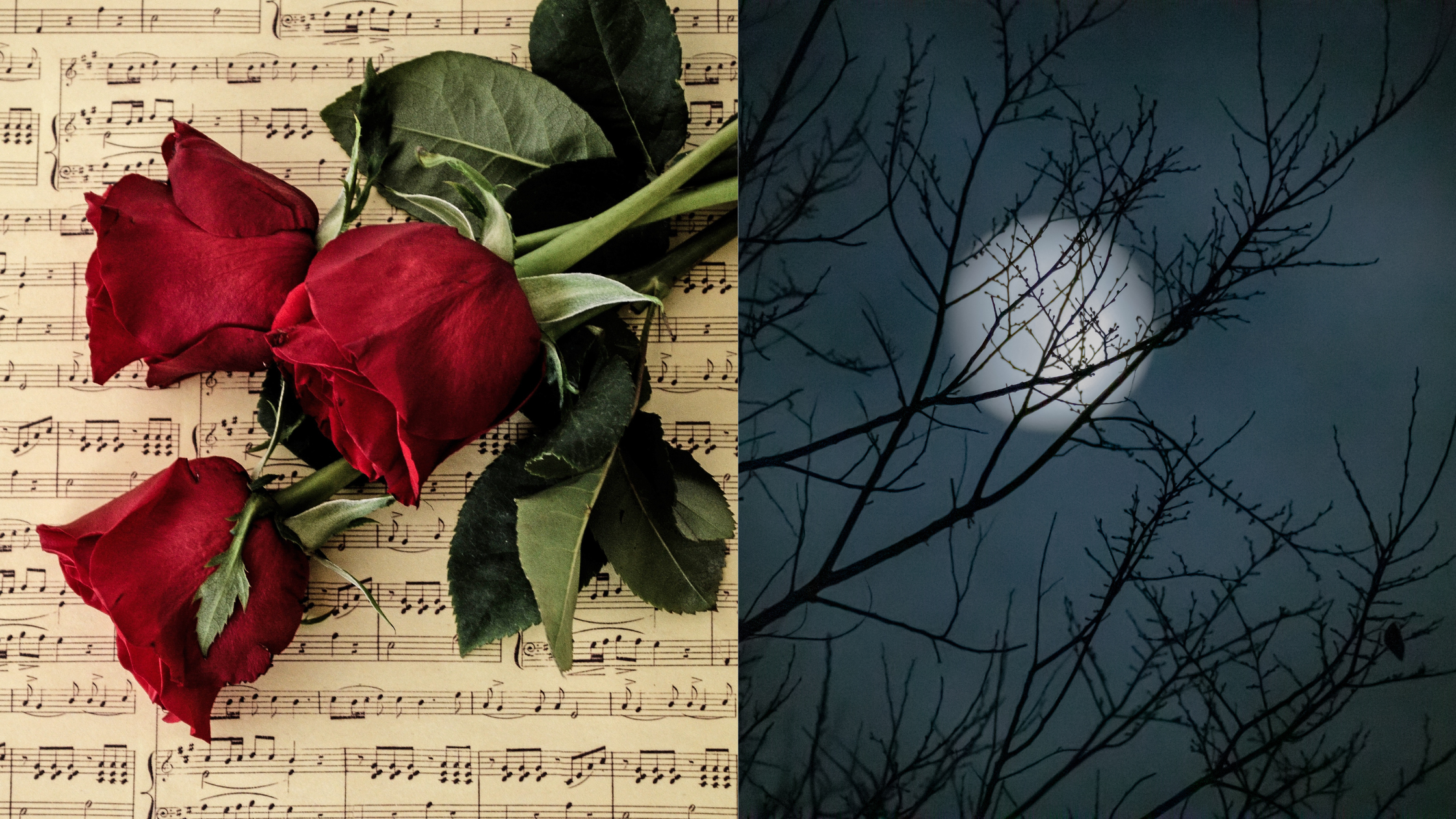
At first blush, horror and romance might seem as far apart as two genres can be. But on closer inspection, the genres exhibit many similarities.
Beyond the story-level connections, the readerships of these two genres share a protectiveness born from the feeling others look down on their genre of choice as being of low merit, of not being literary enough, of being trashy, even. Sometimes the reaction is just a dismissive curl of the lip.
Horror and romance contain both purely entertaining page-turners and examples of high “literary” merit (the quotes here suggesting “whatever the hell that means” and “but that’s a topic for another day”).
In my experience people will often look down on horror and romance in a way they wouldn’t about mysteries or suspense, so that sense of protectiveness is understandable. This snobbishness might be more true in the past, and both genres might be more widely accepted today than ever before, but the attitudes still seem to exist, at least on some level.
Horror and romance are cherished by their readerships, and these stories help readers process their lives. They act as a salve in troubled times. Sometimes they simply entertain and are in fact trashy in the best way. And there’s nothing wrong with that.
All About a Feeling
It’s been said by Tananarive Due and others that horror is an emotion, and this defines the genre in a special way and in fact makes the genre hard to define (and also more expansive). Romance is certainly all about love and the associated emotions.
So at the heart of both genres is the evocation of feeling in the characters, and not just feeling, but intense, life-altering feeling.
In “Horror and Romance: Doppelgangers in Need,” horror writer L. Marie Wood talks about how need (want, desire, yearning) is essential to both genres, and it’s a fascinating piece.
Which Genre Are We Talking About Again?
If you think about a force that insinuates itself in people’s lives and begins to change them, begins to affect them in physical ways (raised heartbeat, shortness of breath), begins to draw them toward something close to an obsessive relationship, you might be excused if you aren’t sure whether we’re talking about horror or romance.
This force might be evil in horror and love in romance, but in both it’s a force that cannot be shaken, that persists, that holds the promise of forever.
HEA and HEN
A romance without a happily ever after (or a happy for now) is not a romance. That’s part of the promise to the reader, and romance writers feel the heat if they break that promise.
Horror contains something you might call a happily ever never. While a character might in the end triumph over the evil in question, that triumph often comes at a great cost, and there’s usually the sense that the evil hasn’t been truly vanquished, that it’s only been momentarily thwarted before it rises again.
Meet-Cute and Meet-Brute
A romance needs a meet-cute to introduce the love interests and set them on the path toward romance. Well-deserved praise to romance writers coming up with fun and innovative meet-cutes that go beyond the characters literally bumping into each other.
In much the same way, the protagonist in a horror story needs a meet-brute (yeah, I don’t think this term has much chance of catching on, but thanks for humoring me) to expose characters to the presence of evil. In both romance and horror, characters’ first reactions are often to flee from this scary force (“I don’t have room in my life for a relationship!” or “I don’t want to be consumed by this demon!”).
This is another good point to emphasize again the physical responses in horror and romance. In romance, the mere touch of a new love interest (and it might be the slightest brushing of hands) draws an outsize physical reaction from the character, who consciously acknowledges the reaction or tries desperately to dismiss it.
In horror the racing pulse or shortness of breath at that first touch of evil is just as present, and it will only get worse. That’s also a promise to the reader.
Isolation
In horror characters are often isolated in ways that make them more vulnerable to evil and that connect them closely to primal childhood fears, such as being lost in a forest or shopping mall. The character may be physically stranded in a cabin or cave, or they may be emotionally stranded when no one around them believes that true evil is present.
Romance also often isolates its love interests to make them more vulnerable to the force of love working its magic on them. They may, in fact, be snowed in at a cabin. Or they may be forced to share a bed. Or any number of other scenarios. But that isolation is often key.
Teasing Out the Romance / Showing the Monster
In one of my favorite podcasts about horror movies, Pod Mortem, the hosts talk about how part of the reason movies such as Nightmare on Elm Street and Child’s Play work so well (and specifically the first film in each series) is because the creators know to use Freddy and the evil doll sparingly, that giving them too much screen time, too early, spoils the fear.
Similarly, romance often works best when the characters are kept from that full-fledge romance for as long as possible, because throwing them right together can spoil that delicious sense of tension and Will they or won’t they? (though of course we know they will).
Don’t Go in the Basement: Tropes, Tropes, Tropes
Horror and romance are often filled with tropes, conventions, and obligatory scenes, and each does well when it addresses these in new and interesting ways.
Is there a compelling reason for the character to go into the basement when common sense is screaming to do anything but? Is the third-act breakup drawn from compelling character motivations or thrown in unrealistically because the author is at the 75 percent mark?
The Grand Gesture / Sacrifice
In romance a character often makes a grand gesture to win back their love interest after the aforementioned third-act breakup. This works best when the character gives up something they thought they needed because they’ve realized what it is they actually need.
In horror a character will often need to make a great sacrifice, possibly their life or even their soul, to defeat evil. (And knowing that evil never dies we can say only, Hey, good luck with that.)
I Love You / I’m Going to Tear Your Soul Apart
Horror and romance might seem strange bedfellows, but thinking about the connections between the two is a lot of fun, and we didn’t even bring into the mix Gothic literature, which excels at entwining romance and dread. Are there any other connections that spring to your mind?
Further Reading:
Wood, L. Marie. “Horror and Romance: Doppelgangers in Need.” Chosen Realities 1 (Summer 2020).