Tag: Club Ed

  • My Webinar on Editing Horror

    My Webinar on Editing Horror

    The recording of my webinar on editing horror is now available for purchase at Club Ed at the following link:

    Editing Horror with James Gallagher 

    This one-hour webinar is for people interested in learning how to edit the horror genre. 

    The class covers the following:

    • What is horror?
    • Brief history of the genre
    • Subgenres
    • Horror beats and tropes
    • Character: protagonist v. the monster
    • Setting
    • Controlling theme: from life to death to damnation
    • The unknown
    • Reader immersion
    • Editorial concerns for problematic tropes


    I am a lifelong horror fan, and this webinar was a blast to prepare and present. Even better, I was able to do it over at Club Ed Freelancers, run by the great editor and editorial trainer Jennifer Lawler.

    I’ve taken numerous classes with Jennifer, and she and Club Ed have been an important part of my development as an editor.

    Long live horror!

  • Castle Walls Update: New Edition of the Chicago Manual & Other News

    Castle Walls Update: New Edition of the Chicago Manual & Other News

    This fall is full of exciting happenings in my editing world!

    • Style alert! CMOS 18 hits the streets
    • My appearance on Club Ed Discussions
    • My upcoming course on editing horror
    • My upcoming presentation for ACES VCON24

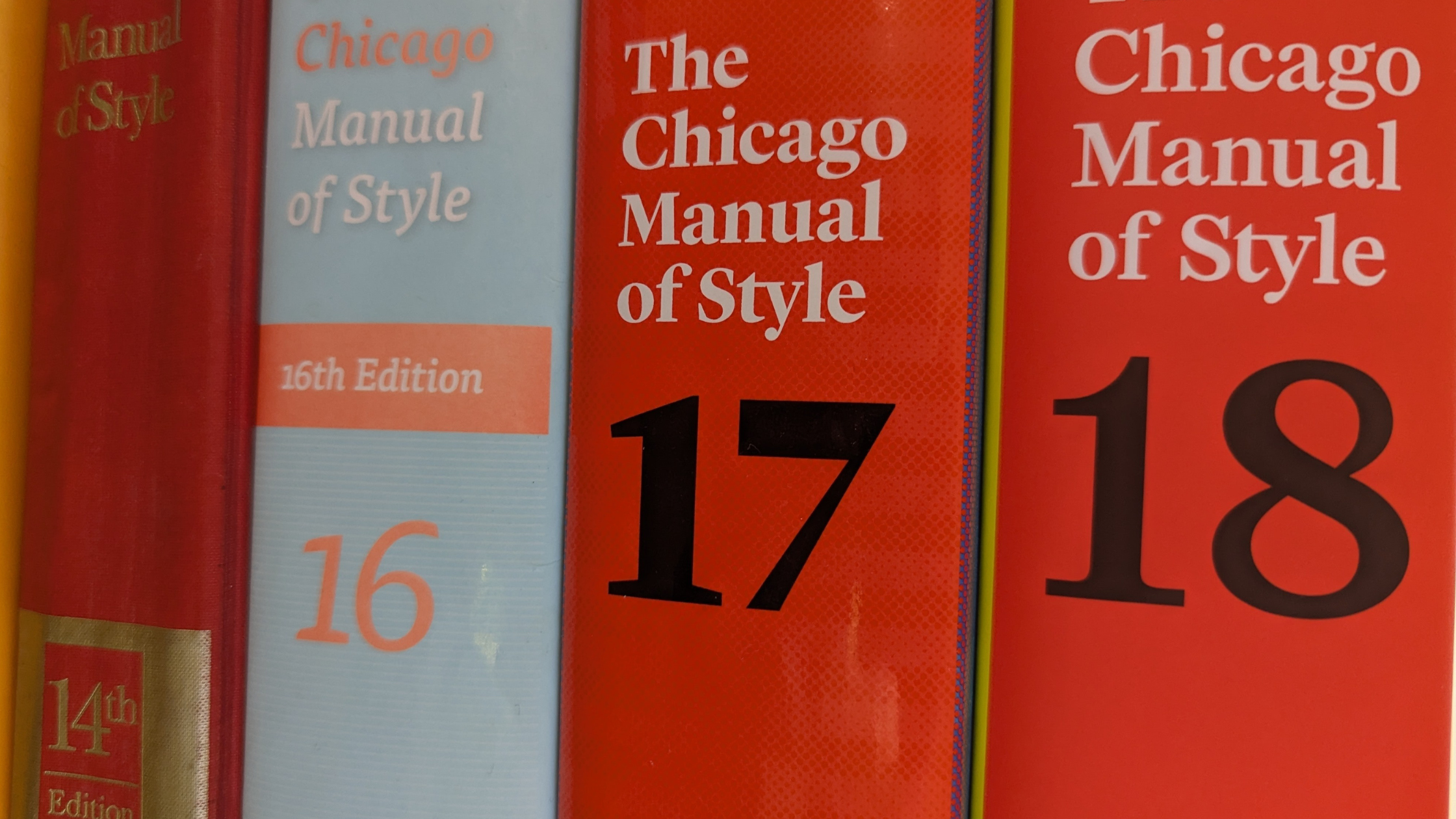
    The Chicago Manual of Style releases a new edition

    While the Associated Press frequently updates its style guide to accommodate the fast pace of delivering up-to-the-minute news, The Chicago Manual of Style is updated approximately every seven years in deference to the much longer development times for book-length projects.

    So the recent release of the style guide’s eighteenth edition is big news for editors, who are eagerly educating themselves on the style changes in the new edition.

    I have a subscription to the online edition, and generally that’s my go-to resource because of its search capabilities. But I couldn’t resist purchasing the print edition (and its strikingly yellow cover) to sit beside my print editions going back to the fourteenth (my first edition). With the number of years between editions, it’s a good investment, and it’s comforting to have it on my shelf.

    Some changes will take some getting used to (I’ve spent too many years avoiding numerals at the beginning of a sentence to not look askance). But most I’m on board with.

    Always use a capital letter for complete sentences after a colon? Sounds good to me. Check Merriam-Webster for capitalization of adjectives derived from proper nouns (think french fries or Dutch oven)? Even better.

    I talk horror, romance, and copyediting on Club Ed Discussions

    On August 13 I was thrilled to join Jennifer Lawler on Club Ed Discussions, a discussion series she hosts for editors in her Club Ed membership. While the discussions are recorded, they’re reserved for her members, so I can’t share the link here, but I had a blast talking about the similarities between horror and romance, working with authors and publishers, and other aspects of copyediting.

    Jennifer is one of my favorite people in the editing world, and taking her classes has been an important part of my editing journey. Through Club Ed, Jennifer offers classes, community, and other resources to support editors and help them deliver quality services to authors and publishers.

    I’m teaching a class on editing horror!

    Speaking of Club Ed, Jennifer Lawler has long wanted to add a horror course to her offerings but doesn’t herself edit horror. Knowing my love of the genre, Jennifer asked me to develop a course for her platform, and this October students will be able to participate in Editing Horror with James Gallagher.

    The class begins with a one-hour live webinar that will be available for later viewing and also includes an online forum and feedback on a sample chapter edit. I am beyond excited!

    I’ll be presenting a session for ACES VCON24

    ACES: The Society for Editing is hosting a virtual conference from September 25 to 27, and I’ll be presenting the session “How to Create an Annual Report for Your Editing Business.”

    Presenting before a national conference of my peers is a huge honor and will be one of my highlights for the year. I’m also looking forward to all the other informative sessions from the fantastic editors at the conference.

    Other news

    I’ll just add that I’ve been busy with copyediting, proofreading, and developmental editing work for indie authors and publishers. This year I’ve been pleased to add Hachette Book GroupPenguin Random House, and Catapult to my clientele.

    Happy writing!

  • Course Review: Editing for Point of View and Perspective

    Course Review: Editing for Point of View and Perspective

    The self-paced Editing for Point of View and Perspective class from Club Ed delves into finer editing considerations of particular benefit to developmental editors and line editors. As with all Club Ed courses, the materials and exercises are first-rate.

    After having taken many quality courses from Club Ed creator Jennifer Lawler, I’d picked up this self-paced class many months before I finally settled down to work my way through it. Because I’d benefited from previous courses with Jennifer, I had high expectations, and I was not disappointed.

    A reality of editing schedules is that authors sometimes push delivery dates, so having a learning opportunity at hand can help relieve anxiety—as well as sharpen your editing skills—when time unexpectedly opens on your calendar.

    Instructor Led v. Self-Paced

    I’ve taken both instructor led and self-paced classes from Club Ed, and there are pros and cons to each. At Club Ed, both options present you with reading materials (Word documents or PDFs) and exercises for each lesson.

    Instructor Led

    With instructor-led courses, materials are released weekly for the lessons (usually over a four-week period). Students are asked to return assignments before the beginning of the next week.

    The two main advantages of instructor-led courses are class forums and instructor feedback.

    The forums allow participants to interact with the instructor and other classmates. This provides further insight and discussion, as well as the opportunity to network with other editors.

    The feedback on each exercise is arguably the most valuable component of Jennifer’s courses. Editing is often best learned through doing, and Jennifer provides a detailed critique on each student’s work, invaluable for adjusting the new skills being practiced.

    Self-Paced

    The main value of self-paced courses is, of course, the flexibility to take courses on your own time. When time opens, they are there waiting to fill gaps in your schedule.

    Ask any editor and they’ll tell you that scheduling a live class is a surefire way to have work suddenly overwhelm your inbox. While I try to balance live and self-paced classes, live classes always bring a bit of anxiety around fitting them into a full editing schedule.

    (I also want to add that I try to take at least a couple of courses each year, and I hope to always do so. Whether it’s largely a refresher course or one that covers a new skill, training is wonderful for maintaining skills, developing new ones, meeting new editors, and renewing your enthusiasm for the art.)

    While self-paced classes don’t entail instructor feedback on the exercises, Jennifer does include an answer sheet with her suggested approach to each exercise. The individual feedback of instructor-led courses is most valuable, but these answer keys go a long way toward bridging that gap and are extremely helpful.

    The Class

    Editing for Point of View and Perspective helps developmental editors spot and solve POV and perspective errors in fiction. The class is broken into four lessons:

    Lesson 1

    The first lesson covers the basics of POV and perspective, the differences between the two, the three main POVs, and common problems editors will encounter with POV and perspective.

    Lesson 2

    The second lesson takes a closer look at the possibilities and limits of POVs and examines how an author’s choices affect the story. The lesson also examines where narrator perspective and character perspective interconnect.

    Lesson 3

    The third lesson delves into perspective problems as early-warning signs of other issues in the manuscript. The materials demonstrate how developmental problems in a manuscript can be intertwined, and strategies are offered for prioritizing and addressing these issues.

    Lesson 4

    The fourth lesson addresses POV and perspective issues that occur less frequently in manuscripts but for which an editor should nonetheless be prepared. The materials show where authors can go wrong and the strategies editors can use to get authors back on track.

    Overall Assessment

    POV and perspective issues require a sensitivity and ear for what is happening right down to the sentence level, and editors who develop this sensitivity and ear will be able to offer clients strong advice for modulating the narrative distance between the text and the reader. This class provides insightful materials and useful exercises for developing this higher-level editing skill.