Category: Review

  • Course Review: Editing for Point of View and Perspective

    Course Review: Editing for Point of View and Perspective

    The self-paced Editing for Point of View and Perspective class from Club Ed delves into finer editing considerations of particular benefit to developmental editors and line editors. As with all Club Ed courses, the materials and exercises are first-rate.

    After having taken many quality courses from Club Ed creator Jennifer Lawler, I’d picked up this self-paced class many months before I finally settled down to work my way through it. Because I’d benefited from previous courses with Jennifer, I had high expectations, and I was not disappointed.

    A reality of editing schedules is that authors sometimes push delivery dates, so having a learning opportunity at hand can help relieve anxiety—as well as sharpen your editing skills—when time unexpectedly opens on your calendar.

    Instructor Led v. Self-Paced

    I’ve taken both instructor led and self-paced classes from Club Ed, and there are pros and cons to each. At Club Ed, both options present you with reading materials (Word documents or PDFs) and exercises for each lesson.

    Instructor Led

    With instructor-led courses, materials are released weekly for the lessons (usually over a four-week period). Students are asked to return assignments before the beginning of the next week.

    The two main advantages of instructor-led courses are class forums and instructor feedback.

    The forums allow participants to interact with the instructor and other classmates. This provides further insight and discussion, as well as the opportunity to network with other editors.

    The feedback on each exercise is arguably the most valuable component of Jennifer’s courses. Editing is often best learned through doing, and Jennifer provides a detailed critique on each student’s work, invaluable for adjusting the new skills being practiced.

    Self-Paced

    The main value of self-paced courses is, of course, the flexibility to take courses on your own time. When time opens, they are there waiting to fill gaps in your schedule.

    Ask any editor and they’ll tell you that scheduling a live class is a surefire way to have work suddenly overwhelm your inbox. While I try to balance live and self-paced classes, live classes always bring a bit of anxiety around fitting them into a full editing schedule.

    (I also want to add that I try to take at least a couple of courses each year, and I hope to always do so. Whether it’s largely a refresher course or one that covers a new skill, training is wonderful for maintaining skills, developing new ones, meeting new editors, and renewing your enthusiasm for the art.)

    While self-paced classes don’t entail instructor feedback on the exercises, Jennifer does include an answer sheet with her suggested approach to each exercise. The individual feedback of instructor-led courses is most valuable, but these answer keys go a long way toward bridging that gap and are extremely helpful.

    The Class

    Editing for Point of View and Perspective helps developmental editors spot and solve POV and perspective errors in fiction. The class is broken into four lessons:

    Lesson 1

    The first lesson covers the basics of POV and perspective, the differences between the two, the three main POVs, and common problems editors will encounter with POV and perspective.

    Lesson 2

    The second lesson takes a closer look at the possibilities and limits of POVs and examines how an author’s choices affect the story. The lesson also examines where narrator perspective and character perspective interconnect.

    Lesson 3

    The third lesson delves into perspective problems as early-warning signs of other issues in the manuscript. The materials demonstrate how developmental problems in a manuscript can be intertwined, and strategies are offered for prioritizing and addressing these issues.

    Lesson 4

    The fourth lesson addresses POV and perspective issues that occur less frequently in manuscripts but for which an editor should nonetheless be prepared. The materials show where authors can go wrong and the strategies editors can use to get authors back on track.

    Overall Assessment

    POV and perspective issues require a sensitivity and ear for what is happening right down to the sentence level, and editors who develop this sensitivity and ear will be able to offer clients strong advice for modulating the narrative distance between the text and the reader. This class provides insightful materials and useful exercises for developing this higher-level editing skill.
  • Book Review: Such Kindness by Andre Dubus III

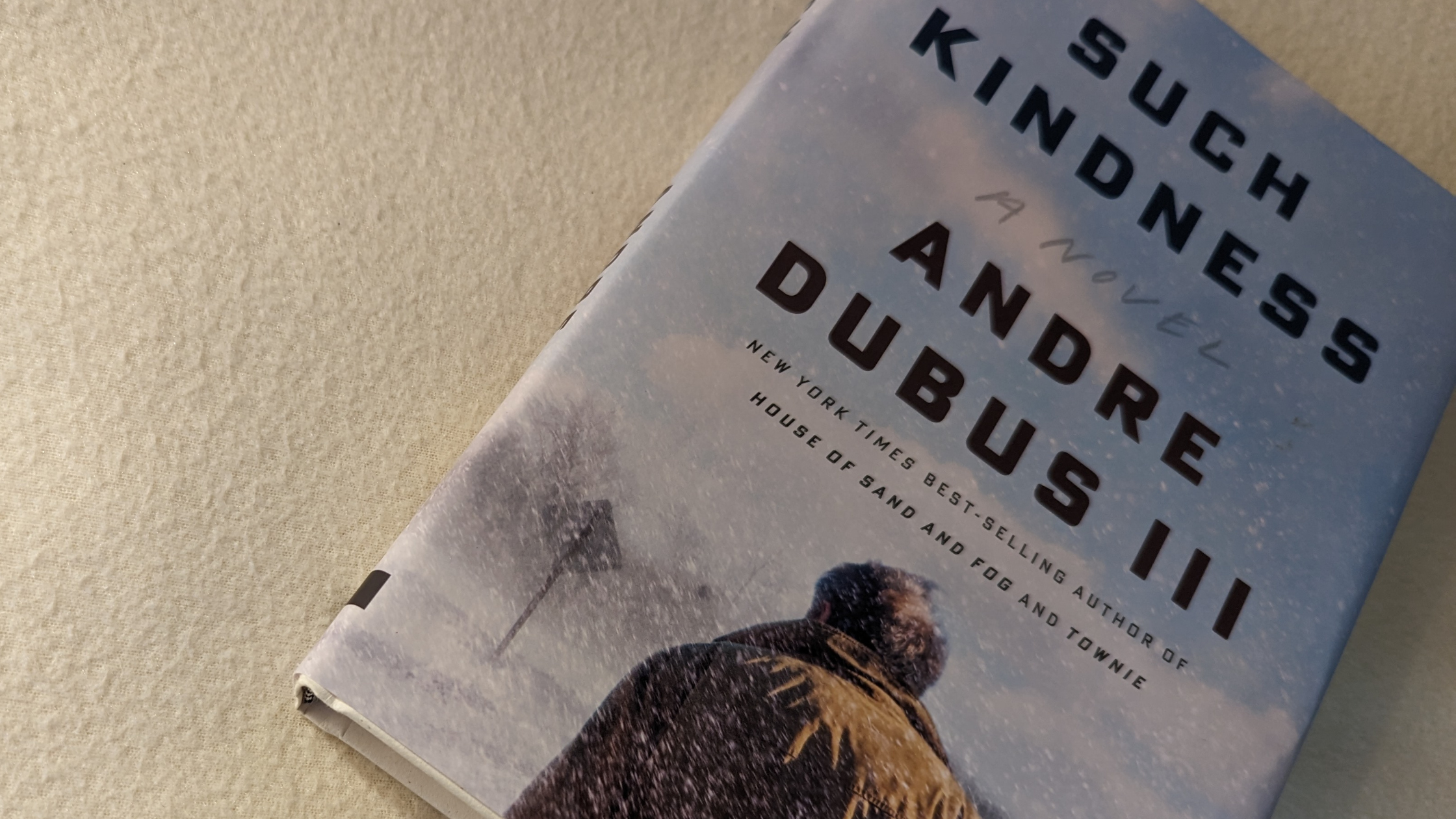
    Book Review: Such Kindness by Andre Dubus III

    “I used to be something, I guess. But I’m trying to let go of all that.”

    Tom Lowe always thought everything would be all right as long as he worked hard enough. He had a wife and son, a home he’d built with his own hands, a future that seemed within reach, despite the nagging whispers that the arm of his bank loan might one day push it all from him.

    Then, in a careless moment seeded by mounting financial precariousness, he fell off a roof during a construction job. Painkillers followed. Addiction. The inability to work. And then he lost his wife and son.

    Such Kindness by Andre Dubus III opens with Tom, years later, attempting to rob the bank agent who’d help take Tom’s life from him. He’s enlisted the aid of Trina, the young mother next door to his government housing apartment, and Jamey, her sometime boyfriend.

    So begins Tom’s odyssey to reconnect with his son, who’s turning twenty, and for whom Tom wants only to secure a vehicle so he can be with his son and buy him dinner. Tom’s choices, however, come with consequences, both for him and his young friends.

    Any release from Dubus is an event. He looks hard at his characters, but there’s kindness, too, in his approach, and the kindness that Tom begins to finally see and accept in the world is something I will take from this complex work. This author is one of the best, period, and his writing affects me profoundly. Such Kindness is another startling achievement.

  • Book Review: The Ferryman by Justin Cronin

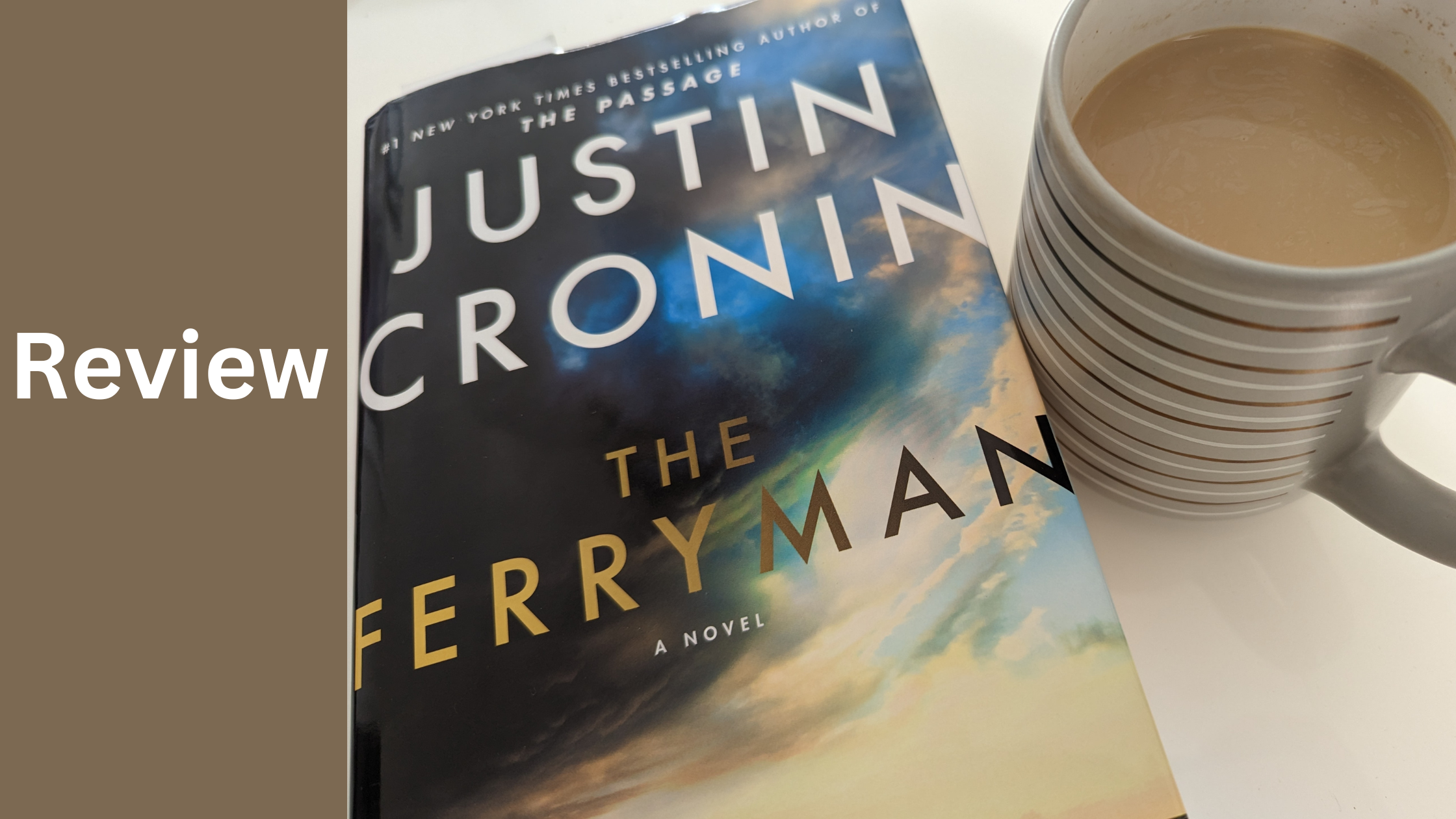
    Book Review: The Ferryman by Justin Cronin

    Any Justin Cronin release is an event. The books of the Passage trilogy are among my favorites (oh, that first hundred pages), and The Ferryman shows the author at the top of his form with this stand-alone.

    His latest resonates with the motifs readers will recognize from his earlier works: falling, the wonder of stars, fathers and daughters, grief.

    Cronin’s work is often that of return and reevaluation, and these narrative echoes deepen his themes and their effect on the audience. The payoff of a specific sequence of foreshadowing, for example, had me in tears as it opened up my understanding of what he was orchestrating in the larger story.

    The Ferryman examines big existential questions, and Cronin is particularly adept at using the micro to suggest the macro, and vice versa. In a work that largely hinges on the characters’ attempts to understand their reality, it would have been easy to lose the grounding that keeps the reader invested, but the story never loses its narrative drive (and this with a protagonist who is necessarily not always likable).

    Cronin is a true prose stylist. The man flat-out knows his way around a semicolon, and the most startling element of the author’s craft is that you’d stop every other moment to admire his turns of phrase if you weren’t so consistently absorbed by the story.

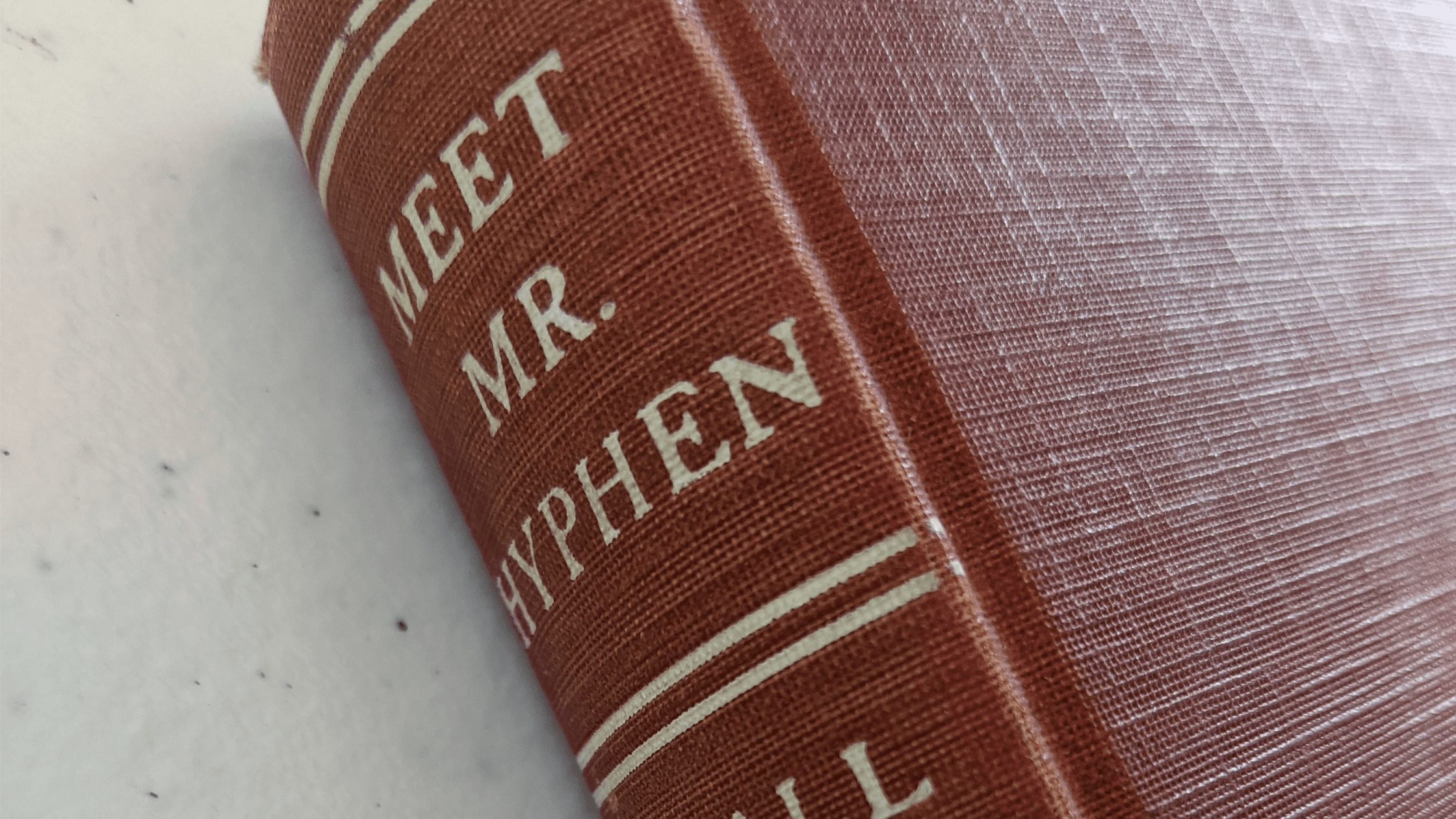
  • Review: “Meet Mr. Hyphen (And Put Him in His Place)”

    Review: “Meet Mr. Hyphen (And Put Him in His Place)”

    [vc_row][vc_column][vc_column_text]In a post from Merriam-Webster’s Words at Play, Mary Norris (Between You & Me) called Meet Mr. Hyphen the “best thing ever written about hyphens.”

    First: All hail the Comma Queen!

    Second: If Norris’s assessment intrigues you, then you’re probably a copy editor. 

    I read that post years ago, and because the book was out of print, I had to go to some trouble to track it down—which I did happily. But then life got busy and it sat on my bookshelf for far too long.

    I always liked that Mr. Hyphen was there, though. You might know the feeling of having a book, especially a book with a tinge of mystery because of its relative unavailability, that you purposefully put off reading to retain the magic.

    Eventually, however, I could savor the want of it no more, and I traded mystery for experience.

    The Context

    Edward N. Teall, a proofreader on the 1934 Webster’s New International Dictionary, Second Edition, wrote Meet Mr. Hyphen in 1937 after years of studying compounding. So when he refers to the ’90s, he’s referring to the 1890s. 

    In other words, you won’t find any references to two of my favorite bands, Faith No More and Soundgarden (and even my ’90s are feeling more and more distant).    

    This was before macros. Before crtl+F. Before PerfectIt.

    Hats off to editors past.

    Teall may have written nearly a century ago, but his concerns will strike you as modern. Teall talks about the challenges of compounding (open, closed, or hyphenated) because of the rapid addition of new words related to automobiles, airplanes, movies, and radio. He notes language’s “superabundance of material.”

    Sound familiar?

    You imagine his joy and wonder if he were to see the pace of language change today.

    “We are putting words together in a way that multiplies their power and widens their scope,” he wrote.

    And we still are.

    No Easy Answers

    Teall exhibits a childlike enthusiasm for the art of compounding (“an art, because personal preferences and individual judgments will always be decisive”).

    Speaking of childlike—the word, that is—Teall has a wonderful aside about the practice academics had apparently proposed of hyphenating -like words based on whether they were literal or metaphorical (when combined with child or death, for example).

    Teal dismisses the practice as impractical, but it gets at the kind of thinking Teall employs, a kind of double-clicking* on the logic of the compound itself instead of a strictly grammatical, role-based determination that can be applied broadly and mechanically. Though wouldn’t that be easier, we weep.

    * I hadn’t heard double-clicking used this way until a recent episode of the fabulous That Word Chat, featuring Anne Curzan. Apparently it’s business jargon, but I kind of like it.

    As Teall says, “The English language simply is not logical,” so easy answers are likely in short supply. (Have you checked the page count on the Chicago Manual’s hyphenation table?)

    Teall: “The compounding of words is not sport for specialists, not a freakish, fantastic field of theory; not academic, not aristocratic. It is part of the plain business of conveying ideas through writing or print. It has value in private and professional correspondence; it affects the worth, in accuracy and in validity, of legislative enactments and state documents. It is important to all who write or print.”

    He goes on: “Clean compounding is a source of strength. Slack, untidy compounding is in itself a weakness.”

    And later the most important point: “[Good compounding] prevents ambiguity and misunderstanding.”

    Teall’s Method

    It’s unlikely many have thought more about compounding and hyphens than Teall. What may strike the reader is the love he brings to this peculiar passion. He seems dedicated to a task he knows will forever elude ironclad laws or rules one can apply without thought and across circumstance.

    And he revels in the chase.

    “Cultivate his acquaintance—but keep him in his proper place. Don’t let him crowd in where he doesn’t belong, but insist on his doing what is expected of him. He’s a good fellow, but he has to be watched.”

    There’s also a kindness in his approach, and his practice is one we might do well to apply to all areas of editing:

    “First, analysis. The formulation of principles. Next, the casting of rules. Finally, determination not to let any rule override consideration of clarity and exactness of statement in any situation that may arise in the course of composition.”

    For us, words of assurance:

    “This is salvation for the stylesheet makers—for writers, editors, secretaries—for all who put words on paper. First, the making of a workable system; then, clear perception and effective acceptance of the fact that any rule may be laid aside in emergency—and criticism on the ground of inconsistency may be heavily discounted.”

    Stick Around, Mr. Hyphen

    My copy of Meet Mr. Hyphen is a handy five-by-seven hardcover that smells—delightfully—of its age. The book concludes with a working guide and a “Glimpse of the Compounder’s Workshop,” both of which can be dipped into from time to time.

    I’ll note that I didn’t cover Teall’s deeper analysis of compounding, such as his look at modifiers that are descriptive versus those that serve the function of identification. I still need to work my mind around that and around his other musings, but the book is there, on my shelf, and it’s not going anywhere.

    If there were one thought from the book I’d tattoo on my arm, it’s probably this:

    “Complete consistency is impossible. Good style is attainable.”


    References

    Norris, Mary. Between You & Me: Confessions of a Comma Queen. New York: W. W. Norton & Company, 2015.

    Teall, Edward N. Meet Mr. Hyphen (And Put Him in His Place). New York: Funk & Wagnalls Company, 1937.

    Words at Play: https://www.merriam-webster.com/words-at-play/comma-queen-meets-mr-hyphen.[/vc_column_text][/vc_column][/vc_row]

  • Book Review: ‘Because Internet’ by Gretchen McCulloch

    Book Review: ‘Because Internet’ by Gretchen McCulloch

    If all the cool kids on Editor Twitter are gushing over a book on language, then I should probably read it too.

    Because peer pressure.

    But also because I follow other editors for good reasons: to learn from them, to stay current on trends in the industry, to feel part of a community even while working largely in isolation.

    I haven’t been steered wrong when jumping on the latest reading trend and picking up books such as Benjamin Dreyer’s Dreyer’s English, Emmy J. Favilla’s A World without “Whom” and Kory Stamper’s Word by Word.

    Gretchen McCulloch’s Because Internet: Understanding the New Rules of Language is the latest it book in the editorial realm, and rave reviews and brisk sales have backed up the hype.

    In her book, McCulloch skillfully examines language change via electronic forums, from the days of ARPANET to today’s Snapchatters, breaking down Internet People into three waves characterized by

    • Old Internet People (First Wave)
    • Full Internet People (Second Wave)
    • Semi Internet People (Second Wave)
    • Pre Internet People (Third Wave)
    • Post Internet People (Third Wave)

    I’m nearing fifty, so it’s safe to say I’ve lived through most of these waves, and I enjoyed the bursts of nostalgia as McCulloch walked readers through BBSs and listservs and AIM and MySpace, all the way through Facebook, Gchat, and Instagram.

    Beyond a simple evocation of days gone by, however, the grouping of internet users serves a useful function: allowing readers to place themselves — and their attitudes toward internet communication — in a greater context, thereby encouraging readers to examine how and why they communicate before turning their eye toward how others do so.

    Any preconceived notions of internet language as a bastardization of more formal language are quickly shattered as McCulloch explores nuance in internet communication, whether through capitalization or punctuation or use of emoticons and emoji.

    I can imagine someone, exhausted by charges of laziness about the way people communicate on the internet (ruserious?), presenting Because Internet as a gift to a text-speak derider. The highest praise for the book might lie in how quickly it opens the eyes of the most resolute of the kids-these-days, get-off-my-lawn crowd.

    In other words, as the author demonstrates, language use on the internet has a lot less to do with laziness than it does with complex factors developing in real time and bolstering expressiveness rather than limiting it.

    People hate-reading the book to grouse about language change may instead find themselves taking notes on why their use of the period is misunderstood or on how they can better communicate with loved ones via a new set of tools.

    At heart the book displays a generous, enthusiastic love for language and for seeing where it is leading us and how we are shaping it.

    As McCulloch writes, “When we study informal language, we open our minds wide. We step out of the library and see the complexity of the wide world that surrounds us.”

    McCulloch herself is an internet linguist and the author of the Resident Linguist column at Wired. She also runs All Things Linguistic and cohosts the Lingthusiasm podcast.

    McCulloch’s writing style combines her academic bona fides (you don’t doubt her chops) with a playfulness that shines through often enough to make it an enjoyable as well as informative read.

    Final Take

    Seeing people ridicule each other for their use of language is one of the darker sides of being online.

    Knowledge of how and why people use language is usually inversely proportional to the frequency with which people ridicule others’ language (which is why you so rarely see good editors “correcting” people’s posts and tweets; most editors prefer to limit their comments on your language to when they’re being paid to do so).

    Increasing your understanding of how people are using language is therefore reason alone to read this book.

    Because Internet is highly recommended for both outsiders looking in, hoping for a better handle on how to communicate on the internet, and the savviest of internet wordslingers, looking for insights on where the language is going and how they’re helping to shape it.

  • Book Review: ‘Our Lady of the Inferno’ by Preston Fassel

    Book Review: ‘Our Lady of the Inferno’ by Preston Fassel

    Along with the much-anticipated rebirth of Fangoria magazine came Fangoria Presents, a publishing venture that launched with the release of 2018’s critically acclaimed Our Lady of the Inferno by Preston Fassel.

    With its splashy neon-pink-accented cover art and the all-but-flickering “Fangoria Presents” signage in the paperback’s upper-right corner, Our Lady has much of the same irresistible appeal that readers of a certain age will remember from garishly designed VHS tapes in their local video-rental store.

    (Another pink book, Autumn Christian’s wonderful Girl Like a Bomb, is basking in similarly positive reviews, making one wonder if pink has become horror’s new black.)

    The Setting

    Fassel’s tale takes place over nine days in June of 1983 and is set largely on New York’s Forty-Second Street, otherwise known as the Deuce. The nineties had yet to see Times Square turned into a place where tourists could safely swing into an Applebee’s (shudder), and you were more likely to run into hookers, drug dealers, and porn theaters than a “three-for” app combo.

    For most, eighties nostalgia is a joyful blast from the past, and, as we know, it’s everywhere, seen particularly in films like It and the at-least-partly It-inspired Netflix series Stranger Things

    Readers, however, should not expect a glut of “fun” references to that decade, which isn’t to say that Our Lady doesn’t skillfully reference the eighties. It does, and talk of exploding heads and summer camp slashers attest to Fassel’s knowledge and love for the genre. But the novel is more Taxi Driver than Friday the Thirteenth, and references to Flashdance and Sally Ride and the X-Men’s Jean Grey are both intentional and essential to the story and its lead character.

    The Plot

    Our Lady centers on Ginny Kurva, the bottom girl (a sort of fixer) for a group of prostitutes living at the seedy (and aptly named) Misanthrope. Having maneuvered her way into a position of influence with a grotesque pimp known as the Colonel, Ginny is able to care for her younger sister (wheelchair user Tricia) and run a type of school for the Colonel’s hookers, even as Ginny herself is subject to the pain and degradation inflicted by the life.

    Ginny has also struck up a friendship of sorts with horror-film fanatic Roger Neiderman, who tips her off to a predator stalking girls on the Deuce. We learn that the predator, assumed male, is in fact Nicolette, who works at the Staten Island Landfill by day and creates there a kind of killer-dog-prowled, Thunderdome-esque labyrinth by night, with Nicolette the Minotaur at its heart.

    As Ginny sinks deeper into alcohol-fueled self-care and is pushed to the breaking point, she nears a confrontation with both the Colonel and Nicolette, with the stakes being any hope for the future, should she even survive.

    But is it horror?

    Even as a horror fan, this is a question that usually doesn’t excite me. Yes, it’s somewhat annoying when people take the tack that anything skillfully enough realized cannot possibly be horror (Silence of the Lambs a prominent example), but I largely block out that noise. In many ways horror is the most inclusive of genres, and people who can only cast it in a restricted light are doing themselves a disservice.

    Still, I have seen people questioning whether Our Lady is horror, so I suppose it’s worth addressing. The novel doesn’t have supernatural elements, and the author doesn’t employ jump-scare-like tactics to frighten the reader. Fassel also leans on character over plot, with big issues much on his mind (the case of course with so much good horror), so those with an aversion to anything remotely literary might get nervous.

    But, as mentioned, horror references abound, specifically to films of the era, and the gore comes in sharp spikes. If you look at elements that horror must have, you can see that the book contains an attack by a monster (Nicolette), a speech in praise of the monster, a labyrinth, and a scene with the hero (Ginny) at the mercy of the monster.

    Our Lady also has a consistently bleak tone. The book is horror enough for me, but you can debate that to your heart’s content.

    The Verdict

    Fassel is one hell of a writer, and Our Lady of the Inferno is an extraordinary novel drenched in an eighties atmosphere both more true and less sanitized than many are accustomed to. The real horrors here lie in botched abortions, hopeless servitude, and the kind of arrangements one brokers with oneself to get by — and to care for those they love.

    If I have any quibbles it’s that Nicolette, in comparison with Ginny, feels underdeveloped, and the confrontation between the two is pushed so late into the novel that one might wish it had a little more room to breathe.

    But those are minor complaints, and Our Lady lives up to its place as the first book in the Fangoria Presents line, which continues with My Pet Serial Killer by Michael J. Seidlinger and Carnivorous Lunar Activities by Max Booth III. I’m looking forward to both and happy to have Our Lady on my bookshelf.

    (Fassel had apparently done a signing the week before at the store where I bought the book, so I was also lucky enough to unknowingly snag a signed copy.)