Category: Musings

  • Staying Connected during Isolation

    Staying Connected during Isolation

    Isolating in our homes during the COVID-19 pandemic has undoubtedly increased the amount of time we’re spending in virtual spaces for business, pleasure, and education. 

    Before the pandemic, I had weekly meetings with clients on Google Hangouts and Skype, but since the shelter-in-place guidance I’ve seen a big increase in meetings via Zoom (not to mention sessions with friends and family on Houseparty).

    I’ve also participated in more online collaboration on Miro, and it’s hard to imagine that virtual collaboration will do anything but increase — whether or not we return to something approaching our old normal. 

    The following fun and informative offerings have popped up in recent weeks:


    That Word Chat with Mark Allen

    Former newspaper reporter and longtime copy editor Mark Allen (@EditorMark) has launched That Word Chat on Zoom. 

    Described as a “video chat with lovers of all things lexical,” the episodes air Tuesdays at 4:30 p.m. ET. The first episode featured a conversation with Mary Norris, the author of Between You & Me: Confessions of a Comma Queen and Greek to Me: Adventures of the Comma Queen.

    During the first episode, I looked from attendee to attendee and was struck by the number of respected editors in the virtual room — a real who’s who of Editor Twitter. It felt good to hang for a bit with these great editors.

    The second episode welcomed Word by Word: The Secret Life of Dictionaries author Kory Stamper and Steve Kleinedler, author of Is English Changing? At one point, the two took word suggestions and wrote on-the-fly definitions. 

    Though they made clear that coming up with definitions off the top of their heads was far from the real dictionary-writing process, it was still fascinating to get a glimpse of how they think — and it was also a lot of fun.


    Sentence Diagramming with Ellen Jovin

    Known on Twitter for her traveling Grammar Table, Ellen Jovin (@GrammarTable) has launched a series of classes on sentence diagramming.

    Whatever your reaction to sentence diagramming — be it a quizzical Huh? or a nostalgic Oh yes, I remember doing that — the first two classes have been a blast, and I look forward to the third.

    (I remember sentence diagramming from grade school nearly four decades ago and haven’t thought about it a lot since, so I’ve greatly enjoyed the creativity of drawing out sentences with a group of fellow editors.)


    ACES and EFA Webinars

    I value my memberships in ACES: The Society for Editors and the Editorial Freelancers Association (EFA), and both have offered free webinars to members during the pandemic (with ACES offering free webinars to nonmembers as well).

    Whether for learning something new or reinforcing knowledge, ongoing education is an important part of being an editor who provides the best possible service to clients. 

    I also find it can be a boost to mental health, because it feels like such a productive use of time (and while I’ve been lucky to maintain steady work during the crisis, the uncertainty around book publishing is just one of many stressors in this new world).


    ACES Annual Conference

    For many, ACES is almost synonymous with the organization’s annual convention, and I’ve been fortunate enough to attend past conventions in St. Petersburg, Portland, and Chicago.

    This year’s convention in Salt Lake City was canceled because of the pandemic, but ACES has scheduled a day of online sessions for May 1. Session topics include the following:

    • The Invention of the Modern American Dictionary with Peter Sokolowski, editor-at-large, Merriam-Webster
    • Grammar Arcana with Lisa McLendon, coordinator of the Bremner Editing Center at University of Kansas
    • Developing a Quality Editorial Process End-to-End with Samantha Enslen, president, Dragonfly Editorial, and Cynthia Williams, editor and project manager, Dragonfly Editorial
    • What’s New in the AP Stylebook with Paula Froke, lead editor, AP Stylebook, and Colleen Newvine, product manager, AP Stylebook


    I’m looking forward to these sessions and am grateful that the people at ACES have done what they can to replace their beloved convention.


    Evident Ink with Nancy Smay

    In addition to serving clients through Castle Walls Editing, I edit romance as a guest editor through editor Nancy Smay’s company Evident Ink, and I am happy to report that Nancy has launched a wonderful series of free live video sessions on Facebook (https://www.facebook.com/EvidentInk/). 

    Nancy welcomes new guests every week, with upcoming sessions including topics such as boosting your writing productivity and using tropes in fiction. The classes take place on Thursdays at 4:30 p.m. ET and are well worth checking out.


    Corona Con

    Because of the cancellation of the Scares That Care horror convention in Wisconsin, author Kelli Owen led the charge to put together a live stream replacement con on April 18.

    Guests included Jonathan Janz, Kelli Owen, Brian Keene, Mary SanGiovanni, Robert Ford, Tim Meyer, Matt Hayward, Wes Southard, Somer Canon, Wile E. Young, Stephen Kozeniewski, Aaron Dries, Bracken MacLeod, and moderators Sadie Hartman (MotherHorror of Nightworms), Bob Pastorella (This Is Horror), Steve Pattee (Horror DNA), and Shane Keene (Ink Heist).

    A link to the day’s events can be found here: 

    https://www.youtube.com/watch?v=GDnXscKJ4nY&feature=youtu.be

    All the sessions are worth watching, but the Jonathan Janz reading stands out as perhaps the day’s biggest bring-down-the-house moment. Reading from his forthcoming work The Raven, Janz delivered a master class in live reading.


  • Don’t Lift the Lid! Slow Cookers and Editing

    Don’t Lift the Lid! Slow Cookers and Editing

    Lifting the lid on a slow cooker, even for a second, supposedly adds thirty minutes to cooking time. In much the same way, there seems to be a disproportionate amount of time lost when an interruption takes editors out of their editing groove.

    If I’m editing a manuscript and have to stop to address a completely different matter, this shifting of gears takes my mind off the project and interrupts my flow. When you have forty or more hours ahead of you on a book edit, little bits of time lost can add up quickly and affect your ability to hit your deadlines.

    Most editors have to play a kind of scheduling Tetris to ensure they hit their deadlines and get their clients their edited manuscripts. Delays on one job can easily affect every other job on the schedule, so it’s no wonder editors are so serious about keeping their work moving.

    Managing interruptions is therefore a vital editing skill.

    Interruptions can include emergency requests for quick-turn assignments, personal and professional emails, phone calls, and face-to-face interactions with coworkers or family.

    The extent to which an editor is affected by an interruption depends on the following:

    • Nature of the interruption. Answering a quick question will obviously affect the job you’re working on less than needing to completely break to spend an hour proofing an emergency job. For such an emergency request, there might be research involved, or you might have to wait for more information from that client (and trying to work on one job while keeping an eye out for information needed for an emergency request is less than ideal, because it splits your thoughts).
    • Where you are in the editing process. An interruption might be easier to process if the work you’re doing is more mechanical (invoicing or answering emails or cleaning up your style sheet) than if you’re in the midst of hard-core, concentration-intensive editing.
    • Your state of mind. The more pressure you’re under to hit a deadline on your current job and the more concentration required by that job, the more likely you are to have trouble recovering from an interruption. Stress from outside sources (a pandemic affecting lives the world over comes to mind) will also likely have an outsize effect on how you handle interruptions.


    Interruptions are inevitable

    Interruptions, of course, are inevitable, especially for work-at-homers whose offices are no longer the quiet places they were before the COVID-19 crisis prevented family members from heading off to school or places of employment.

    While interruptions are unavoidable, they can be minimized by policing yourself (refraining from answering the phone or checking email and social media) and by communicating with those in your vicinity so they understand why you need quiet time and when it’s okay to break into that time.

    (Corporate clients are most likely to have emergency requests, and because corporate clients often pay higher fees, they enable editors to perform the lower-paying manuscript work that may be the editor’s true love. Editors, therefore, often need to accept emergency requests to keep paying their bills.)


    Breaks are not interruptions

    Interruptions can negatively affect your work, but breaks are a whole different ball game. After a ten-minute break at the top of the hour, you’re more likely to concentrate better than if you’d worked straight through.

    While an interruption can break your flow and make you feel like you’re not making the progress you want to make, little breaks can refresh you and enable you to work longer and more effectively. 

    These breaks can also have physical benefits if you use them to stretch, move around a bit, or even do a few arm curls. I don’t adhere to it as well as I should, but the 20/20/20 rule, in which every 20 minutes you focus on something 20 feet away for 20 seconds, can do wonders for eye strain.


    Low and slow

    As with a slow cooker meal, editing is usually best when done low and slow. This, however, isn’t always possible. If something drops on your desk and it’s needed in an hour, you might have to take that baby out of the slow cooker and throw it in the microwave.

    With this kind of triage editing, prioritization is everything, because you might not have time to address every aspect of the work. In these cases you have to identify the most important aspects of the work, ensure those are correct, and only then address less prioritized matters, if time allows.

    But I’ll always prefer the slow cooker to the microwave, and whenever possible, I’ll be taking it low and slow.


    Lots of ingredients

    As I continue to stretch the comparison, I’ll add that slow cookers are so effective because they (like editors) meld ingredients (skills) over consistent heat (effort and concentration). 

    For clients, the editor (slow cooker) they need is a complicated combination of specialty (developmental editor, line editor, copy editor, proofreader) and bona fides (certifications, client list, books published, referrals, fact-checking cred, familiarity with style guides, ability to work with tech tools, and knowledge of grammar, punctuation, and spelling).


    Preparation

    Slow cookers are all about preparation. That’s the magic: assemble all your ingredients, set the slow cooker, and let it do its thing for the next eight hours. 

    Preparation is just as important for enabling editors to edit, and preparation can take many forms:

    • Workspace: A dedicated workspace with plenty of room to operate, multiple monitors, and ergonomic accommodations makes for happy, healthy editors.
    • References: Whether accessing dictionaries, style guides, and other resources online or through your personal library, quick access to the references you need is essential.
    • Prework: Creating invoices, setting up your style sheet, and formatting your document all allow editors to get on with the business of editing their documents. 


    The flavors meld

    Editors spend long hours on any given job. While interruptions can’t be avoided entirely, they can often be minimized or dealt with effectively, leading to a meal (edited manuscript) that will have clients drooling.

  • Over 3.5 Million Words Served

    Over 3.5 Million Words Served

    The other day I summed the word counts on my books-edited spreadsheet and saw that in the last two years I’ve edited over 3.5 million words.

    That’s a big number, the kind of number that’s impossible to fully imagine. Most of the books I copy edit or proofread range from 70,000 to 100,000 words, so the number starts to come into focus when you realize that editing ten 100,000-word books will get you to your first million.

    Before I devoted myself full-time to Castle Walls Editing around two years ago, I’d worked for nearly fifteen years as an editor for Recorded Books. During that time I ran Castle Walls on the side, doing occasion freelance work, so I’d have to do some digging to attempt a guess at a lifetime number for words edited.

    A word, however, is not a word is not a word is not a word. By that I mean that, while most editors base estimates for jobs partially on word count (noting that the number of pages is not a reliable indicator of word count because of variations in font, margins, and line spacing), word count alone will not let you estimate how long a job will take.

    With new authors, editors need to see a sample of the work to determine the level of editing required. An author might ask for a simple “last check” proofread but need a developmental edit.

    Or a job might be riddled with typos and punctuation errors or tangled grammar. Or require fact-checking. Or have time-consuming notes and reference lists. Or be remarkably clean.

    But whatever the case, if the level of edit does not match what’s needed, neither the editor nor the author is well served. As with anything in life, a calm assessment of the work ahead is a good first step for ensuring everyone is happy. 


  • What Are Zombie Rules in Grammar?

    What Are Zombie Rules in Grammar?

    Zombies are fueled by mindless hunger, and this mindlessness is part of what makes them scary.

    If you have a choice between reasoning with a zombie and bashing one in the head with a shovel, the latter approach is more likely to help you avoid becoming one of the undead yourself.

    Zombie rules in grammar (“rules” that have no grammatical basis but nonetheless refuse to die) are frightening because they’re driven by much the same brand of mindlessness.

    You can probably reel off your favorite zombie rules the same way you’d reel off your favorite zombie flicks. “Never end a sentence with a preposition,” “Never start a sentence with a conjunction,” and “Never split infinitives” are the Night of the Living Dead, 28 Days Later, and Shaun of the Dead of the grammar world.

    More obscure zombie rules stalk the landscape as well: the number of items between can apply to and the use of double negatives (think Dead Alive and Cemetery Man).

    People faced with zombie rules generally arm themselves with reasonable arguments that often involve Latin, John Dryden, and Winston Churchill quotes (“This is the type of errant pedantry up with which I will not put”).

    But zombie rules wouldn’t be zombie rules if they were easy to kill (though people won’t stop trying, and there are seemingly billions of blog posts devoted to grammar rules that aren’t really rules).

    Why do people hold on to zombie rules?

    (1) They were learned as absolute truths during one’s formative years and have never been questioned. If pressed, most will cop to their certainty about a grammar “rule” as coming from an elementary school teacher or some other distant authority.

    So changing one’s stance on ending a sentence with a preposition might involve a slight shifting of a long-held world view. Doing so might cause a little tremor in your foundations. But evaluating and resetting your world view is a good thing, and we should all reevaluate our beliefs on a regular basis.

    (2) It’s hard to admit you were wrong. Changing your view on rules such as these can feel like you’re admitting you’ve been wrong for years, possibly decades. But this is a sting that can be lessened by the realization that most “rules” aren’t rules, and that what we’re really talking about are styles and conventions.

    Audience and levels of formality and register often determine the guidelines you’ll follow. Language conventions are ever changing, and embracing this can be quite freeing (while there was no shortage of debate sparked by the major style guides’ lowercasing of internet, a good number of copyeditors undoubtedly felt a rebellious thrill when they first started taking down that I).

    (3) The “rule” makes you feel superior. People love to correct other people’s grammar. Check any comments thread and you’ll quickly find someone attempting to invalidate someone else’s argument by pointing out a misstep in grammar, spelling, or punctuation.

    People’s use of grammar is also tied up in their self-perception and it’s used to broadcast their level of education. It’s also used as a barricade to prevent others from accessing their realm.

    But people can love grammar and not be an ass about it. Inflexibility and a rigid adherence to “rules” across all situations are probably your best ways of advertising how little you actually know about language. Let’s try not to use our knowledge to hurt or exclude others. Let’s try to be kind, share knowledge generously, and open ourselves to the idea that we have much to learn.

    I suppose I could say more, but I’m off to watch Return of the Living Dead III.

    ABOUT JAMES GALLAGHER

    I’m a copyeditor and the owner of Castle Walls Editing. If you have a manuscript and need a copyeditor, contact me through this site or email me at James@castlewallsediting.com.

  • Taking the Plunge: Running an Editing Business

    Taking the Plunge: Running an Editing Business

    Last Wednesday I said my goodbyes as senior editor at Recorded Books and embarked on a new life running an editing business.

    Even after fourteen years with a company I love . . .

    Even after forming personal and professional relationships I hope will continue indefinitely . . .

    Even after spending nearly a third of my life as a Recorded Books employee . . .

    Even after all that, those first steps into my new endeavor felt . . .

    EXHILARATING!

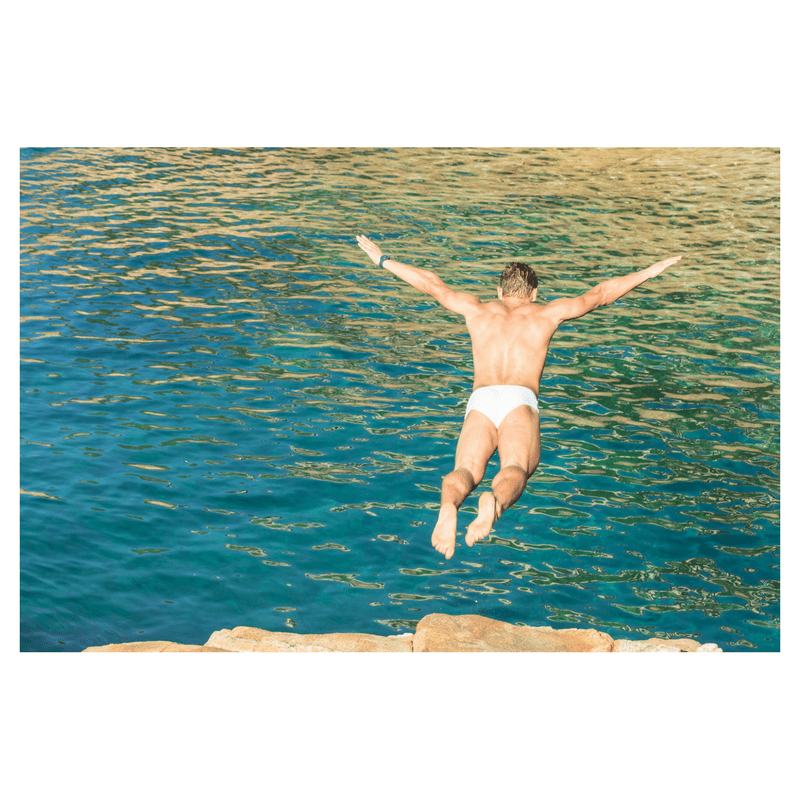
    Me earlier this summer, jumping right in

    What I Accomplished

    I’m happy with my time at Recorded Books and happy to have left on my terms, with no regrets. The company sells mostly to libraries, and I’ve always felt that my late grandmother, a fixture in her local library, would have been proud of me for serving that market.

    The sun has set on my time at Recorded Books

    Of all the projects I tackled while working for the world’s premier audiobook company, these are a few of my favorites:

    • Shepherding large-print books from art acquisition to typesetting to cover creation to proofreading and printing.
    • Editing the guidebooks that accompanied the Modern Scholar series of university lectures.
    • Proofing A Prairie Home Companion Pretty Good Joke Book.
    • Writing jacket copy for hundreds and hundreds of audiobook covers.
    • Crafting catalog copy (the ability to write in small spaces is a useful tool!).
    • Creating text for marketing materials, press releases, and web pages.
    • Writing and editing materials for children’s reading programs.

    Then there was the day I picked up the phone and found film producer Robert Evans (Rosemary’s Baby, The Godfather, Chinatown) on the other end. We were publishing his autobiography (The Kid Stays in the Picture) and he wanted extra copies of the large-print edition.

    So that’s how I found myself having a nice chat with one of Hollywood’s most legendary figures.

    Pretty cool.

    Running a Business v. Freelancing Full-Time

    Notice above that I said “running an editing business” rather than “freelancing full-time,” a thought voiced just this past weekend by respected editor Dick Margulis (of Dick Margulis Creative Services) at Communication Central’s Be a Better Freelancer conference.

    Despite freelancer being in the name of the conference, the thought is that freelancer evokes someone dabbling in the work, perhaps on weekends, while a person running a business is fully invested and wholly dedicated to the craft.

    The terminology sends a message to clients, and, perhaps equally as important, it sends a message to the business owners themselves and sets the tone for how they project themselves to the world.

    And, yes, I left my in-office gig on Wednesday, traveled Thursday, and attended the conference on Friday and Saturday. The conference came at an opportune time, to be sure!

    The conference was everything I hoped it would be: packed with helpful new tricks for marketing yourself, mastering Word, editing proposals, writing contracts, and assembling epubs. I would highly recommend it, and Ruth E. “I can write about anything!” Thaler-Carter did a hell of a job organizing the event.

    Bonus: I also stopped by Niagara Falls before heading home to begin my new life. Spectacular.

    Three Reasons I Started My Own Business

    Lists of reasons to go it on your own (or not) are everywhere, but here are my big three:

    My Work
    I can’t complain about the experience I gained in the office, and I enjoyed working on such a wide variety of projects, but at some point I felt the need to go after my own work. I love to edit, and I love horror fiction, and more than anything I hunger to pore over horror and dark fiction manuscripts. I also enjoy literary fiction, other genres, and even corporate work, but horror has been my jam since I first encountered Stephen King and Clive Barker thirty-some years ago.

    My Schedule
    For personal reasons, I’m going to be splitting time between Maryland and Dallas, not an easy thing when you need to be in the office five days a week. I also crave the thrill of waking up every day and thinking, “What do I need to do?” Balancing the work itself with marketing and accounting and all other aspects of the business can be overwhelming, but what a charge!

    My Life
    Running my own business has always been a dream, and I’m going for it, aiming to accomplish my editing goals, my writing goals, my life goals. At twenty, my son is now older than my sister was when she died. At forty-six, I’m now older than my mother was when she died. So I’m not convinced there’s a safe path through this life. Risks abound, but so do the rewards.

    Three Lessons I’ve Learned from the Experience

    As much information is out there on starting your business as there are reasons for doing so, but these are three lessons I found especially helpful:

    Lay the Groundwork
    I’ve done freelance work with my company for quite a while, so that was a tremendous help when making the jump. But with a full-time gig, not to mention two children, the time for that work was limited. Still, getting comfortable carrying out freelance work greases the skids, as does having at least a few clients who can help pay the bills while you establish yourself.

    Being as involved as possible in the greater editing community is also reassuring. A host of good editors are available to follow on social media, and joining the American Copy Editors Society (ACES) and the Editorial Freelancers Association (EFA), as well as attending ACES and other conventions, helps place you in that community.

    Exit Gracefully
    This was an easy one. People often cite office politics as one of the main reasons for going it on their own, but I genuinely liked and respected my coworkers. Those politics did exist on some level, but I was able to form cherished, lasting relationships. So no burned bridges, and as paths continue to cross, my former office mates and I can continue to help each other in any number of ways.

    Manage Expectations
    We all want to take the world by storm, but this rarely happens overnight. Running my own business is likely to put me in feast-and-famine cycles. I hope there’s always plenty of work to keep my business humming, but if not, there are a million things I can do to market myself, learn new skills, or interact with and help colleagues.

    Parting Thought

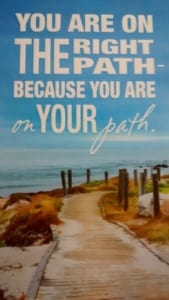
    Before I left the office for the last time, the director of the publications department (a great friend) gave me this card, along with a touching message inside. I think this says it all.

  • Toward (Towards?) a Better Tomorrow

    Big changes lie ahead for me personally and professionally. I’ve made some life-altering decisions, and I feel good about those decisions. There’s uncertainty, sure, but I feel good about that too.

    I’ve lost a lot in life. My mother and sister died when I was 17. Not long thereafter I spent a summer watching my grandmother die of lung cancer. I’ve lost too many friends too soon. In many ways I lost my father, who died just before the new year, long ago.

    But I’ve also been given a lot in life. Two wonderful children. Friends who mean everything to me. A partner who is as beautiful as she is supportive.

    We can’t change anything that’s come before. We make decisions and move forward.

    And we hope we make decisions for the right reasons.

    In Puerto Rico, contemplating the future (7/26/17)

    As an editor, I make any number of decisions every day. These decisions often come down to whether I should change something or let it stand. Compared to major life decisions, some of these decisions might seem minor, but I’m not sure anything ever is, and our underlying approach to decision-making is consistent, no matter the scale.

    Over the past week, I’ve followed discussions about the spelling of toward and of how U.S. editors spend a lot of time changing towards to toward, the thought being that toward is more common in American English.

    Changing towards is almost a reflex.

    I must have first come across this guidance at least two decades ago, and I’ve changed towards to toward more times than I can count.

    There’s support for doing so.

    In Garner’s Modern English Usage, Brian A. Garner writes that toward “has been the predominant and editorially preferred form” in American English since about 1900.

    Fowler’s Dictionary of Modern English Usage puts toward as “at least twice as frequent” in American English.

    The American Heritage Dictionary and Merriam-Webster online list toward as the primary spelling, with towards as the variant.

    The eleventh edition of The Gregg Reference Manual specifies that “both forms are correct, but toward is more common in U.S. usage.”

    I’m as rebellious as the next guy, and I don’t believe you always have to bow to the “authorities,” but I have a great deal of respect for each of the above-mentioned resources, and I’m going to take their guidance into serious consideration. Others do as well, so I know I’m making decisions based on reference points that other editors also hold in high esteem.

    If a client has a preference for towards, that’s the client’s choice, but unless otherwise specified, I’ll make the change. It seems like a clear-cut decision.

    But nothing in life ever is.

    Counterpoint

    As I mentioned at the beginning of the post, this is apparently my Year of the Big Decision (more on the nature of these decisions in a future post). So maybe I’m especially prone to contemplation about choices in every aspect of my life.

    Whatever the case, it bothers me that I’ve always so readily accepted “more common in American English” as a reason to kill towards without giving it more thought.

    Linguist, editor, writer, and book designer Jonathon Owen (of Arrant Pedantry) contended in a piece for the Visual Thesaurus that authors use toward and towards in “roughly equal numbers,” and that it’s the copy editors, rather than the authors, who enforce the distinction.  

    “In a nutshell, towards is seemingly rare in American English because copy editors make it rare,” wrote Owen.

    If this is the case, then that’s a bit of an eye-opener, and it’s certainly something to consider when pondering language change. I suppose it shouldn’t be too surprising that copy editors enforce and thereby drive certain usages, but I always imagined that these decisions ultimately reflected actual word use among authors and that the copyediting, in a sense, followed.

    Maybe that was a tad naive. 

    Copy editors, like authors, should have the needs of the audience in mind, but how does the conception of audience for a copy editor differ from that of the writer? And if copy editors and writers vary in background, interests, and worldview, then who should shoulder the greater weight for shaping language?

    Toward/towards also came up in a recent discussion thread, with one editor maintaining that she left towards whenever possible because she didn’t want to contribute to the corpus supporting this “preference” among American authors.

    Corpora like the Google Ngram Viewer have made this kind of information more and more accessible, and this ready access will undoubtedly also shape language change, as well as our awareness of our own roles in that change.

    Authors, editors, readers: we’re all connected, perhaps affecting each other in ways we didn’t previously understand (or fully understand, at any rate).

    As an editor, this knowledge makes me want to always question the edits I make, to place these edits in context, and to move forward and make better, more informed decisions.

    Why Are We Often So Eager to Follow a “Rule”?

    I always try to embrace the philosophy that in editing there are no rules, only guidelines. But I also have to admit that there’s a part of all of us inclined toward following rules and experiencing the pleasure (misguided or not) of applying them.

    I don’t think editors can separate their approach to work from their approach to life (and their approach toward others). An editor who edits to help his client and ultimately the reader likely takes a much different approach to life than the one whose chief joy is “correcting” the author. As an editor, I hope I’m the former.

    In this Year of the Big Decision, in this year of exploring my decision-making, I’ll suggest a few reasons why we as editors might so readily embrace “rules” such as automatically changing towards to toward.   

    1. Consistency. When there are multiple spellings of a word in a document, it can confuse or slow the reader unnecessarily. Consistency is usually a good thing. Some argue that context changes whether toward or towards sounds better in a particular sentence. While I’m open to this idea, I still believe the distraction of flip-flopping spellings might outweigh any benefits from the sound of the word in each sentence.  
    2. Being right. We want to be right, damn it! People love to point out other people’s “mistakes,” and there might be no place this happens more often than in the realm of language. I hope I resist this urge more often than not. Helping, not correcting, is the nobler approach.
    3. Blindly following. At some level, most of us appreciate guidelines. If we’re provided one, we may grasp on to it and apply it blindly, perhaps even wielding it for years without giving it a second thought. The Year of the Big Decision might be the perfect time to take inventory of all those decisions I make without thinking. Whether or not I change those decisions, I would undoubtedly benefit from considering them in more depth.
    4. Showing our work. We all want to show our clients that we are dedicated, thorough editors, and the low-hanging fruit of instances like towards is one quick, easy way to do that. Authors may even switch back and forth between spellings without being aware of it, and they may thank you for pointing this out, even if they choose something other than what you’ve recommended.
    5. Adhering to author’s/client’s/audience’s preference. In the end, it’s the client’s work. We suggest what we feel is the best choice, but ultimately the client has the final say.

    Toward (and Towards) the Future

    Copy editors have feelings about their work. Feelings and theories and attitudes and passion.

    We learn as much as possible, fight off petty motivations, and make the best decisions we can. Then we reevaluate those decisions and move forward.

    Always forward.

    Life can be cut short at any moment. My sister wanted to be a translator, but she never had the chance. We might even have worked together. I like to think that we would have, but maybe in some ways we still do.

    I think of the years she lost and the years I’ve been granted and I keep her in mind. And when I make decisions, big and small, in editing and in life, I want those decisions to help the reader, to help the author, to help the people I care about, and even to help myself.