Category: Interview

  • Four on the Floor with Stevie Kopas

    Four on the Floor with Stevie Kopas

    In the previous Four on the Floor interview, we were treated to insights from one of horror’s leading new lights, Stephen Kozeniewski. For this interview, we get the perfect follow-up: Kozeniewski’s Slashvivor! coauthor Stevie Kopas.
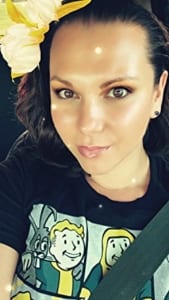
    Bio: Stevie Kopas was born and raised in New Jersey. She is a gamer, a writer, and an apocalypse enthusiast. Stevie will never turn down a good cup of coffee and might even be a bit of a caffeine addict. Stevie is the managing editor of the website Horror Metal Sounds, and she is also a writer/reviewer for the site.

    Stevie’s works include the Breadwinner trilogy (The BreadwinnerHaven, and All Good Things), Never Say Die (collection), Slashvivor! (with Stephen Kozeniewski), and Madness Burns (collection).

    Now here’s the interview!

    James Gallagher: Horror can be beautiful, unsettling, terrifying, universal. If a Cenobite were forcing you to choose one thing you love about the genre, what would it be?

    Stevie Kopas: Look, if a Cenobite were talking to me, I’d probably piss my pants. But I guess if I have to choose just one thing from the horror genre that I’m in love with, it would be the apocalypse. The reminder that humans aren’t invincible and we are more problematic than we think is great. I seem to always gravitate toward apocalyptic fiction of every media type, so that’s definitely my thing.

    JG: Writers are always told to pen tales that only they could write. What do you bring to your writing that’s pure Stevie Kopas?

    SK: I suppose I try to incorporate personality elements of people I know or have interacted with in my life into the characters I create. That makes them feel more real to me. Plus, I can take out my frustrations on anyone I feel like in any way that I want when I’m writing, so it’s definitely therapeutic. I also think I have a tendency to play on the sarcastic side of things. Writing is just more fun that way.

    JG: How have your feelings about editing and the editing process changed since you began writing? 

    SK: I have a huge respect for editors and the editing process. It’s a lot of work for both the writer and the editor (mostly the editor lol) and that respect increases with each thing that I write.

    JG: What’s a recent book that you think everybody should be reading? Are there any movies or series that you can’t stop talking about?

    SK: A recent book everyone needs to read? Well, I’m going to take this opportunity to shamelessly promote myself here! lol My most recent release, Never Say Die: Stories of the Zombie Apocalypse, was super fun to write and I think it’s a fresh and unique collection of zom-poc fiction for lovers of the genre.

    As far as recent movies, I’m totally obsessed with Alex Garland’s Annihilation. It’s a beautiful horror film with stunning visuals and a haunting story, so people need to watch it!


    For more information about Stevie Kopas, look for her on TwitterFacebook, and her website

  • Four on the Floor with Stephen Kozeniewski

    Four on the Floor with Stephen Kozeniewski

    Stephen Kozeniewski’s novel The Hematophages was named by horror legend Brian Keene as the number one book of 2017, so I was thrilled to have Stephen take part in one of our Four on the Floor interviews. Enjoy!

    Bio: Stephen Kozeniewski lives in Pennsylvania, the birthplace of the modern zombie. During his time as a field artillery officer, he served for three years in Oklahoma and one in Iraq, where due to what he assumes was a clerical error, he was awarded the Bronze Star. He is also a classically trained linguist, which sounds more impressive than saying his bachelor’s degree is in German.

    James Gallagher: Who are your writing heroes, and has mentoring played a role in your development as an author?

    SK: Well, barring your Douglas Adamses and your Dostoevskys, Tolkiens, and Vonneguts, my greatest writing hero is Brian Keene. The others being dead, I felt it incumbent upon me to tell him at a signing once. I guess he liked the cut of my jib or something, because I haven’t been able to get rid of him since.

    His mentorship has opened many doors for me, as he’s introduced me to editors and publishers, and given me opportunities to work with people and on projects I never would have broken into alone.

    Networking is absolutely vital in this business, and at the end of the day it’s never really stopped being an apprenticeship industry. Other authors have helped me get to where I am, and I always try to pass along what I can to aspiring authors as well.

    JG: What do you find particularly exciting about the horror genre, and what do you most hope readers take away from your writing?

    SK: After decades of being the rented mule of the redheaded stepchild of literature, it definitely seems like horror is finally having its day in the sun. It was the highest grossing horror film of all time last year—a genuine horror blockbuster.

    Meanwhile, films like Get Out and The Shape of Water are getting critical respect and taking home awards. The Walking Dead is still a major television phenomenon, and shows like Black Mirror and Stranger Things are blowing up Netflix. I think it’s a terribly exciting time for the horror genre and I’m just pleased to be a part of it.

    I hope my readers enjoy themselves. I hate to be pat about it, but that’s the long and short of writing for publication. If you’re not writing with the hopes of bringing your audience some pleasure—whether it be intellectual, vicarious fright, or even just titillation—then there’s no point publishing. Just keep it on your computer.

    JG: In what ways has editing (both editing your own work and having it edited by others) sharpened your writing or contributed to the evolution of your writing process?

    SK: Not in the slightest. No, I’m just kidding. Before my first professional edit I didn’t know what I didn’t know, if that makes sense. Now I feel fairly confident when doing self-edits that I can identify the major flaws in the piece as well as some of my personal tics. It’s really something you can only learn by doing, I think.

    JG: Speaking of your process, do you more often outline your stories or do you start with a more general image or idea and then just let it rip?

    SK: Primarily the latter. I’ve tried numerous methods, such as writing extemporaneously (Braineater Jones, Billy and the Cloneasaurus), plotting heavily (The Ghoul Archipelago), and outlining on a whiteboard (Every Kingdom Divided). But when it comes to the debate between pantsing and plotting, I remain firmly agnostic. I just do whatever feels best for the project.

    ***

    Check out Stephen’s blog or follow him on Twitter and Facebook.

  • Four on the Floor with Kathe Koja

    Four on the Floor with Kathe Koja

    My Four on the Floor interview with Kathe Koja appears below. I first discovered Koja’s writing in the early ’90s, when as a college student I visited a bookstore (remember those?) and picked up the Dell/Abyss paperback edition of her novel The Cipher. (If you’ve seen either this edition or the Abyss edition of her novel Bad Brains, you’ll likely remember the stunning cover art by Marshall Arisman).

    You can probably easily count the number of times a writer has truly opened your eyes, and reading Koja had that effect on me. Thematically, stylistically, this was a horror novel (though Koja’s writing defies genre) unlike any horror novel I’d ever read. 

    If you haven’t experienced her writing, that glittering promise nestled in 2018 is the experience of reading one of her novels for the very first time. Enjoy!

    About: Kathe Koja’s books include Under the Poppy, The Bastards’ Paradise, The Cipher, and Skin; her young adult novels include Buddha Boy, Talk, and Kissing the Bee. Her work has been honored by the ALA, by the ASPCA, and with the Bram Stoker Award. She’s a Detroit native and lives with her husband, artist Rick Lieder. She also runs Loudermilk Productions, creating site-specific immersive events, including performances of Faustus and her own adaptation of Under the Poppy.

    1. A Library Journal reviewer once wrote that your prose reads like “a collaboration between Clive Barker and William S. Burroughs.” Are there any writers (or artists in other mediums) whose works have exerted a particular influence on your writing?

    The great, fierce, subtle Shirley Jackson was a lasting influence on me as a beginning writer—her “Notes for a Young Writer,” in Come Along with Me, is really a fiction master class in less than 20 paragraphs. And the work, her novels and her stories, pretty much defies category: it’s Shirley Jackson’s work, period.

    David Bowie was a tremendous influence too—not just his genius as a musician, but his indelible example of fidelity to his own instincts and interests, his courage in making the work he wanted to make; he transcended categories, too, his music was Bowie music, first and always.

    I’ve written YA novels, horror novels, historical novels, and what stays constant is my voice, so I very much took those examples to heart.

    2. The beautifully styled and richly atmospheric nature of your prose would require a deft editorial hand. What has been your experience with editors?

    Whenever I send a manuscript to any editor, it’s always complete, or as complete as I can possibly make it—I wouldn’t send it otherwise!—so I don’t invite much in the way of collaborative editing, but I’m of course wide open to close and critical reading and comments: the writer and editor have identical goals, to bring the book (or story) to its highest level of completion, so I listen very carefully to all editorial notes.

    My best editorial experience? I was so fortunate to be able to work with Frances Foster at Farrar, Straus & Giroux: she was thorough, she was subtle, and whenever we disagreed, which was seldom, she was always open to honest argument. We worked on seven YA novels together and the process was utterly seamless. It’s no wonder she was a publishing legend.

    3. In what ways do you play with the overall structure of your novels and at what point in your process are you most aware of structure?

    All my fiction begins with a character—for The Cipher it was Nicholas, the failed poet; for Skin it was Tess, the stubborn sculptor; for Talk it was Kit Webster, the thoughtful and watchful young actor; for the Under the Poppy trilogy it was Istvan the puppeteer and his cadre of fantastic mecs—and the story just accretes around that person, through research, and notes, in a very hands-off kind of process, just letting the thing grow and find its shape until it’s time, finally, to start writing.

    I’m not able to work with outlines, I need to discover what’s being made in and by the making itself. So the structure is never imposed, it’s always organic to whatever’s being written—for one example, I had no idea the Poppy trilogy would be a trilogy, but the story just kept growing, kept showing itself to have more and more facets, until it became three books.

    4. Are there any recent books or films that have frightened or inspired or opened your eyes to something new in the world?

    A true life-changing example is Anthony Burgess’s A Dead Man in Deptford, his biographical novel about the sui generis Elizabethan poet and playwright Christopher Marlowe. I read it, fell head over heels for Marlowe, read all his poems and plays, and ended up writing a novel about him called Christopher Wild that’s also turning itself into a performance piece. A creative force of nature, Marlowe, that’s for certain.

    Recent work I’ve loved: Carter Scholz’s short novel Gypsy, the Netflix series Dark, and Perfume Genius’s album No Shape.

    Kathe Koja can be found online on Twitter, on Facebook, and at her website.

    Readers will also want to check out this interview conducted by Jeff VanderMeer for the Weird Fiction Review and this New Yorker piece about her novel Headlong.

  • Four on the Floor with Sophie Playle

    Four on the Floor with Sophie Playle

    A specialist fiction editor who provides editorial services directly to writers, Sophie Playle also trains other editors through her online courses and is the author of the short story collection The Hours of Creeping Night—which I recommend highly!

    I’ve enjoyed following Sophie on Twitter and am also a fan of her newsletter, Liminal Letters (particularly of her approach of writing the letters as if they were letters to a friend). More information about Sophie and about her services can be found at her website, Liminal Pages.

    Now enjoy the interview!

    Do you find that being a writer as well as an editor makes you better at each craft? How so?

    Yes, definitely. Though, for me, being a writer has helped me be a better editor more than being an editor has helped me be a better writer. I believe I’m a more sensitive editor because I know how difficult it is to transfer your vision to the page. But my brain can get stuck in editor mode, which can make it difficult to be creative and free in my own writing.

    Are there any recurring themes you’ve consciously or unconsciously developed in your fiction?

    Hmm, interesting question. I’m not sure. I think I often explore the nature of fear—what can cause it, how it can manifest, what it makes us do. On the surface, I enjoy writing stories about strange beings—monsters, zombies, mythical animals, living trees and all that jazz. So much fun to be had there.

    What is your favorite part of editing?

    I provide two main services: manuscript critiquing (where I provide feedback on the story as a whole) and line/copyediting (where I help improve the artistry of the sentences and fix mechanical issues). I love it when an author hires me for both services and I get to see the improvements they make between drafts. It’s really satisfying to polish a solid story and see the author’s vision take shape.

    Is there an editing strength that you’re particularly proud of?

    My years of literary analysis, studying writing craft theory and being a creative writer myself have made me an excellent line editor, if I do say so myself. I feel I’ve got a pretty good grasp of how much I should intervene and how much I should hold off to preserve the author’s voice and style, but I know exactly the effect a comma placement or word choice will have on a sentence.

  • Four on the Floor with Mitchel Whitington

    Four on the Floor with Mitchel Whitington

    [This interview originally appeared in the November 2017 edition of Ramparts, the monthly newsletter from Castle Walls Editing.]

    Writer and lecturer Mitchel Whitington, born in East Texas, has explored haunted locations all across the United States, and on top of that, Mitchel lives and works in a haunted house (The Grove) in Jefferson, Texas.

    Mitchel’s body of work includes Ghosts of East TexasA Ghost in My SuitcaseHaunted Texas Highways, and Diamonds of Death.

    This Halloween, on an appropriately stormy night, I had the pleasure of meeting Mitchel and touring his haunted (and beautiful) home. I hope you enjoy this interview as much as I enjoyed meeting the man himself.

    Said to be one of the most haunted locations in Texas, your home (The Grove) would seem to be the ultimate residence for a writer. What has it been like writing in such a richly historic atmosphere?

    The stories of the former owners of The Grove are very inspiring to me. It was built by a businessman who was in Jefferson when the city was still being carved out of the wilderness. A freed slave bought the house in 1885, and he’d gone from being someone else’s property to one of the most respected businessmen in town. 

    Each of the owners contributed to the history of The Grove, and I realize that without really being aware of it, I’m writing my own life’s story into the annals of the house. I’ve got to say that all that is extremely inspiring — I’m actually living a part of this house’s history. 

    When I was working on my writing many years ago, I often wrote at the food court of a local mall in the Dallas area. There were dozens of conversations going on around me, people were smoking (it was a different world back then), the Muzak of the mall was piped over speakers, and eventually I still managed to produce a sellable book. 

    Life is much better now. I write in a quiet, historic home heavily steeped in history, with a number of resident spirits looking over my shoulder … how could it not be inspiring?

    What part of the writing process do you enjoy the most (research, writing, rewriting, etc.)?

    My favorite part of the process is the research. I enjoy writing — a lot — but when I’m doing research I feel like I’m trying to solve a puzzle, looking for leads and clues.

    I enjoy it so much that I sometimes wonder if I would have made a good police detective, putting together all of the pieces to solve a crime. Being a writer is a lot safer, though, so I’ll just keep moving along the path that I’m on.

    You’ve dedicated a good part of your life to preserving your beautiful home so that it will endure for future generations. Is this desire to preserve the past part of what drives you as a writer as well?

    Actually, I don’t think so. My drive to preserve The Grove is because I feel a huge responsibility toward it as the current owner.

    We recently rescued a basset hound who had been dumped out on Highway 49 near Jefferson; the dog had a terrible case of heartworms, had never been spayed, and had a number of other health problems. 

    When Bella became part of our family, we took care of all her health issues and have proceeded to spoil her — the baby that once no one loved has become one of the most loved bassets in the world. 

    I kind of feel the same about The Grove. It sat empty for a number of years, waiting for someone to love it, and as its current caretakers, I feel a responsibility to nurture the house. 

    I had a passion for writing long before I discovered The Grove, however, and I think that if I were homeless and living under a bridge I’d be collecting paper scraps and pieces of pencils so that I could write. My drive to write is as strong as my feelings for The Grove, but they’re separate things. It’s just that living in the house provides a wonderful and inspiring backdrop.

    Speaking of living and working in a haunted house, what scares you? Are there any authors whose works you find particularly terrifying?

    After 15 years at The Grove, supernatural occurrences don’t scare me at all. We learned early on that there’s nothing bad or evil here, but instead we feel really blessed that we get to have a peek into the “other side” on a fairly regular basis. 

    What scares me more than anything else are humans. There are people in the world who do terrible things, and they are the ones who wander my nightmares. 

    As to authors, well, I love the master: Stephen King. But while his supernatural stories like The Shining and Christine greatly entertain me, it was Misery that made me lose sleep!

  • Four on the Floor with Writer/Producer/Director Al Gough

    Four on the Floor with Writer/Producer/Director Al Gough

    Alfred Gough III (@TheRealAlGough) is half of the prolific Alfred Gough-Miles Millar writing/producing team. Having achieved success with properties as diverse as Spider-Man 2Lethal Weapon 4SmallvilleInto the Badlands, and The Shannara Chronicles, Al has ranged far from the quiet streets of his hometown of Leonardtown, Maryland.

    I grew up in that same town and was lucky enough to spend a good portion of my childhood running elaborate Star Wars battles with Al, whose creative savvy was already coming to the fore.

    A little known fact about both our lives is that Al gave me my first job, passing on his gig selling peaches outside the Ben Franklin five-and-dime store.

    Al, you’ve come a hell of a long way! Now on to the interview:
     

    You wear a lot of hats (creator/showrunner/executive producer/writer). Which is your favorite?

    That’s a great question! When my partner and I are writing movies, we miss television, and vice versa when we are knee-deep in a new season. I would say creator and writer are my favorites because that’s the time when the idea and the story and the script are all yours. We don’t have to worry about budgets and network notes and production issues. It’s the time when the potential seems limitless.

    What is your writing routine and what are the benefits and challenges of having a writing partner?

    Miles Millar (my partner) and I have been writing together for 23 years. We’ve always treated it like a job—meaning we would write from 9 a.m. to 7 p.m. every day. And when we started out, we would write seven days a week. 

    Now, as the years have gone by and we have families, we’ve amended that to five days a week. The last few years, with both The Shannara Chronicles and Into the Badlands shooting on opposite sides of the world (Auckland and Dublin, respectively), with our writers’ rooms in LA and post-production in Toronto, we have evolved our process. Thank God for the internet, Skype and email! 

    I have only seen benefits in writing with a partner. First and foremost, we are friends who have always seen eye-to-eye creatively. It’s also nice to have someone who’s got your back in this crazy business!

    How scary is it to jump into an already established franchise or series?

    The challenges of tackling an established character or franchise are twofold—bringing a fresh point of view to the material and dealing with the fact that you can’t satisfy every fan of the source material (whether it is a comic book character or novel series). 

    The important thing to remember is that you need to honor the spirit of the source material while bringing something new to the table. We certainly found this on Smallville, where we had fans of Superman who thought we’d gone too far. But now, 17 years later, the show is considered canon. I guess one generation’s heresy is another’s gospel!

    Authors put faith in me to help cultivate their darlings. How protective are you of your work? At what point do you cede ownership of the work to other creative parties and to the audience?

    The thing about film and television that you learn early—you can’t be precious. They are both team sports. Both require a large amount of people and a large financial investment to get off the ground. 

    Again, the trick is being able to take good, constructive criticism while still sticking to your creative vision for the show.

    Also, once a movie or TV show is out in the world, it doesn’t belong to you anymore. It belongs to the people who watch it and love it and put their own emotional stamp on it. They are your fans. They are the ones sitting around the proverbial campfire listening to your story and making it their own.  

    That is actually a deeply satisfying part of doing this—when I hear from people that a show or movie we did helped get them through a tough time or was one of their favorites from childhood.

    That experience is what makes it all worthwhile.

  • Four on the Floor with Author J. J. White

    Four on the Floor with Author J. J. White

    [An abbreviated version of this interview ran in my September newsletter.]

    Author J . J. White has been kind enough to credit my editing with helping him land an agent and traditional publisher. Read on to learn more about the author and to see how he responded to the Four on the Floor interview.

    About J. J. White: Award-winning author J. J. White has written 11 novels, including A Promise to Lena, Nisei, and Prodigious Savant, as well as more than 400 short stories. He lives in Merritt Island, Florida, with his wife, Pamela.

    What was it like to move to a traditional publisher? Did this change how you viewed yourself as a writer?


    I should explain how to get traditionally published before I write about what the move was like. In good fiction, the narrative follows a story arc. First an event must change the protagonist’s life. Then there’s escalating trouble to keep him or her from their goal, and, finally, you have a satisfactory resolution for the reader.

    For an author to become traditionally published, you have to go through your own real-life story arc. First, you must have an event that starts you writing. In my case, it was a back injury that laid me up for two weeks.

    Then, after you have been writing for a while, you must endure the escalating conflict that tries to keep you from reaching your publishing goal. This includes a mountain of rejection from agents, acquisition editors, publishers, and reviewers.

    Finally, if all the stars align, a traditional publisher agrees to bring you aboard.
    This separates you from the millions of self-published authors and allows your book to be placed in bookstores. You also have less trouble getting media interviews, and the local newspapers and libraries take you more seriously than they do self-published authors.

    The transition from self-published to traditional is a bit disconcerting. Publishers have certain methods and traditions new authors stumble over. I had no idea what a galley was and didn’t understand the relationships between publishers and the big-chain bookstores, but eventually I learned, though it took three books to do so.

    In most cases, the traditional publisher will defray publication costs such as promotion, travel, editing, and advertising. Although they will edit your book, it’s wise to have a polished manuscript to give to your agent.

    “I was fortunate to have three manuscripts edited by Castle Walls Editing, which helped me acquire both an agent and publisher.”

    Being traditionally published changes you personally and professionally. It has given me the confidence to submit both long and short fiction to the publishing world.

    Without that confidence, I would not have continued writing novels and would not have had my short fiction published in the Saturday Evening Post anthology, Sherlock Holmes Mystery Magazine and the St. Martin’ Press novel A Divided Spy. Like my protagonist in my books, I feel I have reached a major portion of my goals.

    What is your day-to-day writing routine?


    Writing is a lifetime commitment. Almost every bestselling author will tell you the six most important things to do to be a successful writer are to read, read, read and write, write, write.

    I read every day, whether it’s a book or audiobook. If it’s an audiobook, I try to imagine the words floating around the car in their literary order to see how the author meant to write them. Of course, this distracts me from driving, though I’ve been lucky enough not to have an accident while concentrating on Hemingway’s prose.

    Writing doesn’t take up much of my day. I can live a normal life of working, golfing, surfing, reading, and cooking dinner, and yet still find time to write.

    Normally, after I watch Jeopardy with my wife, I’ll spend two hours writing in my office. I write in longhand, so after I finish a chapter, I hand it over to Pam, who types it up, edits the ridiculous and the unbelievable, and then emails it back to me in my office, which is only two rooms away.

    Usually, I’ll do the first edit on it that night, and then on Tuesdays, when I meet with the other three members of my writing group, we’ll go over it in detail.

    “Two hours of writing a night doesn’t seem like it would add up to much, but after ten years, it has equated to 11 novels and 400 short stories.”

    Which other writers working today do you admire most?


    Writing beautifully is important, but if the author doesn’t give me a good story, I’ll put it down. I tend to drift toward genre writers like Stephen King, Dennis Lehane, and Michael Connelly.

    For a literary read, I enjoy Cormac McCarthy and Joseph O’Connor.

    My favorites for historical fiction are Steven Pressfield, Edward Rutherfurd, and Bernard Cornwell.

    I also enjoy the fiction of Laura Lippman and Paula Hawkins, and I try to read a variety of authors to improve my own writing.

    What do you find most valuable about having someone else edit your work?


    When I write, I imagine my characters on a stage in front of me acting out their parts. I dutifully jot down what they say and do. Unfortunately, this gets me so close to them I can’t see their flaws. They become my darlings and good authors will tell you, you must kill your darlings.

    “An independent editor can stand back and see the entire picture and kill those darlings without sentimentality, or at least suggest that I kill them.”

    They can also see my obvious punctuation, grammar, and content mistakes. The reason I miss them is because my attention as an author is on the narrative and the style instead of the construction.

    It took me time to figure this out and to accept suggestions about removing anything that doesn’t belong in the story. A good editor equates to a good book and I’m smart enough to know I need a good editor.

    More information about J. J. White can be found at his website.