Category: Featured Tips

  • Editing with Word’s Read Aloud Feature

    Editing with Word’s Read Aloud Feature

    After a publisher client suggested that all its editors try Word’s Read Aloud feature to help eliminate errors such as missing or repeated words, I decided to give it a shot.

    I hadn’t used the feature before and suspected I’d react badly to another voice in my head while editing. But for a last look at a document in the late stages of the editing process, I’m liking it more and more.

    (I touched briefly on this feature when writing about the benefits of reading aloud here.)

    What Is Read Aloud?

    Read Aloud is Microsoft Word’s text-to-speech function in Word 2016 (Office 365). You can access it on the Review ribbon or add it to the Quick Access Toolbar.

    When you select this function, the program reads the text to you, starting where the cursor is positioned. Each word is then highlighted as it’s read.

    A little control panel will also appear for jumping back a paragraph, jumping forward a paragraph, and playing/pausing the function.

    A settings button lets you adjust the speed of the reading, from painfully slow to lightning fast. You can select from three options for readers: Microsoft David, Microsoft Zira, and Microsoft Mark.

    I’m partial to Microsoft Zira.

    I set a pace at a little over halfway across the speed bar. Without halting the function for edits, this seemed to read through approximately thirty pages of a standard format (Times New Roman, 12 pt., double spaced) romance novel in an hour.

    How’s the Quality?

    For the most part, Real Aloud wasn’t glitchy. At one point it switched to Microsoft David for no apparent reason (disturbing!), and at another point the synching went off between the reading and the highlighting of the words. For each case, I paused the reading and hit play again, which fixed the problem.

    Zira’s voice would also periodically take on a raspy quality for the length of a paragraph, as though the program were encountering difficulty processing what was being read.

    I suppose this could have something to do with connectivity or my processing speed or an underlying code for that stretch of text, but this occurred only on certain paragraphs, and each time the reading went back to a fully voiced Zira at the start of the next paragraph.

    I was happy with the pace I’d set for the reading, but the program did pause (to my mind) overly long on paragraph marks, while the space between sentences seemed just right.

    Zira had little trouble with most words, though she occasionally read Olivier as Oliver, and for some reason she read sun as Sunday in a number of places (though not in all instances).

    The function didn’t pause at em dashes or ellipses, reading straight through in a way that a reader never would, and it read abs and expressions such as mmm as individual letters: a-b-s and m-m-m, respectively.

    Zira also had comical stumbles over Airbnb (though that’s a tough one) and Liberace (for which she read the last syllable as though it were the playing card).

    But the overall quality of the reading was high.

    My Process

    I usually have my second monitor (the one with the manuscript) turned portrait with the page at 150 percent.

    For the Read Aloud pass, I turned my monitor landscape and blew the manuscript up to 200 percent. This might provide “seeing the text anew” benefits both from the larger font and from hearing the text.

    As I listened, I “followed the bouncing ball” as Zira read and the words were highlighted. If I were reading as an author and not an editor, I could see a benefit in freeing yourself from the page entirely, but I was too afraid of missing homonyms or weird punctuation.

    Benefits

    Doing this kind of reading seemed to require less mental effort (Zira doing the heavy lifting of the read), and this let me move my eye around the text a bit while Zira read. It also may have enabled me to stay fresh for a longer period.

    The hope would be that lessening the mental energy of reading during the final pass would result in picking up errors that might otherwise have been missed.

    While it was a different editing experience, the internal error-detection alarm that went off when encountering an error was much the same. So the same editorial sensors seem to be at work, and I can easily believe that doing this kind of reading would help prevent my mind from filling in words that I “know” are there or that I expect to be there, but which really aren’t.

    An error that seems particularly illustrative is that of a man “siting at the counter,” which of course should have been “sitting at the counter.” The long i in siting jumped out in a way it might not have if reading without the audio.

    Without the audio, the context might cause you to read it as “sitting” and not catch the missing t until just after you’ve read the word, whereupon you would then back up and say, “Oh, they actually have ‘siting’ there.” Or the context might cause you to read it as “sitting” and not catch the error at all, which isn’t acceptable.

    Another benefit is that Read Aloud moves through the text on its own, so you don’t have to scroll or arrow through the document.

    At least for me, I found that doing a read that was markedly different from previous reads on the text renewed my enthusiasm for the read-through. Maybe it’s because it’s still a new process, but I am enjoying using the feature, and those positive vibes can’t hurt.

    I’d thereby list these as the benefits of using Read Aloud:

    (1) Less mental drain because you’re sharing the reading load

    (2) Better identification of missing and repeated words because your mind can’t automatically fill these in or gloss over them

    (3) Better identification of errors because of pronunciation clues

    (4) No scrolling

    (5) Renewed enthusiasm for additional read-throughs

    Drawbacks

    Initial edits on a document require too much hands-on-keyboard time to make it practical for early passes. Constantly pausing the reading to make edits would also grow irritating, so a last look with few expected errors is the only time I can see using the function.

    The function also doesn’t seem to work when tracked changes are showing, as it reads deletions along with inserted text.

    If you’re tracking changes, you’ll need to show “No Markup” to use the feature effectively.

    A final note is that, while the quality of the reading is high, a word mispronounced consistently through a text could set an editor’s teeth on edge.

    The following are therefore what I see as drawbacks:

    (1) Only practical for final passes

    (2) Does not play well with tracked changes

    (3) May contain irritating pronunciation errors

    Conclusion

    While I would not use the feature on initial passes on a document, I’m enjoying Read Aloud and will continue to experiment with it for final passes.

    Have you played with this feature?
  • Sign on the Dotted Line: The Editing Contract

    Sign on the Dotted Line: The Editing Contract

    Signing a contract can be intimidating. What am I getting into here? What might be lurking in the fine print?

    When it comes to the author–editor relationship, contracts can reassure authors

    • that they’ve chosen the right editor
    • that the editor will provide the services they want
    • that the pay and delivery schedule will meet their expectations


    The Right Editor for You

    Authors find editors in all kinds of ways, and if you poke around social media for a minute or two, you’ll probably come across authors asking where they can go to find a good editor.

    Editors may be referred by other authors (editors love this).

    Authors may find editors blind on the internet or through resources such as the Editorial Freelancers Association (of which I’m a member).

    Authors may even turn to friends who love to read and regularly point out grammar miscues on Facebook (but please don’t point out grammar miscues on Facebook).

    Wherever an author finds an editor, the contract is a sign of the editor’s professionalism. The contract says the following to the author:

    • “I am a professional, I take my job seriously, and I will treat you in a professional manner.”
    • “I want to be absolutely clear on the work that you want me to do, and I want you to be absolutely clear on the work I’m doing.”
    • “I want to prevent any misunderstandings on the cost of the work or when you can expect the work to be delivered.”

    Whether your editor is an old friend or a complete stranger, contracts set the business transaction off on the right foot and preserve the relationship between the parties by preventing misunderstandings.

    With something as important as a manuscript an author has toiled over, better safe than sorry is a good approach for everyone involved.

    The Services You Want

    An author’s view of the kind of editing that should be done on a manuscript can be very different from the editor’s.

    Authors and editors may even have different definitions for what is entailed by the different levels of editing: developmental editing, line editing, copyediting, and proofreading. (No surprise here, because editors often have different definitions themselves.)

    Authors might not even be aware there are different levels of editing, so prework discussions leading to the contract can be extremely informative.

    For example, the contract can prevent an author from thinking the copyeditor will perform Big Picture structural work on a manuscript when the copyeditor thinks he will be editing for grammar, spelling, punctuation, style, and consistency only.

    No Surprises

    Unspoken expectations lead to trouble, especially when it comes to money and the nature of the work involved.

    A contract may specify the type of file that will be supplied to the editor (an editor may be expecting a Word document when the author is planning to send a PDF for markup or share a Google document).

    A contract might say that the work will be billed based on the supplied word count and not the word count of the edited document (often much lower), or a contract may spell out a project fee and a pay schedule.

    Either way, addressing payment expectations (including the deposit and methods of payment) avoids one of the greatest sources of contention.

    In addition, an author might expect that the editor’s fee includes a full review of the edited manuscript after the author has addressed comments and accepted and rejected changes, whereas the editor might see this as a separate charge.

    What happens when the author or editor has to pull out of a project, for whatever reason? This can be covered in the contract too.

    Another thing to keep in mind is that if authors see something they don’t like in the contract, they are free to raise the issue with the editor and are encouraged to do so.

    After all, editors and authors are working toward a common goal: to make the author’s manuscript as good as it can be.

    Contracts help achieve this goal and reassure both parties that their expectations are being met.

    (For more on contracts and setting fees, The Paper It’s Written On by Karin Cather and Dick Margulis and The Science, Art and Voodoo of Freelance Pricing and Getting Paid by Jake Poinier, aka Dr. Freelance, are excellent resources.)

    About James Gallagher:

    James Gallagher is a copyeditor and the owner of Castle Walls Editing LLC. To view a sample contract or to find out how James can help with your writing projects, email James at James@castlewallsediting.com.


    References:

    Cather, Karin, and Dick Margulis. The Paper It’s Written On: Defining Your Relationship with an Editing Client. New Haven, CT: Andslash Books, 2018.

    Poinier, Jake. The Science, Art and Voodoo of Freelance Pricing and Getting Paid. Phoenix, AZ: More Cowbell Books, 2013.

  • What Are Zombie Rules in Grammar?

    What Are Zombie Rules in Grammar?

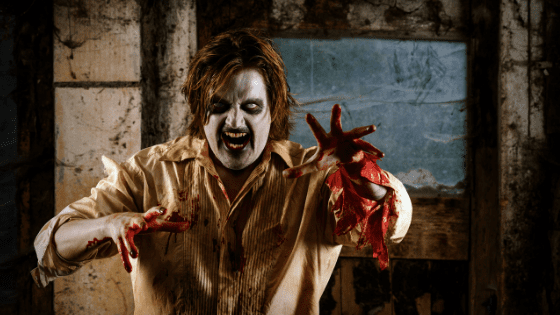
    Zombies are fueled by mindless hunger, and this mindlessness is part of what makes them scary.

    If you have a choice between reasoning with a zombie and bashing one in the head with a shovel, the latter approach is more likely to help you avoid becoming one of the undead yourself.

    Zombie rules in grammar (“rules” that have no grammatical basis but nonetheless refuse to die) are frightening because they’re driven by much the same brand of mindlessness.

    You can probably reel off your favorite zombie rules the same way you’d reel off your favorite zombie flicks. “Never end a sentence with a preposition,” “Never start a sentence with a conjunction,” and “Never split infinitives” are the Night of the Living Dead, 28 Days Later, and Shaun of the Dead of the grammar world.

    More obscure zombie rules stalk the landscape as well: the number of items between can apply to and the use of double negatives (think Dead Alive and Cemetery Man).

    People faced with zombie rules generally arm themselves with reasonable arguments that often involve Latin, John Dryden, and Winston Churchill quotes (“This is the type of errant pedantry up with which I will not put”).

    But zombie rules wouldn’t be zombie rules if they were easy to kill (though people won’t stop trying, and there are seemingly billions of blog posts devoted to grammar rules that aren’t really rules).

    Why do people hold on to zombie rules?

    (1) They were learned as absolute truths during one’s formative years and have never been questioned. If pressed, most will cop to their certainty about a grammar “rule” as coming from an elementary school teacher or some other distant authority.

    So changing one’s stance on ending a sentence with a preposition might involve a slight shifting of a long-held world view. Doing so might cause a little tremor in your foundations. But evaluating and resetting your world view is a good thing, and we should all reevaluate our beliefs on a regular basis.

    (2) It’s hard to admit you were wrong. Changing your view on rules such as these can feel like you’re admitting you’ve been wrong for years, possibly decades. But this is a sting that can be lessened by the realization that most “rules” aren’t rules, and that what we’re really talking about are styles and conventions.

    Audience and levels of formality and register often determine the guidelines you’ll follow. Language conventions are ever changing, and embracing this can be quite freeing (while there was no shortage of debate sparked by the major style guides’ lowercasing of internet, a good number of copyeditors undoubtedly felt a rebellious thrill when they first started taking down that I).

    (3) The “rule” makes you feel superior. People love to correct other people’s grammar. Check any comments thread and you’ll quickly find someone attempting to invalidate someone else’s argument by pointing out a misstep in grammar, spelling, or punctuation.

    People’s use of grammar is also tied up in their self-perception and it’s used to broadcast their level of education. It’s also used as a barricade to prevent others from accessing their realm.

    But people can love grammar and not be an ass about it. Inflexibility and a rigid adherence to “rules” across all situations are probably your best ways of advertising how little you actually know about language. Let’s try not to use our knowledge to hurt or exclude others. Let’s try to be kind, share knowledge generously, and open ourselves to the idea that we have much to learn.

    I suppose I could say more, but I’m off to watch Return of the Living Dead III.

    ABOUT JAMES GALLAGHER

    I’m a copyeditor and the owner of Castle Walls Editing. If you have a manuscript and need a copyeditor, contact me through this site or email me at James@castlewallsediting.com.

  • Three Quick Tips for Grammar Quizzes

    Three Quick Tips for Grammar Quizzes

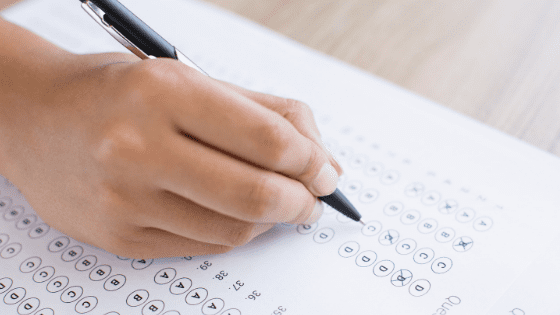
    Online grammar quizzes pop up all over the place, and I often find them hard to resist.

    I’m a copyeditor, so why bother with quizzes I should breeze through? Isn’t it like shooting fish in a barrel?

    Yes, but it always feels good to ace something, and people working outside traditional office settings often need all the pick-me-ups they can get.

    Indie editors work largely in isolation. Positive feedback from our authors is one of the best parts of the job, but we may or may not get any feedback at all, even when the author is ecstatic.

    And we certainly don’t have the daily face-to-face interactions you find in an office, so even getting a little positive feedback from a quick electronic quiz can provide a mental boost.

    I won’t go into any irritation over grammar quizzes that are more concerned with spelling or less strictly grammatical matters. Or how they often promote zombie rules. Or how they are sometimes poorly edited. Or how sometimes the “correct” answer is, at the very least, debatable.

    Oh, look at that. I guess I just made those points in a decidedly cowardly manner. To be fair, for the first point, most see the grammar umbrella as covering a wide area. And there’s nothing wrong with that.

    The following are three quick tips for nailing high marks on grammar quizzes. (For a giant measure of extra credit, you can also grab a copy of Bryan A. Garner’s The Chicago Guide to Grammar, Usage, and Punctuation, an excellent resource.)

    1. Read carefully.

    People read differently online and are much more likely to scan for information. But this isn’t a good practice for multiple-choice quizzes, and it’s easy to start to read the question, think you know what’s being asked, and move on to the answers.

    More often than not, the reason you made an incorrect choice is because you misread the question and selected the first answer that matched the question you thought was being asked. Questions also contain words like “does not” or “never” or “always,” and these will change the answer you select.

    1. Get that nonsense outta here!

    With online quizzes, the process of elimination makes your task a whole lot easier. You can normally throw out an answer or two that you’re absolutely certain isn’t correct. So on quizzes with four possible answers, you can easily increase your odds of getting the answer correct from 25 percent to 50 percent.

    As mentioned above, read all the answers carefully. You might think the answer has to do with comma placement and find yourself going back and forth between two possible choices — until you see that one of those answers has a “their” that should be “there.” Problem solved.

    1. Don’t overthink it.

    Unless you’ve failed to read the entire question carefully and are thus either operating under a false assumption or not seeing something obvious, going with your gut is usually a good thing. Most of the time your first thought is the correct one.

    Don’t let the quiz masters get in your head. Madness lies down the road of “They are probably thinking I’ll think this, and so I should think this, but they might anticipate my thinking that as well.” Don’t succumb to it. Choose the best answer and let the chips fall where they may.

    ABOUT JAMES GALLAGHER

    Copy editor and writer James Gallagher is the owner of Castle Walls Editing. To hire James, email him at James@castlewallsediting.com.  

  • I Like Your Style! A Quick Look at the Major Style Guides

    I Like Your Style! A Quick Look at the Major Style Guides

    Style guides promote consistency for clear and accurate communication. A consistent approach to style shows professionalism and builds trust with the reader.

    Consistency also helps readers understand what is being communicated without having to question whether inconsistencies were intentional or a case of sloppiness or inattention. If two instances of the same term are styled differently, the reader might wonder if she’s being presented with two different meanings or if she’s missing something.

    Fiction authors don’t want these questions to break the spell of the reading experience, as can also happen with typos or poor construction. 

    In academics, writing represents a kind of conversation that promotes knowledge and the spread of ideas. Standard citations, for example, help this conversation by creating a common language that can be easily understood and used.

    But styles are almost always better thought of as “guidelines” rather than “rules,” and writers might break style for any number of reasons, not least to help the reader when a slavish adherence to style might do the reader a disservice.

    The following are major styles you may encounter (there are, of course, many more, and links to free online style guides appear at the end of the post):

    • AP
    • Chicago
    • Turabian
    • MLA
    • APA
    • AMA
    • CSE


    The Associated Press Stylebook and Briefing on Media Law

    Current edition: printed yearly and updated regularly online

    Audience: newspapers, magazines, and public relations offices 

    Website: www.apstylebook.com

    The Associated Press is an independent, not-for-profit news cooperative with teams in over 100 countries. AP style helps ensure consistency across worldwide distribution. Much of AP style is based on the premiums of space, so, for example, AP does not use the Oxford comma (except for clarity) or an s after the apostrophe when forming the possessive of singular nouns ending in s.

    The 2017 edition of The Associated Press Stylebook and Briefing on Media Law contains new entries on fact checks and fake news, guidance on the use of cyberattack, a new entry on gender, a new entry on addictions, and revised drug-related entries.

    You may buy a print copy (updated yearly) or subscribe to the AP Stylebook Online.

    The AP Stylebook Online gives you choices for

    • One or multiple users
    • Subscription to Webster’s New World College Dictionary
    • Twenty percent savings when signing up for automatic renewal


    The Chicago Manual of Style: The Essential Guide for Writers, Editors, and Publishers

    Current edition: seventeenth (2017)

    Audience: writers, editors, proofreaders, indexers, copywriters, designers, and publishers

    Website: www.chicagomanualofstyle.org

    For more than 100 years,  the Chicago Manual has been the go-to reference for style, usage, and grammar.

    While AP style meets the needs of a daily, 24-hour news cycle, the Chicago Manual addresses the longer planning cycles of the publishing industry. Editions may therefore be separated by six years or more.

    Among the changes in the seventeenth edition are the lowercasing of internet and the dropping of the hyphen from email.

    The manual is divided into three main parts:

    • Part I: The Publishing Process
    • Part II: Style and Usage (including a chapter on grammar by Bryan A. Garner)
    • Part III: Source Citations and Indexes


    A Manual for Writers of Research Papers, Theses, and Dissertations: Chicago Style for Students & Researchers (Kate L. Turabian)

    Current edition: ninth (2018)

    Audience: students and researchers

    Website: www.chicagomanualofstyle.org/turabian

    Since Kate L. Turabian assembled guidelines for students at the University of Chicago in 1937, Turabian style has been a reference standard.

    The manual’s ninth edition covers the research and writing process, from planning to production; all aspects of source citation, including both notes-bibliography style and author-date style; and style matters, offering guidance on spelling, punctuation, and numbers.

    The notes-bibliography style is frequently used in the humanities and social sciences, while the notes-bibliography style is more often used in the natural and physical sciences.

    The eighth edition diverged in small ways from the Chicago Manual, but the ninth edition aligns completely with the Chicago Manual.

    Turabian/Chicago style paper-formatting tip sheets can be found here.


    Modern Language Association (MLA)

    Current edition: eighth (2016)

    Audience: scholars, journal publishers, and academic and commercial presses

    Website: www.mla.org/MLA-Style

    As expressed in the preface by Kathleen Fitzpatrick, the purpose of this edition is to offer a “truly flexible documentation practice that will continue to serve writers well in a changing environment.”

    The handbook is divided into two main parts. The first part addresses the principles of MLA style and covers the reasons for documenting sources, plagiarism, and the Think, Select, Organize model.

    The second part addresses the details of MLA style, including treatments for names, titles, quotations, numbers, works cited, and in-text citations.


    Publication Manual of the American Psychological Association (APA)

    Current edition: sixth (2009)

    Audience: scholars and others writing in the the social and behavioral sciences

    Website: www.apastyle.org

    Maintaining styles for scientific communications, the Publications Manual of the American Psychological Association is favored by writers, editors, students, and educators in the social and behavioral sciences.

    The contents include the following:

    • Writing for the Behavioral and Social Sciences
    • Manuscript Structure and Content
    • Writing Clearly and Concisely
    • The Mechanics of Style
    • Displaying Results
    • Crediting Sources
    • Reference Examples
    • The Publication Process

    APA Style employs the author-date system for citations.


    AMA Manual of Style: A Guide for Authors and Editors

    Current edition: tenth (2007)

    Audience: authors, researchers, institutions, medical editors, publishers, and members of the news media who cover scientific research

    Website: http://www.amamanualofstyle.com/

    The AMA Manual of Style is geared at the medical and scientific publishing community: authors, researchers, institutions, medical editors, publishers, and members of the news media who cover scientific research.

    The tenth edition features expanded electronic guidelines, increased attention on ethical and legal issues, and guidelines on authorship, conflicts of interest, scientific misconduct, intellectual property, and individuals’ rights in scientific research and publication. The manual examines research ethics and editorial independence and features new material on indexing and searching as well as medical nomenclature.

    The manual is also available online.


    Scientific Style and Format: The CSE Manual for Authors, Editors, and Publishers

    Current edition: eighth (2014)

    Audience: authors, editors, publishers, students, and translators in science and related fields

    Website: www.councilscienceeditors.org/publications/scientific-style-and-format/

    Scientific Style and Format is aimed at authors, editors, publishers, students, and translators in science and related fields (physics, chemistry, genetics, biological sciences, and astronomy). The eighth edition was updated for electronic and online environments and for changes in international standards and policies.

    The manual contains style instructions for numbers, units, mathematical expressions, and statistics; information on managing tables, figures, and indexes; guidance on plagiarism and other aspects of academic integrity; and information on copyright law and Creative Commons.

    With coverage ranging from style conventions to publishing procedures to citation practices, Scientific Style and Format offers clear guidance on both print and electronic publications.

    Scientific Style and Format is available in print and online. You can visit scientificstyleandformat.org for a free trial.

    Free Online Style Guides

  • 5 Tips for Winning NaNoWriMo

    5 Tips for Winning NaNoWriMo

    National Novel Writing Month (NaNoWriMo) is almost upon us. I participated for the first time three years ago and now have three successful campaigns under my belt (meaning I’ve hit the 50,000-word mark each time).

    Brag much, James? I know, I know, but if I’m going to offer tips for the event I should at least let you know that I’ve done it successfully a number of times, right?

    Every writer is going to approach NaNoWriMo differently (hence all the talk about planners and pantsers), but here are five tips I think can help anyone:

    1. Get off to a fast start.
      I can’t emphasize enough the importance of coming strong out of the gate. During November, you need to write 1,667 words per day to hit the 50,000-word mark. Your NaNoWriMo stats page provides a number of different ways to track your progress, but perhaps none is more gut-clenching than the one that displays your words per day to finish.

      It’s this simple: Write more than 1,667 words per day and that number goes down. Write less and the number climbs. Fatigue and pressure mount as the month progresses. Seeing a lower words-per-day-to-finish count assures you that you can actually do it. Seeing the number rise might just have you fleeing the scene.
    2. Remember that anything that isn’t writing, isn’t writing.
      Twitter, Facebook and the NaNoWriMo forums are all great places to meet fellow NaNoWriMo participants, and doing so is a valuable part of the experience, but every second you’re not pounding out words is a second when your word count is languishing.

      It’s oh so tempting to commiserate with other writers about the challenge consuming you or to talk strategy or to discuss your work in progress, but, for my money, your best advice is this: Write now, talk later.
    3. Treat yourself.
      During this frantic month, you’ll have to balance writing with jobs, family, friends and all the other aspects of your life. You’ll feel the rush of knocking out words at a lightning pace, but you’ll also have moments when you’re not sure where your story is heading, and you’ll inevitably also experience the soul-shattering fear that you don’t have another word left in you.

      In the face of all this, every little incentive helps. Treat yourself to the little halo you get for donating to NaNoWriMo. It’s a little thing, but the halo and other accomplishment badges really do give you a boost.
    4. Make a cover.
      Participants who upload a cover for their novel in progress are much more likely to hit the 50,000-word mark. Doing so won’t magically add to your word count, and someone who creates (or has someone else create) a cover is probably more serious about the endeavor in the first place, but you can’t argue with the connection between having a cover and “winning” NaNoWriMo.

      Seeing that cover every time you go to your NaNoWriMo page adds legitimacy to what you’re doing. And if it’s an especially badass cover, it might even inspire your writing to new heights. I mean, how can you see a killer cover for your novel and not throw down the words to fulfill its promise?
    5. Keep your head in the game.
      I’ve found that my best writing is done away from the keyboard. By this I mean that you should use every spare moment of non-writing time to plan your work, so that when you sit down to write the words pour out of you. The last thing you want is to waste your writing time staring blankly at a page.

      Keep pen and paper handy or use your smartphone to type or record audio of story ideas. Be open to inspiration from every source and it will find its way into your work. These notes can be your to-do list, to be addressed in each writing session. My biggest anxiety during the event has been the fear that I’ll run out of story. Having a growing list of events to populate your novel is incredibly reassuring.


    I hope those tips are helpful, and if you’re priming yourself to make a run at winning NaNoWriMo this year, good luck and enjoy the experience.

    And if you find yourself in need of an editor in the months following the event, or anytime, look me up. I’d love to help you with your project!

  • What Level of Editing Do You Need?

    You’ve completed your manuscript and are eager to send it out into the world, but for your sake (and for the sake of your work) it’s important to determine the level of editing you require.

    The following are the four basic types of editing. (Definitions of the different kinds of editing can vary among publishers and editors, so it’s always important for you to clarify these terms and the kind of work an editor will do.)

    • Developmental (or Substantive) Editing
    • Line Editing
    • Copyediting
    • Proofreading

    Ideally, a manuscript would pass through all four levels of editing, but authors also have to consider their budget and make hard decisions about where to dedicate their resources. Asking the following questions is a good place to start.

    Have you walked away from your work?
    Setting your manuscript aside for a few weeks or even a month allows you to see it with new eyes. Let it breathe. You don’t want to submit it for editing and then find yourself wishing you could take it back for rewrites.

    Does it require a Big Picture look?
    If you need someone to address such issues as plot, character development, and pacing, then you’re looking for developmental editing. This isn’t the time to worry about typos. After all, you wouldn’t start painting your living room if you were thinking about knocking out a wall first.

    Are you ready to tackle it paragraph by paragraph, sentence by sentence?
    If you need someone to focus on clarity, flow, rhythm, voice, style, and readability, then you’re looking for line editing.

    Are you ready to get down to the nitty-gritty?
    If your manuscript is far along in the process and you need someone to address matters of spelling, punctuation, grammar, usage, and consistency, then you’re ready for copyediting.

    Does your manuscript need a last look?
    If you’re perfectly happy with your manuscript and need one last look to catch any typos, formatting issues, or anything else that was missed in previous steps, then you’re ready for proofreading.

    Determining your level of editing is the best thing for your manuscript and the best thing for your wallet.

    Let’s be honest, editing isn’t free, and you don’t want to waste money on proofreading if you’re going to do significant rewriting.

    If you’re still unsure about which level of editing you require, simply contact us and we’ll be glad to help you determine what’s best for your work.

  • 5 Reasons Authors Need Style Sheets

    At Castle Walls Editing, I supply style sheets when returning edited manuscripts to authors. But, you might ask, what the heck is a style sheet?

    The style sheet is a separate document (or documents) used to ensure consistency in a manuscript or across a series.

    While editors usually work in accordance with specific style guides, such as the Chicago Manual of Style, style sheets cover instances not covered by the guide or instances that conflict with the guide.

    Style sheets usually address the following areas:

    • Spelling and Styles
      Editors will specify the dictionary they follow (Merriam-Webster’s Collegiate Dictionary, for example), but there are still any number of spelling decisions an editor has to make. The style sheet tracks the spellings of made-up words and words with alternate spellings. The style sheet also helps the editor, author, and proofreader use consistent styles for formatting and punctuation of quotation marks, ellipses, and other features of the manuscript.
    • Characters
      Consistent spelling of character names is obviously important (you don’t want Sara on page five and Sarah one hundred pages later—and family names can get even more complicated). Style sheets also track character traits and histories, so you don’t end up with characters switching eye color midway through the manuscript or performing an action that conflicts with a previous action.
    • Locations
      The style sheet tracks the spelling of place names and indicates characteristics of those places. This is important so that characters don’t head east out of a door that earlier faced west, or any number of other logical inconsistencies that can occur. The style sheet also helps track the physical layout and features of rooms, buildings, and locales for consistent presentation in the work.
    • Timeline/Plot
      It can be surprisingly easy for the author and editor to miss time gaffes and plot holes while focusing on the micro-level action in the manuscript. A timeline by day (Day 1, Day 2, Day 3) or whatever time division works best for the manuscript helps keep time elements straight while noting basic plot points.


    Benefits for the Author

    No author or editor can remember everything or keep track of all the information involved in a novel without some sort of handy reference. The style sheet is therefore a necessary tool that helps editors do their job while providing a multitude of benefits to the author.

    And now for the promised five reasons authors need style sheets.

    Style sheets supply the author with the following:

    1. An explanation of edits. When authors review the edits an editor has made in a document, the style sheet shows why the edits were made, thereby preventing authors from sending unnecessary queries to the editor. This reassures the author and saves the author time and money.
    2. An invaluable resource. After editing, authors may still rework their novel or they may move on to sequels or additional books in a series. The style sheet provides a helpful tool for keeping track of names and styles, especially useful for SF, fantasy, and other genre work with unusual naming conventions.
    3. Insight into their own work. The style sheet provides authors with another tool for viewing their work. Some authors create story maps or chart out their novels on index cards. The style sheet acts as another lens through which authors can view their work, and seeing their story from another angle often helps writers identify flaws and improve their novels.
    4. Lessons on style. After reviewing a style sheet, it’s not uncommon for an author to have an “Oh, I didn’t know that” reaction. Some authors may be talented storytellers but fall short on the technical aspects of writing. Style sheets help in this area, and authors are usually more than happy to learn something new.
    5. A peek inside the editor’s mind. In many ways, the style sheet maps the editor’s process and demonstrates his or her competence. The style sheet is, therefore, a useful tool for helping an author grade an editor and decide whether or not to use that editor again.


    A writer might take a manuscript to a copyeditor with no idea of what a style sheet is or that one will be provided with the edited manuscript. Once writers start enjoying the benefits of style sheets, however, they usually find that the sheets are something they don’t want to do without.

    For more information about style sheets or the services that Castle Walls Editing provides, select Contact from the menu to your left.

  • If the Story Is Good Enough, No One Will Care About a Few Typos, Right?

    You’ve just put the finishing touches on your masterpiece and cannot wait to share it with the world. Readers are going to shower you with positive reviews. You just have to get your story out there. There’s no reason to wait another second, right?

    It’s easier than ever to self-publish your work, and we’re farther and farther from the days when the vanity press was viewed with near-universal disdain.

    When done right, self-publishing can be profitable—even, dare we say, respectable. Just look at the growing number of authors who have made it going the self-publishing route (E.L. James and Hugh Howey are two well-known examples).

    The tools available to self-publishers also make it possible to create beautiful books with relative ease—books with your name on them! How can you resist?

    The temptation is almost too much for any writer, one of whose ultimate goals is, of course, to send a written work out into the world. But the ease with which writers can now publish their works can be a trap.

    Remember, once you send something into the world, you can’t pull it back, and that first impression can turn off a reader for life. Sure, you can reload a cleaner version, but by then a significant amount of damage may already be done to your reputation.

    The Delusion

    If you think self-publishing is a good fit for your goals, then there’s every reason to pursue it. But it’s a cruel world out there, and you should make every effort to give your work its best chance for survival.

    When we want something badly enough, we are extremely adept at picturing our desired outcome, often turning a blind eye to harder realities. This can lead to rushing out a work before you’ve helped it achieve its best form.

    Think about how fragile your feelings are in regard to something you’ve written, and then think about what lurks online. Have you been on the internet lately? Can’t you hear readers sharpening their knives? Do you really want to let an audience, emboldened by anonymity, take potshots at one of your darlings?

    It’s not uncommon for hopeful writers to say to themselves, “But if it’s a good enough story, no one’s going to care about a few typos, right?”

    The truth is that the only people who don’t care about typos are the imaginary readers you create for your work.


    Eliminate Stumbling Blocks

    Some of the best writing advice you’ll ever hear is simply this: Don’t ever give your readers a reason to stop reading.

    Dense paragraphs at the beginning of a work might convince your readers that your story is simply too difficult to wade through. For this reason many writers suggest always throwing in dialogue on the first page.

    Packing too much information, too much world-building, into the beginning of your story can also give your readers a reason to stop reading, so a better approach might be to let your audience acclimate a little more slowly to your world.

    And whether you’d like to believe it or not, misspellings and grammatical errors are a huge reason to stop reading. Your audience will question your professionalism, and if readers have paid for your work, even if it’s only a few dollars, even if it’s only 99 cents, they are going to feel ripped off.

    Writers owe their readers, at a minimum, crisp, clear copy that contains none of the stumbling blocks a professional edit could have eliminated.

    Before sending your darling out into the world, ensure it’s edited properly, which means another set of eyes. The world’s best editors realize that no one can successfully edit his or her own work. Writers are simply too familiar with their text. So do the right thing and treat your darling to a good edit. You—and your story—deserve it.