Category: Editing

  • Writing Sprints for NaNoWriMo and Beyond

    Writing Sprints for NaNoWriMo and Beyond

    National Novel Writing Month (NaNoWriMo) is fast approaching, and many writers are biting their nails hoping they can find the time to pound out 50,000 words in November.

    “Not enough time” is a constant refrain among hopeful writers — and an understandable one. Day jobs, family, friends, chores, outside-of-work appointments, life(!) all come between writers and actual, honest-to-God, sitting-down-at-your-computer writing.

    But a piece of advice you’ll hear again and again from successful writers is that writers write. No one has the time, but if you really want to write, you’ll find the time. You’ll make the time.

    Sprints are one way you can do this.

    WHAT IS A SPRINT?

    If you’re familiar with the business world, you’ve probably heard about Agile and Scrum and Scrum sprints, or timeboxed activities that take place over a short time (usually a month) with a clear goal. Sprints help businesses stay on task, cope with change, and deliver better products.

    For our purposes, especially if words like deliverables and iterative processes put you to sleep, sprints are short bursts of a single, uninterrupted activity.

    You might sit down and write for half an hour, take a break, and then conduct another sprint. People also join group sprints through social media, the camaraderie adding further incentive to meet your writing goals.

    BENEFITS OF SPRINTS

    The following are ways sprints can help you during NaNoWriMo and beyond.

    You accomplish a short-term goal. Micro habits are small, achievable tasks you can do every day to give you a sense of accomplishment, which in turn increases your ability to tackle larger projects. Even making your bed in the morning lets you tick an item off your to-do list and feel better about the day’s challenges.

    Lack of confidence is a barrier writers struggle with. No one can write a novel. I mean, come on. It’s too big a task. Too daunting. But you can write for half an hour. You can pound out 500 words. And if you do this again and again, you’ve written a novel without being crushed under the enormity of mentally tackling the whole thing at once.

    You separate yourself from distractions. Writers are great procrastinators. Let’s face it: writing is hard. It requires discipline and facing our own fears. You can’t hide from yourself on the page.

    Writing is something many writers feel they were meant to do, something they feel is their calling, perhaps even the most important thing they’ll ever do. That’s a lot of pressure, and it’s easy to shy away from it. You can’t fail if you don’t try.

    But you also can’t succeed.

    Our world also presents us with more distractions than ever. (Is your Twitter feed calling?) Sprints make you block all that out, at least for the duration of the sprint. You don’t check email, Facebook, or Twitter. You don’t answer your phone. You ignore the kids. You do what you have to do.

    You instill discipline into your writing routine. Muscles develop day-by-day with exercise, and the more you exercise, the better shape you find yourself in. Your brain benefits from exercise too.

    The more writing sprints you run, the more you train your brain to jump quickly into writing mode.

    People who have trouble sleeping are told to make the bed a place for sleep only, so your mind associates it only with sleep and will therefore slip into sleep mode faster when you crawl under the sheets. Writing sprints help you do something similar when sitting down at your computer.

    You send a clear message to those around you. Has anyone ever struck up a conversation with you while you’re reading in a public place? I always feel like the person sees you reading and thinks, Oh, God, they’re reading. What a terrible fate! I better go rescue them! It’s infuriating.

    Family and friends can do the same thing while you’re writing. Hanging up your DO NOT DISTURB sign or doing whatever it takes to tell friends and family that you’re writing for the next hour (or half hour, or whatever the duration of your sprint is) helps create that space.

    Specifying a definitive amount of time also helps wall this time off, because it prevents the “as good a time as any” approach to interrupting that someone can take if there are no definitive boundaries around your time.

    WHAT ARE THE KEYS TO A SUCCESSFUL SPRINT?

    You can do a few things to get the most out of your sprints.

    Prepare. The most important thing is to work steadily and productively through the sprint. If you sit down and write nothing, you haven’t made it out of the starting blocks.

    For NaNoWriMo, you can outline your novel ahead of time (but it’s almost November and the clock is ticking!). Another trick is always ending your writing session before the end of a scene, so in the next writing session you can pick right up where you left off.

    In your free moments (washing dishes, driving home from work, conducting brain surgery), think about what you’re going to write. This prevents you from having no idea where you’re going when you sit at the computer or take out your notebook and pen.

    Commit. The busiest time of the year at any gym is usually right after New Year’s. Everyone is packing the place and is committed to New Year’s resolutions to exercise more. But check out the same gym in mid February and count the tumbleweeds blowing by.

    You have to commit to your sprints and make them productive. With NaNoWriMo, it’s easy to start strong but end up jumping ship when fatigue sets in. So the depth of your commitment will be tried.

    NaNoWriMo provides great progress reports, and that “words per day to finish” feature can help or hurt your confidence. So try to come out of the gates quickly to keep that number as low as possible. And then use sprints to manage your one-day-at-a-time approach.

    Communicate. As we talked about above, those around you can both support and hinder your writing efforts, and many times this is well meaning or unintentional. Someone who doesn’t write may want to help but end up invading your mental space.

    So it’s important to set your time boundaries and enforce your do-not-disturb policy. And then be exceedingly kind to the people who enable your writing by watching your kids, giving you that space, or providing any of the other kindnesses and allowances loved ones make for this demanding endeavor.

    ARE EDITING SPRINTS GOOD OR BAD?

    I’ve seen more and more talk online about editing sprints, which follow the same concept. A fairly recent ACES: The Society for Editing chat even centered on this topic, and a lot of great editors extolled the virtues of editing sprints for tackling their work.

    I like the sentiment. It’s hard to argue that an uninterrupted period of activity is bad for editing. There’s no doubt that ignoring email or social media while editing is a good thing, but I also feel like this should go without saying.

    More than anything, though, I don’t like the word sprint associated with editing. With writing, it’s often important to get that first draft on the page at any cost. But editing needs to be slow and methodical — never a frantic, rushed activity.

    So while I think the idea of an editing sprint is a good one, I don’t like the word in this context, and I would prefer editors use it for admin tasks or some other activity that doesn’t require the slow, methodical mindset.

    When I worked at the audiobook company Recorded Books, we proofed thousands and thousands of audiobook covers. The covers came fast and furious, and there was always temptation to rush to handle the workload.

    So I put together a sheet of Editing Rules of the Road, with the first rule being to “Slow Down!” When it comes to editing, this is always good advice.

    ABOUT JAMES GALLAGHER

    ACES and EFA member James Gallagher is owner/editor at Castle Walls Editing. If you’re in need of copyediting, send a message through the contact form on this site or email James at James@castlewallsediting.com.

  • Five Tools That Help My Editing Business

    Five Tools That Help My Editing Business

    No electronic tool can match the mind of an editor when it comes to making judgments informed by training, widespread reading, on-the-job experience, and lessons shared by peers and mentors.

    Searching the #spellcheckcantsaveyou hashtag on Twitter, for example, will give you tweet after (often-humorous) tweet of spellchecker fails.

    But that doesn’t mean spellcheckers aren’t useful (if limited) tools. You just have to know the limitations of your tools so you can let them help you without relying on them in areas where they fall short.

    I regularly use the following five tools and am happy to have them at my disposal.

    PerfectIt

    PerfectIt from Intelligent Editing is essentially a consistency checker that looks at such areas as spelling, abbreviations, capitalization, hyphenation, house style, and bullets and lists.

    You run PerfectIt from within Word and can set customized styles for clients. I run it on every document I edit, and if it occasionally turns up something I might have missed otherwise, then I’m thankful for the assist.

    Editor’s Toolkit Plus 2018

    Editor’s Toolkit Plus 2018 from the Editorium is a Word add-on that collects easy-to-use macros for doing such things as fixing ellipses, finding and replacing multiple items, cleaning up common editorial problems, and extracting embedded footnotes.

    The 2018 version includes Editor’s ToolKit, FileCleaner, QuarkConverter, NoteStripper, ListFixer, MegaReplacer, QuarkConverter, InDesignConverter, Puller, and WordCounter. Many of these features are great time savers (and editors can always benefit from making their processes more efficient).

    Toggl

    Tracking time spent editing is essential for estimating editing fees and managing your schedule. Toggl is a time tracker with handy reporting features for generating client reports.

    I haven’t compared Toggl to other time-tracking tools, but I find it easy to use and am happy with it. (My only complaint is that I occasionally forget to turn it on or off, but I can only blame myself for that!)

    Google Docs

    I use Google Docs for my style sheets and small writing jobs. I wrote this post, for example, on Google Docs before copying it to WordPress. (I find writing on WordPress a bit maddening, and my experience has been that you’re much less likely to lose your work when writing with Docs.)

    DropTask

    I proofread for a publisher that uses DropTask to move covers through the proofing process.

    DropTask uses lively visuals so workflow can be managed by dragging and dropping jobs (and all their accompanying files) through stages represented by circles and icons. DropTask is easy to use and is even quite a bit of fun (if you’re into that kind of thing).

    Special Mentions:

    In addition to the above, I’ve been using the following with various clients: Miro (an online whiteboard and collaboration tool), Basecamp (project and document management and team communication), Paymo (project management and time tracking), and PayPal (payments).

    Poor carpenters may blame their tools, but I’d say that poorer ones refuse to use the tools at their disposal. What tools do you use?

    About James Gallagher

    Copyeditor James Gallagher serves clients through his business, Castle Walls Editing. Email James at James@castlewallsediting.com to find out how he can help with your writing projects.

  • Five Book Mentors for Editors

    Five Book Mentors for Editors

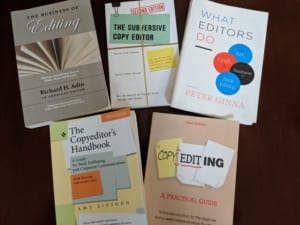
    While there’s no substitute for a mentor of the flesh-and-blood variety, the five “book mentors” below provide indispensable advice on the processes, philosophy, and business of editing.

    (Note that these are not writing or style guides. Click here for my look at the major style guides.)


    The Business of Editing by Richard H. Adin

    A collection of essays by Richard Adin (aka the American Editor), The Business of Editing: Effective and Efficient Ways to Think, Work, and Prosper collects Adin’s sage advice on these key aspects of the profession:

    • Roles
    • Tools
    • Processes
    • Profits
    • The Career of Editing
    • The Future of Editing

    While these essays are free at the American Editor blog, the handy arrangement of selections helps lead you through the above topics, and I thought it well worth the purchase.

    Of late, editor Ruth E. Thaler-Carter has taken over most writing duties on the site, including this post on backups for files and equipment. Thaler-Carter also organizes Communication Central’s Be a Better Freelancer conference, which I attended last fall.

    The Subversive Copy Editor by Carol Fisher Saller

    As senior editor at Recorded Books, I ensured that all the editors had a copy of The Subversive Copy Editor (or, How to Negotiate Good Relationships with Your Writers, Your Colleagues, and Yourself).

    In the book, Saller shares her kind, helpful approach to editing. Her “subversiveness” refers to her belief that editors are not the writer’s adversary but people who work in service to the author (and reader).

    The second part of her subversiveness is her belief that editors often need to look beyond the “rules” and do what makes most sense for the work at hand.

    Not so subversive at all!

    The Subversive Copy Editor is broken into two parts: “Working with the Writer, for the Reader” and “Working with Your Colleagues and with Yourself.”

    Saller also edits the Chicago Manual of Style Online’s Q&A. More about her can be found here.  

    What Editors Do Edited by Peter Ginna

    With essays from the best editors in the field (including the above-mentioned Carol Fisher Saller), What Editors Do: The Art, Craft & Business of Book Editing provides a host of insights into the profession.

    The book is broken into the following parts:

    • Part I: Acquisition: Finding the Book
    • Part II: The Editing Process: From Proposal to Book
    • Part III: Publication: Bringing the Book to the Reader
    • Part IV: From Mystery to Memoir: Categories and Case Studies
    • Part V: Pursuing an Editing Career: Varieties of Editorial Experience

    Many independent editors don’t have the opportunity to work in-house for a major publisher, and this books opens a window into that world.

    Peter Ginna has been an editor and publisher for Bloomsbury Press, Oxford University Press, Crown Publishers, St. Martin’s Press, and Persea Books.

    The Copyeditor’s Handbook by Amy Einsohn

    The following quote from Kim Hawley of the Chicago Book Clinic says it all about The Copyeditor’s Handbook: A Guide for Book Publishing and Corporate Communications:

    “A definite ‘must have’ for the beginning to intermediate editor or author, and even the experienced editor. An indispensable reference tool.”

    The book, which includes exercises and answer keys, is broken into these parts:

    • Part 1: The ABCs of Copyediting
    • Part 2: Editorial Style
    • Part 3: Language Editing

    A professional editor for scholarly, trade nonfiction, and corporate publishing, Amy Einsohn also taught copyediting courses. A tribute to the late Einsohn can be found on Copyediting.com here.

    Copyediting: A Practical Guide by Karen Judd

    The oldest title on my list, Karen Judd’s Copyediting: A Practical Guide is still a well respected resource for copy editors and a good addition to any editor’s shelf.

    The book begins with “What Is Copyediting?” and runs through the subjects of copyediting and proofreading symbols, punctuation and grammar, style and word usage, notes and bibliography, specialized copyediting, and other aspects of copyediting.

    ***

    These are all books that have helped me in my copyediting career. I hope you find them useful as well.

  • I Like Your Style! A Quick Look at the Major Style Guides

    I Like Your Style! A Quick Look at the Major Style Guides

    Style guides promote consistency for clear and accurate communication. A consistent approach to style shows professionalism and builds trust with the reader.

    Consistency also helps readers understand what is being communicated without having to question whether inconsistencies were intentional or a case of sloppiness or inattention. If two instances of the same term are styled differently, the reader might wonder if she’s being presented with two different meanings or if she’s missing something.

    Fiction authors don’t want these questions to break the spell of the reading experience, as can also happen with typos or poor construction. 

    In academics, writing represents a kind of conversation that promotes knowledge and the spread of ideas. Standard citations, for example, help this conversation by creating a common language that can be easily understood and used.

    But styles are almost always better thought of as “guidelines” rather than “rules,” and writers might break style for any number of reasons, not least to help the reader when a slavish adherence to style might do the reader a disservice.

    The following are major styles you may encounter (there are, of course, many more, and links to free online style guides appear at the end of the post):

    • AP
    • Chicago
    • Turabian
    • MLA
    • APA
    • AMA
    • CSE


    The Associated Press Stylebook and Briefing on Media Law

    Current edition: printed yearly and updated regularly online

    Audience: newspapers, magazines, and public relations offices 

    Website: www.apstylebook.com

    The Associated Press is an independent, not-for-profit news cooperative with teams in over 100 countries. AP style helps ensure consistency across worldwide distribution. Much of AP style is based on the premiums of space, so, for example, AP does not use the Oxford comma (except for clarity) or an s after the apostrophe when forming the possessive of singular nouns ending in s.

    The 2017 edition of The Associated Press Stylebook and Briefing on Media Law contains new entries on fact checks and fake news, guidance on the use of cyberattack, a new entry on gender, a new entry on addictions, and revised drug-related entries.

    You may buy a print copy (updated yearly) or subscribe to the AP Stylebook Online.

    The AP Stylebook Online gives you choices for

    • One or multiple users
    • Subscription to Webster’s New World College Dictionary
    • Twenty percent savings when signing up for automatic renewal


    The Chicago Manual of Style: The Essential Guide for Writers, Editors, and Publishers

    Current edition: seventeenth (2017)

    Audience: writers, editors, proofreaders, indexers, copywriters, designers, and publishers

    Website: www.chicagomanualofstyle.org

    For more than 100 years,  the Chicago Manual has been the go-to reference for style, usage, and grammar.

    While AP style meets the needs of a daily, 24-hour news cycle, the Chicago Manual addresses the longer planning cycles of the publishing industry. Editions may therefore be separated by six years or more.

    Among the changes in the seventeenth edition are the lowercasing of internet and the dropping of the hyphen from email.

    The manual is divided into three main parts:

    • Part I: The Publishing Process
    • Part II: Style and Usage (including a chapter on grammar by Bryan A. Garner)
    • Part III: Source Citations and Indexes


    A Manual for Writers of Research Papers, Theses, and Dissertations: Chicago Style for Students & Researchers (Kate L. Turabian)

    Current edition: ninth (2018)

    Audience: students and researchers

    Website: www.chicagomanualofstyle.org/turabian

    Since Kate L. Turabian assembled guidelines for students at the University of Chicago in 1937, Turabian style has been a reference standard.

    The manual’s ninth edition covers the research and writing process, from planning to production; all aspects of source citation, including both notes-bibliography style and author-date style; and style matters, offering guidance on spelling, punctuation, and numbers.

    The notes-bibliography style is frequently used in the humanities and social sciences, while the notes-bibliography style is more often used in the natural and physical sciences.

    The eighth edition diverged in small ways from the Chicago Manual, but the ninth edition aligns completely with the Chicago Manual.

    Turabian/Chicago style paper-formatting tip sheets can be found here.


    Modern Language Association (MLA)

    Current edition: eighth (2016)

    Audience: scholars, journal publishers, and academic and commercial presses

    Website: www.mla.org/MLA-Style

    As expressed in the preface by Kathleen Fitzpatrick, the purpose of this edition is to offer a “truly flexible documentation practice that will continue to serve writers well in a changing environment.”

    The handbook is divided into two main parts. The first part addresses the principles of MLA style and covers the reasons for documenting sources, plagiarism, and the Think, Select, Organize model.

    The second part addresses the details of MLA style, including treatments for names, titles, quotations, numbers, works cited, and in-text citations.


    Publication Manual of the American Psychological Association (APA)

    Current edition: sixth (2009)

    Audience: scholars and others writing in the the social and behavioral sciences

    Website: www.apastyle.org

    Maintaining styles for scientific communications, the Publications Manual of the American Psychological Association is favored by writers, editors, students, and educators in the social and behavioral sciences.

    The contents include the following:

    • Writing for the Behavioral and Social Sciences
    • Manuscript Structure and Content
    • Writing Clearly and Concisely
    • The Mechanics of Style
    • Displaying Results
    • Crediting Sources
    • Reference Examples
    • The Publication Process

    APA Style employs the author-date system for citations.


    AMA Manual of Style: A Guide for Authors and Editors

    Current edition: tenth (2007)

    Audience: authors, researchers, institutions, medical editors, publishers, and members of the news media who cover scientific research

    Website: http://www.amamanualofstyle.com/

    The AMA Manual of Style is geared at the medical and scientific publishing community: authors, researchers, institutions, medical editors, publishers, and members of the news media who cover scientific research.

    The tenth edition features expanded electronic guidelines, increased attention on ethical and legal issues, and guidelines on authorship, conflicts of interest, scientific misconduct, intellectual property, and individuals’ rights in scientific research and publication. The manual examines research ethics and editorial independence and features new material on indexing and searching as well as medical nomenclature.

    The manual is also available online.


    Scientific Style and Format: The CSE Manual for Authors, Editors, and Publishers

    Current edition: eighth (2014)

    Audience: authors, editors, publishers, students, and translators in science and related fields

    Website: www.councilscienceeditors.org/publications/scientific-style-and-format/

    Scientific Style and Format is aimed at authors, editors, publishers, students, and translators in science and related fields (physics, chemistry, genetics, biological sciences, and astronomy). The eighth edition was updated for electronic and online environments and for changes in international standards and policies.

    The manual contains style instructions for numbers, units, mathematical expressions, and statistics; information on managing tables, figures, and indexes; guidance on plagiarism and other aspects of academic integrity; and information on copyright law and Creative Commons.

    With coverage ranging from style conventions to publishing procedures to citation practices, Scientific Style and Format offers clear guidance on both print and electronic publications.

    Scientific Style and Format is available in print and online. You can visit scientificstyleandformat.org for a free trial.

    Free Online Style Guides

  • Getting to the Why of Editing

    Getting to the Why of Editing

    In his wildly popular TED Talk video How Great Leaders Inspire Action, author Simon Sinek maintains that most businesses know what they do, and that some businesses even understand how they do it, but that few businesses truly understand why they do it.

    Why does your organization exist? he asks. Why do you get out of bed in the morning? Why should anyone care?

    I spent almost 15 years working an in-house gig as an editor at Recorded Books (a company that will always have a special place in my heart). But nearly six months ago, I left behind regular paychecks and benefits to begin an adventure running my own editing business.

    I’m a copy editor.

    I love copyediting.

    But that’s what I do.

    I’m learning all the time and refining my processes (something I hope and expect will always be the case). But even so, I can give you a good breakdown of how I do what I do.

    But why do I do it?

    Sinek makes a compelling case for answering this question, and I’m sold on the importance of doing so.

    I should answer it for myself, certainly.

    But perhaps more importantly, I should answer it for my clients and for my potential clients. In truth, they shouldn’t just ask the question. They should demand an answer.

    So here goes.

    Anyone who’s chosen the freelance route can rattle off the usual reasons for going it on your own:

    • Being your own boss
    • Setting your own schedule
    • Pursuing the kind of work you want
    • Avoiding office politics

    These are all compelling, but they don’t actually strike at the why of what I do.

    So how do I get to why?

    My Castle Walls Editing home page features rotating images with these slogans:

    • Serving the Author
    • Serving the Audience
    • Serving the Work

    Each represents a different aspect of my why.

    Serving the Author

    In The Subversive Copy Editor (a must-read for any editor), Carol Fisher Saller expresses her philosophy that editors and authors are not adversaries vying for control of the text. They are instead partners working in service to the reader.

    As an editor, I want to help the author. Helping is important to me, and on a basic level it makes me feel good. I have a strong need to please, and editing lets me do this in a direct way.

    Serving the Audience

    I’m a reader as well as an editor, and reading has always been a place of shelter and warmth (Clive Barker, Ramsey Campbell, and all the other writers I admire have gotten me through a lot of tough times, and reading to my children was one of the great pleasures of my life).

    In a blog post, Baltimore Sun editor John McIntyre wrote, “And to be an editor, you must first be an avid reader. You have to hear all the voices to know which one is appropriate for your writer, your subject, your publication, your reader.”

    So reading is important for both personal and professional reasons. And as an editor, I’m able to help deliver text to readers everywhere—and this is a mission I can believe in, heart and soul.

    Serving the Work

    As a child, one of the chief ways I pleased my mother was by tidying up my room. I’ve carried this desire for neatness—and the psychological rewards of tidying up—into my profession. My mother died when I was not yet out of my teens, but I think she would be proud of the work I do.

    Certain kinds of editing appeal to me more than others, but at the heart of all jobs is that sense of straightening up. Addressing a reference list, for example, can be tedious work, but seeing a final product that appears just the way it should, down to the smallest detail, is extremely satisfying.

    My Why

    So why do I edit? It comes down to three things:

    1. I enjoy helping people.
    2. I enjoy being part of the book-making process.
    3. I enjoy cleaning up text.

    Those are simple reasons, but they feel honest and they work for me. I hope they work for you too.


  • Four on the Floor with Sophie Playle

    Four on the Floor with Sophie Playle

    A specialist fiction editor who provides editorial services directly to writers, Sophie Playle also trains other editors through her online courses and is the author of the short story collection The Hours of Creeping Night—which I recommend highly!

    I’ve enjoyed following Sophie on Twitter and am also a fan of her newsletter, Liminal Letters (particularly of her approach of writing the letters as if they were letters to a friend). More information about Sophie and about her services can be found at her website, Liminal Pages.

    Now enjoy the interview!

    Do you find that being a writer as well as an editor makes you better at each craft? How so?

    Yes, definitely. Though, for me, being a writer has helped me be a better editor more than being an editor has helped me be a better writer. I believe I’m a more sensitive editor because I know how difficult it is to transfer your vision to the page. But my brain can get stuck in editor mode, which can make it difficult to be creative and free in my own writing.

    Are there any recurring themes you’ve consciously or unconsciously developed in your fiction?

    Hmm, interesting question. I’m not sure. I think I often explore the nature of fear—what can cause it, how it can manifest, what it makes us do. On the surface, I enjoy writing stories about strange beings—monsters, zombies, mythical animals, living trees and all that jazz. So much fun to be had there.

    What is your favorite part of editing?

    I provide two main services: manuscript critiquing (where I provide feedback on the story as a whole) and line/copyediting (where I help improve the artistry of the sentences and fix mechanical issues). I love it when an author hires me for both services and I get to see the improvements they make between drafts. It’s really satisfying to polish a solid story and see the author’s vision take shape.

    Is there an editing strength that you’re particularly proud of?

    My years of literary analysis, studying writing craft theory and being a creative writer myself have made me an excellent line editor, if I do say so myself. I feel I’ve got a pretty good grasp of how much I should intervene and how much I should hold off to preserve the author’s voice and style, but I know exactly the effect a comma placement or word choice will have on a sentence.

  • Taking the Plunge: Running an Editing Business

    Taking the Plunge: Running an Editing Business

    Last Wednesday I said my goodbyes as senior editor at Recorded Books and embarked on a new life running an editing business.

    Even after fourteen years with a company I love . . .

    Even after forming personal and professional relationships I hope will continue indefinitely . . .

    Even after spending nearly a third of my life as a Recorded Books employee . . .

    Even after all that, those first steps into my new endeavor felt . . .

    EXHILARATING!

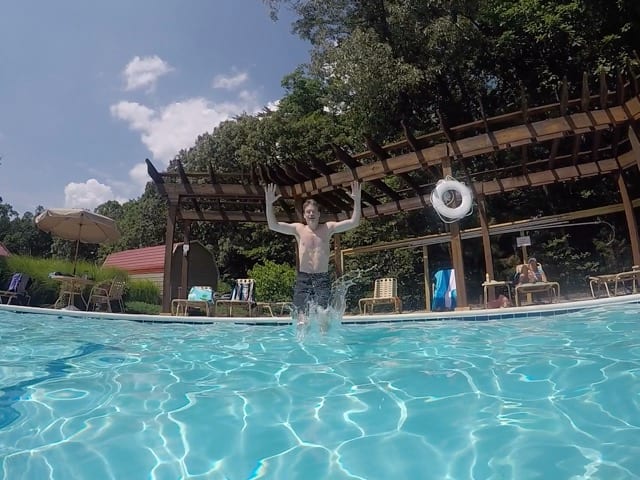
    Me earlier this summer, jumping right in

    What I Accomplished

    I’m happy with my time at Recorded Books and happy to have left on my terms, with no regrets. The company sells mostly to libraries, and I’ve always felt that my late grandmother, a fixture in her local library, would have been proud of me for serving that market.

    The sun has set on my time at Recorded Books

    Of all the projects I tackled while working for the world’s premier audiobook company, these are a few of my favorites:

    • Shepherding large-print books from art acquisition to typesetting to cover creation to proofreading and printing.
    • Editing the guidebooks that accompanied the Modern Scholar series of university lectures.
    • Proofing A Prairie Home Companion Pretty Good Joke Book.
    • Writing jacket copy for hundreds and hundreds of audiobook covers.
    • Crafting catalog copy (the ability to write in small spaces is a useful tool!).
    • Creating text for marketing materials, press releases, and web pages.
    • Writing and editing materials for children’s reading programs.

    Then there was the day I picked up the phone and found film producer Robert Evans (Rosemary’s Baby, The Godfather, Chinatown) on the other end. We were publishing his autobiography (The Kid Stays in the Picture) and he wanted extra copies of the large-print edition.

    So that’s how I found myself having a nice chat with one of Hollywood’s most legendary figures.

    Pretty cool.

    Running a Business v. Freelancing Full-Time

    Notice above that I said “running an editing business” rather than “freelancing full-time,” a thought voiced just this past weekend by respected editor Dick Margulis (of Dick Margulis Creative Services) at Communication Central’s Be a Better Freelancer conference.

    Despite freelancer being in the name of the conference, the thought is that freelancer evokes someone dabbling in the work, perhaps on weekends, while a person running a business is fully invested and wholly dedicated to the craft.

    The terminology sends a message to clients, and, perhaps equally as important, it sends a message to the business owners themselves and sets the tone for how they project themselves to the world.

    And, yes, I left my in-office gig on Wednesday, traveled Thursday, and attended the conference on Friday and Saturday. The conference came at an opportune time, to be sure!

    The conference was everything I hoped it would be: packed with helpful new tricks for marketing yourself, mastering Word, editing proposals, writing contracts, and assembling epubs. I would highly recommend it, and Ruth E. “I can write about anything!” Thaler-Carter did a hell of a job organizing the event.

    Bonus: I also stopped by Niagara Falls before heading home to begin my new life. Spectacular.

    Three Reasons I Started My Own Business

    Lists of reasons to go it on your own (or not) are everywhere, but here are my big three:

    My Work
    I can’t complain about the experience I gained in the office, and I enjoyed working on such a wide variety of projects, but at some point I felt the need to go after my own work. I love to edit, and I love horror fiction, and more than anything I hunger to pore over horror and dark fiction manuscripts. I also enjoy literary fiction, other genres, and even corporate work, but horror has been my jam since I first encountered Stephen King and Clive Barker thirty-some years ago.

    My Schedule
    For personal reasons, I’m going to be splitting time between Maryland and Dallas, not an easy thing when you need to be in the office five days a week. I also crave the thrill of waking up every day and thinking, “What do I need to do?” Balancing the work itself with marketing and accounting and all other aspects of the business can be overwhelming, but what a charge!

    My Life
    Running my own business has always been a dream, and I’m going for it, aiming to accomplish my editing goals, my writing goals, my life goals. At twenty, my son is now older than my sister was when she died. At forty-six, I’m now older than my mother was when she died. So I’m not convinced there’s a safe path through this life. Risks abound, but so do the rewards.

    Three Lessons I’ve Learned from the Experience

    As much information is out there on starting your business as there are reasons for doing so, but these are three lessons I found especially helpful:

    Lay the Groundwork
    I’ve done freelance work with my company for quite a while, so that was a tremendous help when making the jump. But with a full-time gig, not to mention two children, the time for that work was limited. Still, getting comfortable carrying out freelance work greases the skids, as does having at least a few clients who can help pay the bills while you establish yourself.

    Being as involved as possible in the greater editing community is also reassuring. A host of good editors are available to follow on social media, and joining the American Copy Editors Society (ACES) and the Editorial Freelancers Association (EFA), as well as attending ACES and other conventions, helps place you in that community.

    Exit Gracefully
    This was an easy one. People often cite office politics as one of the main reasons for going it on their own, but I genuinely liked and respected my coworkers. Those politics did exist on some level, but I was able to form cherished, lasting relationships. So no burned bridges, and as paths continue to cross, my former office mates and I can continue to help each other in any number of ways.

    Manage Expectations
    We all want to take the world by storm, but this rarely happens overnight. Running my own business is likely to put me in feast-and-famine cycles. I hope there’s always plenty of work to keep my business humming, but if not, there are a million things I can do to market myself, learn new skills, or interact with and help colleagues.

    Parting Thought

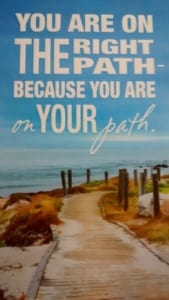
    Before I left the office for the last time, the director of the publications department (a great friend) gave me this card, along with a touching message inside. I think this says it all.

  • A Walk-Through of the Editing Process at Castle Walls

    The following is a walk-through of the editing process at Castle Walls Editing.

    First, as eager as you are to get your book out into the world, it’s important that you are ready to have your manuscript edited and that you know what kind of editing you need, whether that be developmental editing, line editing, copyediting, or proofreading.

    You don’t want to hire someone to proofread your manuscript, for example, if you still think it needs major restructuring. You can read more about the level of editing you need by clicking here.

    Getting Started

    Let’s say you’re interested in copyediting. To get started, email Castle Walls Editing at James@castlewallsediting.com or use the CONTACT US form on the site.

    The more information I know about your manuscript, the better, so this is where it’s helpful to provide a good description of your manuscript and what you would like to have done.

    I will respond to your email as soon as possible and request any other pertinent information. At this point, I will also ask for a chapter or section of your work so that I can provide an estimate for the project.

    To give you a better idea of the work involved, editors generally edit between six and ten pages an hour, and this number fluctuates based on the kind of editing required and the state of the manuscript.

    The Estimate

    Your most pressing question is probably (and understandably) about the cost of editing.

    Click here for a breakdown of what you are paying for when you hire me to edit your book.

    Page count is important, but page count can vary widely because of font, font size, and line spacing, so I will ask for your word count. I will then divide this number by 250 (the number of words on a standard manuscript page).

    If your manuscript is 75,000 words long, I will base my estimate on 300 pages (75,000 divided by 250).

    In addition to page count, however, the time it takes to edit a manuscript depends on formatting requirements, the state of the manuscript (a manuscript with numerous edits on each page will take longer to edit than one that requires fewer edits), the level of technical detail, and the presence of text features such as footnotes, reference lists, and tables.

    Manuscripts have unique needs, and the best way to determine the time it will take to edit your work is to view a sample of the work before providing an estimate.

    The fee for editing will also cover the creation of a style sheet (click here for more information about style sheets).

    The Deposit and Contract

    If we’ve agreed on the terms of work, then we’re ready to go! I require a third of the payment up front and will email you a contract specifying the exact nature of the work.

    The deposit can be paid by check or through PayPal.

    Submitting Your Manuscript

    Now for the easy part. Email me your manuscript and let me work my magic!

    This is the point at which you want to be absolutely sure you’re ready to have your manuscript edited. Once the file is sent, that’s the file I will work through to completion. It’s extremely difficult for editors to do their job when the author is reworking portions of the manuscript during the process, and the goal for all of us is to end up with the best possible version of your manuscript.

    Editing Your Manuscript

    Unless otherwise specified, I will edit in accordance with the Chicago Manual of Style (17th edition) and Merriam-Webster’s Collegiate Dictionary (11th edition).

    If editing in Microsoft Word, I will turn on Track Changes so you can review the edits. I will specify any invisible edits (edits made with Track Changes off). These include edits made to eliminate extra spaces and spaces around returns.

    I also use the editing suite available from the Editorium as well as PerfectIt software. These programs help me to clean up the document and identify a wide range of consistency issues. As any editor will tell you, the more electronic aids an editor can use, the more that editor is free to concentrate on sentence structure, word usage, readability, and other such matters.

    Macros are another tool I employ while editing. Macros are little programs that run within Word to carry out a variety of functions. One such macro, ProperNounAlyse, pulls all the proper nouns from the manuscript so that you can see, for example, if names are spelled inconsistently. Macros enhance the editing process in innumerable ways.

    When copyediting, I do two passes on the manuscript:

    In the first pass, I pore over the document and address all copyediting concerns for spelling, punctuation, grammar, style, and consistency. My goal is always to maintain the author’s voice while serving both the author and the reader.

    I use Word’s ReadAloud feature for my second pass, which is a cleanup pass of the document. During this pass I look for anything I might have missed, and I fix any issues that may have been inadvertently introduced when making edits.

    (Listening to the manuscript is a fantastic way to catch missing words, transposed words, and wrong words. I highly recommend it as a great way to combat familiarity with the manuscript, which can cause you to see what you think should be there rather than what is actually on the page.)

    Returning the Job

    When I’ve completed work, I will supply you with your manuscript with Track Changes showing (and a separate version with changes accepted, if requested). I also provide the style sheet and an editorial summary with an overview of the edits.

    Billing

    Once you’ve received the completed work, I will invoice you for the remainder of the fee (payable by check or through PayPal).

    Keeping in Touch

    I wish all authors all the success their hard work deserves, so I always look forward to hearing about your manuscript’s journey into the world!

  • When I Pay an Editor, What Am I Paying For?

    When I Pay an Editor, What Am I Paying For?

    Paying a professional to edit a manuscript is often pricier than writers might imagine, and the cost can be all the more difficult because authors often have to work the expense into a budget (or a family budget) with no guarantee of a monetary return on their investment.

    If you’re here, then you are probably already convinced that editing is an important, even essential, part of producing a manuscript for your audience. But before deciding to make that investment, it’s also important to understand (and be able to explain to loved ones) just what you’re paying for.

    The Time It Takes to Edit

    For authors, the real eye-opener about editing might be the sheer number of hours that the editor will spend working on their manuscript.

    Many authors might even think that all editing is, in essence, proofreading. But from developmental editing down to proofreading, the time requirements and the amount of work required per page varies for all the different levels of editing.

    At the proofreading stage, for example, the manuscript has (presumably) already been through the copyediting stage, and the proofreader is only looking for typos, wayward design elements, and anything missed (or introduced) during previous stages. So a proofreader would be able to look at more pages per hour than, say, the copyeditor.

    For copyediting, during which an editor checks for spelling, grammar, punctuation, style, continuity, and consistency, an editor generally edits at a rate of six to ten pages per hour.

    So if you have a 400-page manuscript, that’s at least forty hours of work, and that only accounts for one pass through the document, albeit the pass that accounts for most of the expense.

    I like to do an initial read-only pass to familiarize myself with the work, then the copyediting pass, and then a final pass to catch anything I might have missed or any errors I might have introduced while inputting edits.

    More Than Spell-Check

    Writers also might not realize just how much an editor delivers. It’s easy to imagine that the editor will do a simple read-through, mark a few spelling issues or misplaced commas, and then be on his or her way. But the benefits to the manuscript go far beyond.

    In addition to checks for grammar, spelling, usage, and consistency, a copyeditor provides (or should provide) a style sheet noting character names and all word uses that vary from Merriam-Webster or the Chicago Manual of Style or whatever other dictionary and style guide the editor is following.

    With my style guide, I also include a timeline and breakdown of character and location details on the style sheet (so you don’t have a character with blue eyes on page ten and green eyes two hundred pages later). You can also learn more about style sheets here.

    Authors are generally surprised by all the help provided during a copyedit—and they are generally very appreciative as well. The author’s job is to tell a great story, and if an editor can help put that story before an audience in its best possible light, then all the better for the author, the reader, and the work itself.

    The Five E’s

    With a good editor, you get an invisible partner dedicated to your success and to the success of your work. You get someone to pore over your beloved manuscript word by word and help push it to its best possible form.

    An editor lets readers dissolve into your story without any technical details breaking the spell. You never want to give your reader an excuse to stop reading, and an editor helps ensure that doesn’t happen.

    The following are five e’s that an editor provides:

    • Expertise
    • Experience
    • Equipment & Resources
    • Effort
    • Élan


    Expertise

    Quite simply, editors should know things that authors don’t about word usage and about formatting a manuscript and about the editing process. That’s part of why you’re paying them! Editors should also display expertise with the tools at their disposal. The author’s job is to tell a great story, and the editor can help by having expert knowledge of Word and macros and wild-card searches and editing software.

    Editors should also have expert knowledge of the various style and usage guides, and editors should keep abreast of language trends and shifting styles. Editors should also display a level of expertise that empowers them to know when and when not to break style (it doesn’t help your manuscript to have an editor who inflexibly applies a “rule” no matter the context).

    Experience

    I’ve been editing for more than twenty years and have learned a lot over that time—including that I didn’t know as much as I thought I did twenty years ago!

    When you pay for an editor, one of the things you’re paying for is the benefit of that editor’s experience, whether it’s two years or twenty years or forty years. Part of the magic of editing is that editors are always learning, and editors take great joy in passing these lessons on to their clients.

    Equipment & Resources

    Editors have to maintain equipment and software. I like to use a multi-monitor setup, which I find increases productivity and allows me to have the page I’m editing displayed at a good size in portrait view on a revolving monitor, while my style sheet is open on a second monitor (I also have my Chromebook open for additional resources).

    I edit primarily in Word and use the software packages and macros from PerfectIt and the Editorium to increase productivity and help with formatting and consistency issues. These tools save time and allow me to focus more on the sentence structure and word usage and the real mind work of editing.

    The less time I spend on tasks that can be automated with a macro or piece of software, the more efficient I am and the more bang you get for your buck.

    Writers should also expect editors to have a library of resources and to be familiar with them. Editors should have an expert working knowledge of and access to style manuals such as the Chicago Manual of Style and the Publication Manual of the American Psychological Association, the major dictionaries, and such language resources as Garner’s Modern English Usage and Fowler’s Dictionary of Modern English Usage.

    Effort

    Editing requires long periods of concentration as editors pore over a work page by page, paragraph by paragraph, word by word, and letter by letter. This is the real work of editing, and it can’t be rushed. It’s not that someone can’t deliver a well-edited manuscript for a dollar a page, but when you look at the time it takes to edit something properly and the hourly rate that this equates to, you have to wonder if an editor editing at an extremely low pay rate isn’t rushing through the work.

    There is nothing that editors value more than good clients they want to work with again and again. My goal is to deliver the best possible job to my clients so that they want to use me again and refer me to their associates. There are no shortcuts for making this happen. It’s all about hard work.  

    Élan

    This is a bit harder to quantify, and I suppose an editor could have a poor attitude toward his work and still do a good job, but it seems far-fetched. Passion and enthusiasm for editing is what keeps an editor from rushing through the work, and this passion adds unlimited value in any number of different ways.

    Editors get paid for their work, but the rewards of editing also lie in helping authors produce manuscripts that are sent out into the world and are enjoyed by readers, whether that entails the countless readers for a bestseller or a handful of readers for a passion project with a more limited release.


    Let’s Get Started

    For more information about how Castle Walls Editing can help you with your manuscript, contact us here.

  • 5 Signs an Editor Has Been at Work

    Sometimes I’ll be reading happily along and find myself tipping my cap to another editor for the care taken with a particular usage. For just a moment, that editor is there, ghostlike, almost visible through the page.

    You don’t need an EMF meter or full-spectrum camera to spot an editor, nor do you have to worry about ectoplasm on your favorite book. The following are five signs an editor has been at work.

    1. En dashes

    Most people don’t know an en dash from a haberdashery. The mark is most often used in number ranges (1971–2017) and when connecting an open compound to another modifier (Pulitzer Prize–winning author). Many would like to exorcise them from use, but I have a real fondness for en dashes.

    2. Capping aunt and uncle

    People understand writing “I love Aunt Janice and Uncle Bill” but often look askance when seeing something like “I love my aunt Janice and my uncle Bill.” Most likely a copy editor took down the a and u. (Capping of mother and father also causes confusion, though not quite as much.)

    3. Apostrophes with abbreviated words

    Love ’em or leave ’em. When letters are left out at the beginning of a word, the letters are replaced with an apostrophe, not an opening single quote. Some simply don’t know this, and some don’t take the time to fix it. I’ve seen the wrong quote there so often I have to smile when I see the apostrophe.

    4. Plural possessives

    Speaking of apostrophes, there’s probably nothing that trips up your average citizen more than possessives, especially plural ones, especially when they involve names. If I had a nickel for every time I saw something like “the Smith’s house” when referring to a family of Smiths—and not to that one Smith everyone knows as such . . .

    5. Comprise

    Traditionally, the whole comprises the parts and “is comprised of” has been considered poor usage. Whether or not you care about this usage anymore, an editor has likely laid his cold, spectral hand on the text if it’s used in the “correct” way.