Blog

  • A Look Back at EFACON 2023

    A Look Back at EFACON 2023

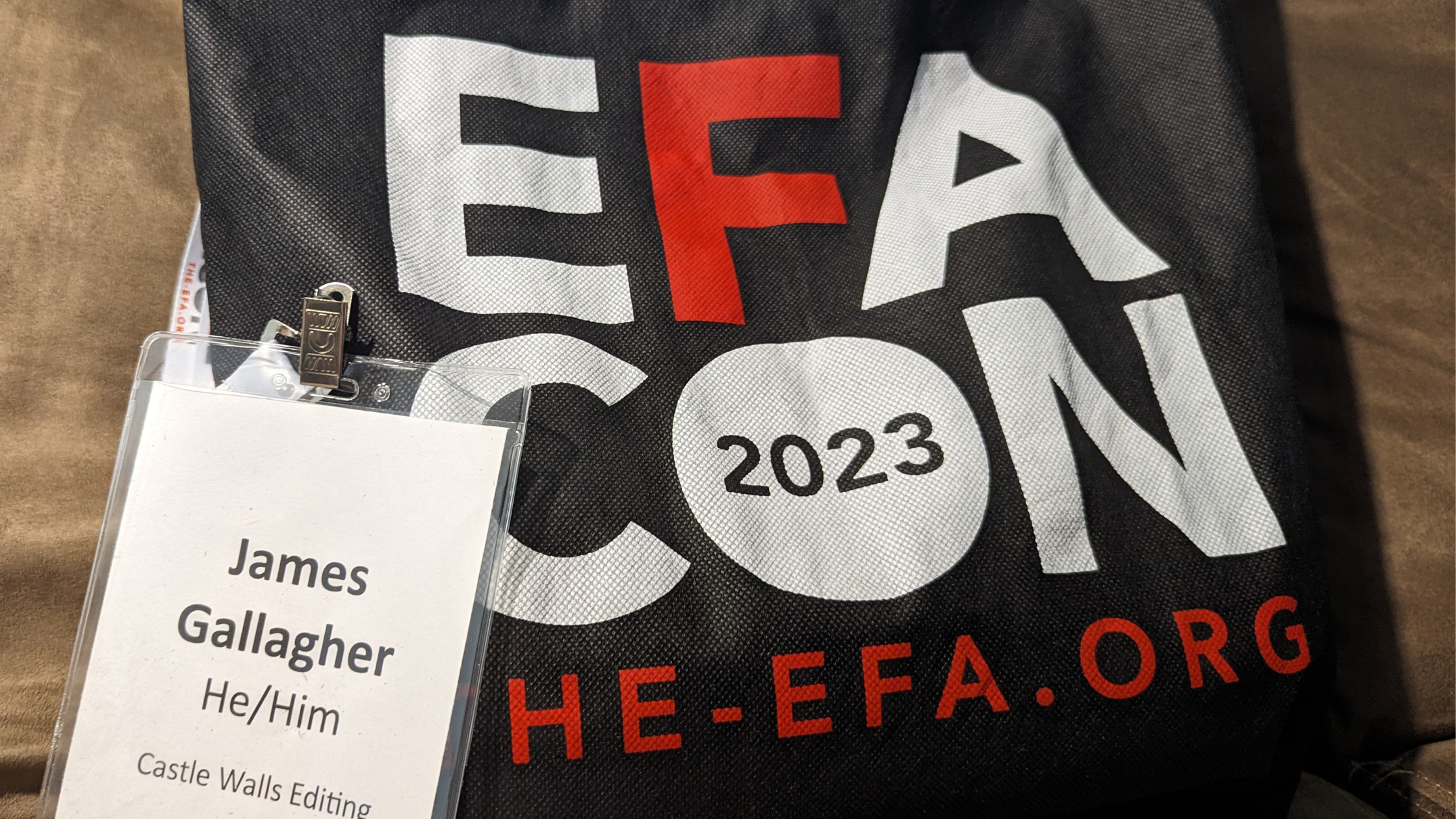
    Attending EFACON 2023 on August 18 and 19 in Alexandria, Virginia, increased my editorial knowledge and strengthened my ties in the editorial community. I left the conference with renewed enthusiasm for my work and already look forward to future events from the Editorial Freelancers Association (EFA).

    In the following I discuss benefits of the conference and provide a high-level lesson from each of the eight sessions I attended. I’ll also add here that the keynotes from Dr. Cathy Hannabach, Cecilia Tan, and Ran Walker were all excellent, and the EFA did a praise-worthy job selecting these speakers.

    People

    Like many editors, I’m introverted, and it’s all too easy to hide in a corner, keep my eyes down to avoid interaction, or look for the empty table at meals. But I’d promised myself that I would engage with people at the conference and am proud that I interacted more than I ever have at similar events.

    As freelance editors, we generally work alone and can often feel isolated, so building that sense of community and expanding our network does wonders for increasing our opportunities for learning from others, sharing job opportunities, and enjoying the camaraderie of like-minded professionals.

    A common theme at the conference was that you never know how a connection will pay off, even years later, so with every interaction you’re planting seeds. Perhaps more important, you’re interacting with the kind, generous people in the editing community, and that’s something to appreciate in and of itself.

    I certainly learned from all my interactions, even in terms of broadening my conception of what people do and how they work, and I was also able to share what I’ve learned since going full-time freelance at the end of 2017.

    I already knew some of the attendees from online venues, and it’s a wonderful experience to finally meet people in person. There’s a unique thrill to Oh, that’s so-and-so!

    Friday and Saturday entailed two long days of sessions, and by the end of the second day I was mentally and socially at my end, so I headed out before the final reception. While that would have been a nice capper, it’s important to recognize your limits, and I left feeling good about all aspects of the conference.

    Processes

    The EFACON sessions provided a wonderful opportunity to learn from editing superstars and to improve my processes.

    The following are the sessions I attended at EFACON, with a takeaway for each. Multiple sessions were scheduled for each time slot, and I’m looking forward to catching ones I missed once the recordings become available.


    Diversify Your Business: From Building Communities to Teaching—How to Provide Editing-Adjacent Services to Authors (presented by Jessica Snyder)

    This provided an excellent start to my conference, especially because it challenged me to think differently. Jessica talked about how coaching, online courses, and consulting can help you serve clients and increase your income to protect against lost income due to disability or illness. She also explored options for better work-life balance.

    TAKEAWAY: It’s easy for me to get in an editing groove and move from one job to the next, but you never know what’s around the corner, and you should never stop thinking about how your business can change and adapt.


    An Editor’s Guide to Assessing and Addressing Problematic Content (presented by Crystal Shelley)

    I’ve long been a fan of Crystal Shelley and have learned much from all the helpful resources she provides, so Crystal was at the very top of presenters I was excited to see. In her session Crystal looked at the ways biased and exclusive language renders text ineffective or harmful. She offered practical tips for offering guidance on problematic language or representation, flagging content, crafting clear queries, providing feedback, and handling client resistance.

    TAKEAWAY: More than anything, I left Crystal’s session wanting to embody her approach of knowing that we’re all human and capable of mistakes, but by listening and learning we can do better, show kindness to others through language, and help to better serve our clients.


    Client Interactions and Relationship Management (presented by Katie Chambers)

    Katie Chambers is a wonderful presenter, lively, funny, and engaging. In this session Katie shared her processes for template emails, e-mail management, client intake, data and systems, and client management.

    TAKEAWAY: Data, data, data! Collecting data on clients and the associated work is vital, and refining processes for doing so should be ongoing.


    Oops! Finding and Fixing Bloopers in Fiction (presented by Amy J. Schneider)

    The author of “that little yellow book,” Amy Schneider was another presenter I was greatly looking forward to seeing. Amy discussed language bloopers (pet phrases, danglers, redundancy), action bloopers (Chekhov’s gun, drop-in characters), and factual bloopers (body position, anachronisms, geography).

    TAKEAWAY: Easy takeaway here. When one of the best copyeditors anywhere shares insights into her craft, you sit up and take notes on every observation.


    One on One: Coaching for Creativity and Craft (presented by Christina M. Frey)

    I’ve taken two line editing classes from Christina Frey, and I’m convinced she’s a genius. In this session Christina discussed how an editorial coach can provide support beyond the typical editor-writer relationship, the qualities of a good editorial coach, approaches, and techniques for listening and adjusting.

    TAKEAWAY: Clients have needs beyond your service offerings, so expanding your thoughts on how you might meet those needs could open all-new areas for your business.


    Find Your NICHE: How to Niche Down and Market Your Specialty (presented by Jeanette Smith)

    I know Jeanette from an EFA chapter and was beyond excited to be there to support her and see her deliver her presentation. She nailed it! Jeanette examined all aspects of NICHE: natural talents, interests, characteristics, heart, and environment.

    TAKEAWAY: Again, it’s easy to get lost in the work and let the marketing side of your business flag. Thinking about your niche can help you better direct your services at the clients you most desire.


    Talking Points: Copyediting Dialogue in Fiction (presented by Amy J. Schneider)

    Here Amy addressed handling the mechanics of dialogue to maintain character voice while keeping dialogue understandable for the reader and letting the story shine. She looked at dialogue tags, verbs of utterance, action beats, punctuation, unspoken dialogue, informal dialogue, sounds and other nonverbal expressions, non-English language and translated dialogue, and electronic communication.

    TAKEAWAY: With The Chicago Guide to Copyediting Fiction, Amy literally wrote the book on copyediting. I’m just smart enough to realize when to pay attention and take lessons from one of the best in the field.


    Retreats: Build Your Business with a Getaway (presented by Laura Poole)

    Here Laura Poole delved into business retreats and professional getaways, discussing benefits, logistics, and suggested activities for group, solo, and virtual retreats. By the end of the session, I think everyone in the room was dreaming of a getaway to ponder all aspects of their businesses.

    TAKEAWAY: This is the third time I’ve said this, but it’s incredibly easy to get caught up in your work. However, stepping away and changing your environment can inspire you with new ideas that might completely revamp how you do business—and make happier clients in the process.


    What We Wish We’d Known Before We Started Freelancing (panel discussion presented by Lori Paximadis, Jeanette Fast Redmond, and Amy J. Schneider)

    This esteemed panel shared insights on building a steady client base, marketing strategies, business policies and boundaries, contracts, client acquisition, automation tools, and efficiency. As a means of both looking back and looking forward, this was a fantastic way to end my conference, head spinning with ideas and hopes for my business.

    TAKEAWAY: Never ever ever stop thinking about new ways to approach your business.

    Final Thought

    EFACON 2023 benefited me personally and professionally. I’ll do my best to continue to build on what I learned there, and I’m thankful for new and deepened editing relationships among my peers.

  • Scene It First Interview with Mary SanGiovanni (Ep. 6)

    Scene It First Interview with Mary SanGiovanni (Ep. 6)

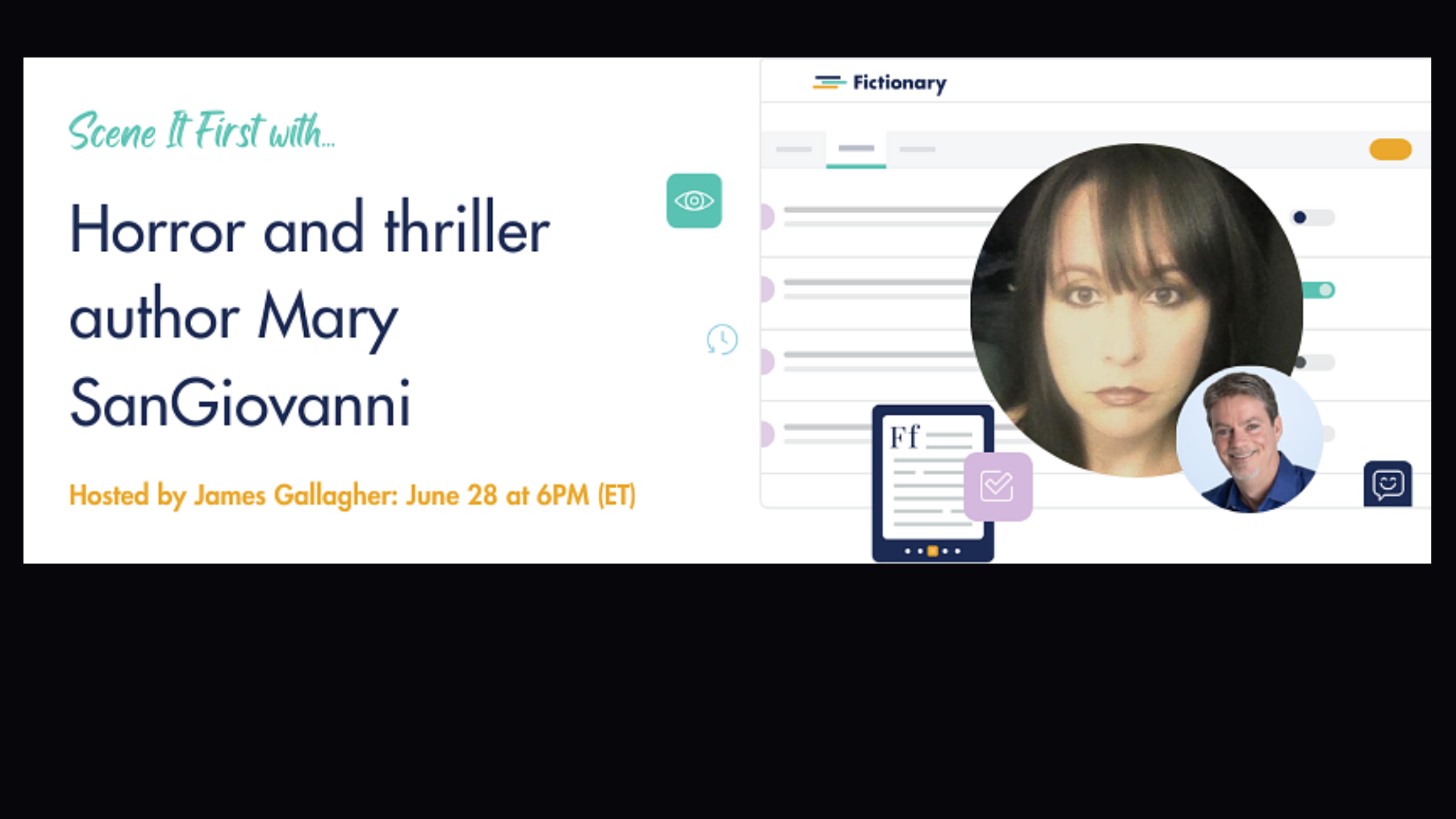
    On July 12, 2023, the queen of cosmic horror, Mary SanGiovanni, joined me for the sixth episode of the Scene It First series, sponsored by Fictionary. In this series, I speak with bestselling, award-winning authors to talk about first scenes, share secrets of writing craft, and celebrate the stories that thrill and inspire us all.

    In this episode, Mary talked about her fiction, author collaborations, cosmic horror, and her recent novel in the Alien universe: Alien: Enemy of My Enemy. (You’ll also want to watch for a quick cameo from a certain horror legend.)

    Upcoming interviews can be joined live by registered members of the Fictionary community, and it’s always free to register.

    In addition to hosting the Scene It First series, James Gallagher is the owner of Castle Walls Editing, a Fictionary-Certified StoryCoach Editor, and the copy editor of more than 250 books.

    About Mary SanGiovanni

    Mary SanGiovanni is an award-winning American horror and thriller writer of over a dozen novels, including the Hollower trilogy, Thrall, Chaos, the Kathy Ryan series, and others, as well as numerous novellas, short stories, comics, and nonfiction. Her work has been translated internationally, and she has a master’s degree in writing popular fiction from Seton Hill University, Pittsburgh, and is currently a member of the Authors Guild, International Thriller Writers, and Penn Writers.

    Mary was a cohost on the popular podcast The Horror Show with Brian Keene and her own podcast-turned-blog on cosmic horror, Cosmic Shenanigans, and she is currently a cohost of The Ghost Writers Podcast. She has the distinction of being one of the first women to speak about writing at the CIA Headquarters in Langley, Virginia, and she offers talks and workshops on writing around the country. Born and raised in New Jersey, Mary currently resides in Pennsylvania.

    About Fictionary

    Fictionary is a story-editing software that allows writers and editors to glean insights and perform developmental edits on their works using Fictionary’s 38 story elements for character, plot, and setting.

    The software also provides attractive visual reports, including the story arc (showing location of the inciting incident, plot point 1, midpoint, plot point 2, and climax), as well as reports illustrating such items as the story map, character list, and word count per scene.

    More information can be found at Fictionary.co.

    The Fictionary community can be found here (free to register).

  • Course Review: Editing for Point of View and Perspective

    Course Review: Editing for Point of View and Perspective

    The self-paced Editing for Point of View and Perspective class from Club Ed delves into finer editing considerations of particular benefit to developmental editors and line editors. As with all Club Ed courses, the materials and exercises are first-rate.

    After having taken many quality courses from Club Ed creator Jennifer Lawler, I’d picked up this self-paced class many months before I finally settled down to work my way through it. Because I’d benefited from previous courses with Jennifer, I had high expectations, and I was not disappointed.

    A reality of editing schedules is that authors sometimes push delivery dates, so having a learning opportunity at hand can help relieve anxiety—as well as sharpen your editing skills—when time unexpectedly opens on your calendar.

    Instructor Led v. Self-Paced

    I’ve taken both instructor led and self-paced classes from Club Ed, and there are pros and cons to each. At Club Ed, both options present you with reading materials (Word documents or PDFs) and exercises for each lesson.

    Instructor Led

    With instructor-led courses, materials are released weekly for the lessons (usually over a four-week period). Students are asked to return assignments before the beginning of the next week.

    The two main advantages of instructor-led courses are class forums and instructor feedback.

    The forums allow participants to interact with the instructor and other classmates. This provides further insight and discussion, as well as the opportunity to network with other editors.

    The feedback on each exercise is arguably the most valuable component of Jennifer’s courses. Editing is often best learned through doing, and Jennifer provides a detailed critique on each student’s work, invaluable for adjusting the new skills being practiced.

    Self-Paced

    The main value of self-paced courses is, of course, the flexibility to take courses on your own time. When time opens, they are there waiting to fill gaps in your schedule.

    Ask any editor and they’ll tell you that scheduling a live class is a surefire way to have work suddenly overwhelm your inbox. While I try to balance live and self-paced classes, live classes always bring a bit of anxiety around fitting them into a full editing schedule.

    (I also want to add that I try to take at least a couple of courses each year, and I hope to always do so. Whether it’s largely a refresher course or one that covers a new skill, training is wonderful for maintaining skills, developing new ones, meeting new editors, and renewing your enthusiasm for the art.)

    While self-paced classes don’t entail instructor feedback on the exercises, Jennifer does include an answer sheet with her suggested approach to each exercise. The individual feedback of instructor-led courses is most valuable, but these answer keys go a long way toward bridging that gap and are extremely helpful.

    The Class

    Editing for Point of View and Perspective helps developmental editors spot and solve POV and perspective errors in fiction. The class is broken into four lessons:

    Lesson 1

    The first lesson covers the basics of POV and perspective, the differences between the two, the three main POVs, and common problems editors will encounter with POV and perspective.

    Lesson 2

    The second lesson takes a closer look at the possibilities and limits of POVs and examines how an author’s choices affect the story. The lesson also examines where narrator perspective and character perspective interconnect.

    Lesson 3

    The third lesson delves into perspective problems as early-warning signs of other issues in the manuscript. The materials demonstrate how developmental problems in a manuscript can be intertwined, and strategies are offered for prioritizing and addressing these issues.

    Lesson 4

    The fourth lesson addresses POV and perspective issues that occur less frequently in manuscripts but for which an editor should nonetheless be prepared. The materials show where authors can go wrong and the strategies editors can use to get authors back on track.

    Overall Assessment

    POV and perspective issues require a sensitivity and ear for what is happening right down to the sentence level, and editors who develop this sensitivity and ear will be able to offer clients strong advice for modulating the narrative distance between the text and the reader. This class provides insightful materials and useful exercises for developing this higher-level editing skill.

  • Book Review: Such Kindness by Andre Dubus III

    Book Review: Such Kindness by Andre Dubus III

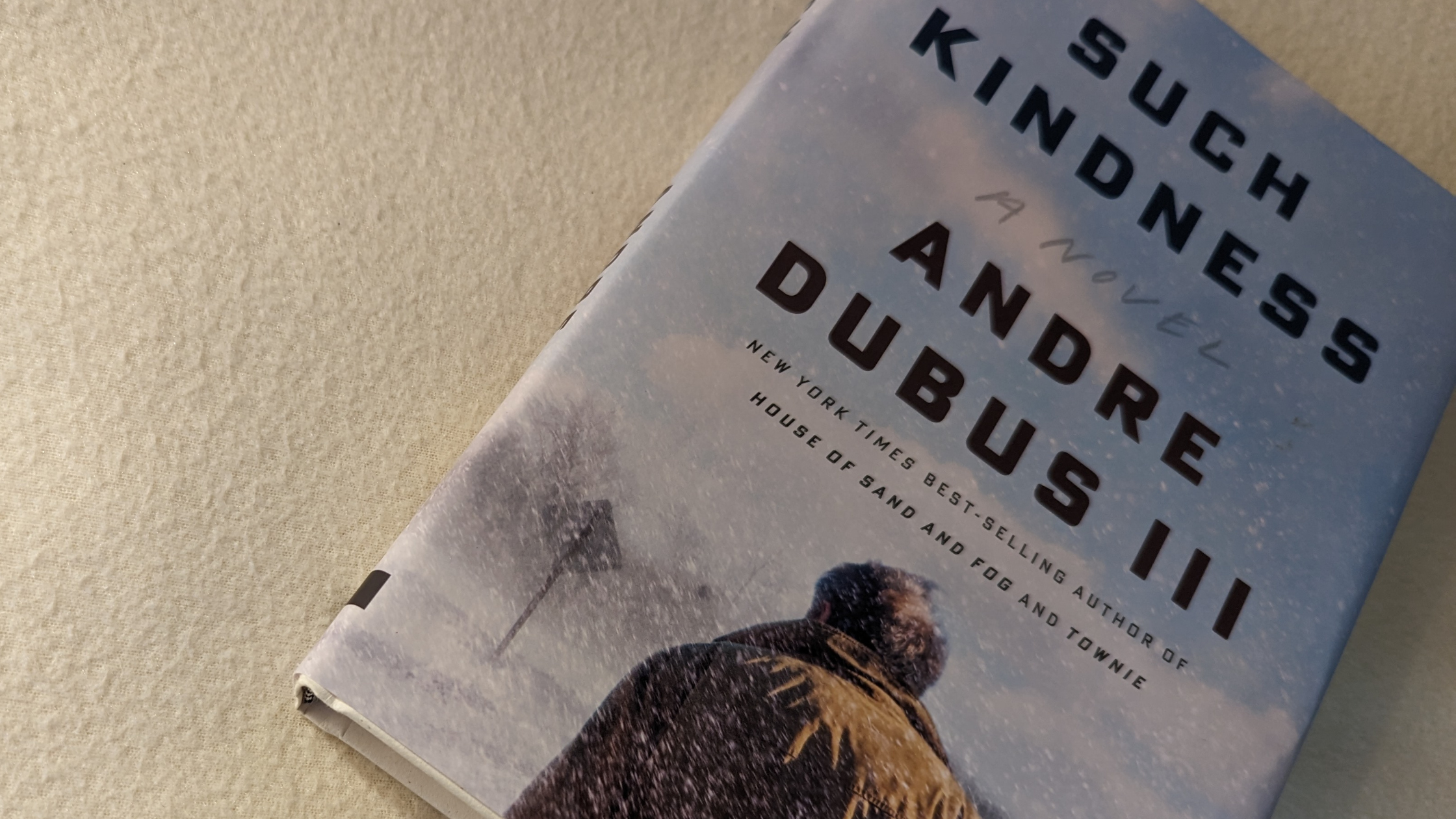
    “I used to be something, I guess. But I’m trying to let go of all that.”

    Tom Lowe always thought everything would be all right as long as he worked hard enough. He had a wife and son, a home he’d built with his own hands, a future that seemed within reach, despite the nagging whispers that the arm of his bank loan might one day push it all from him.

    Then, in a careless moment seeded by mounting financial precariousness, he fell off a roof during a construction job. Painkillers followed. Addiction. The inability to work. And then he lost his wife and son.

    Such Kindness by Andre Dubus III opens with Tom, years later, attempting to rob the bank agent who’d help take Tom’s life from him. He’s enlisted the aid of Trina, the young mother next door to his government housing apartment, and Jamey, her sometime boyfriend.

    So begins Tom’s odyssey to reconnect with his son, who’s turning twenty, and for whom Tom wants only to secure a vehicle so he can be with his son and buy him dinner. Tom’s choices, however, come with consequences, both for him and his young friends.

    Any release from Dubus is an event. He looks hard at his characters, but there’s kindness, too, in his approach, and the kindness that Tom begins to finally see and accept in the world is something I will take from this complex work. This author is one of the best, period, and his writing affects me profoundly. Such Kindness is another startling achievement.

  • Five Reasons Copyediting Takes More Time Than You Might Think

    Five Reasons Copyediting Takes More Time Than You Might Think

    People are often surprised by the time it takes to copyedit manuscripts, probably because they have a sense of how long it takes to read a book of similar length. But copyediting does take longer—much longer—and authors and readers benefit from the hours upon hours copy editors dedicate to their craft.

    (This post refers largely to copyediting fiction, but the principles apply to nonfiction as well, though nonfiction generally takes even more time [often substantially more time] owing to such things as reference lists and technical content. Editors also develop processes that work best for them and their clients, so the following won’t reflect all processes of all editors.)

    WHY DOES THIS MATTER?

    Understanding the time to copyedit something effectively (and all that that involves) helps authors know what they should be getting from an edit, and it helps them weigh what is a reasonable fee for the copy editor’s work.

    What You Get

    As we’ll see, copyediting involves a lot more than people think. (I actually had a friend ask what more I needed to do after running spellcheck!)

    Authors often begin their search for an editor with the idea that they need only a “quick proof,” so all they’ll get from a copy edit needs to be learned (as well as the idea that they might also need a developmental or line edit).

    What You Pay

    If it takes an author twelve or thirteen hours to read through their manuscript, they might assume that the time to edit is somewhere in that neighborhood—and the price they’re willing to pay will understandably align with that.

    Authors might have a very different idea of a fair fee if they understand that the work involves not twelve or thirteen hours but thirty or more hours.

    Let’s say an author has a 300-page manuscript in standard format, and it takes that author twelve hours to do a read-through. This would have them reading at twenty-five pages an hour.

    Ten pages an hour is a pretty good clip for copyediting fiction. I’m usually below that when you average my main pass and proofing pass, but at ten pages per hour that 300-page manuscript would require thirty hours of work. So if an author is paying $200 for the job, they might begin to wonder about the quality of the work.

    FIVE REASONS COPYEDITING TAKES SO LONG

    The following five reasons for why it takes as long as it does to edit effectively should also give authors some reassurance about their editor’s commitment to their manuscript.

    1. Time Outside the Read-Through

    Editors do a number of tasks before the first pass, between passes, and at the end of the job, not to mention admin tasks such as communicating with the author, invoicing, and tracking the kind of data that helps editors constantly refine their systems and processes.

    Initial Cleanup

    Before that first read-through, an editor will rename a file according to their naming conventions and format the file so that it’s usable for editing.

    The latter usually means ensuring the manuscript is Times New Roman, twelve-point font, double spaced, with automatic indents and styled headings. Editor’s Toolkit Plus is a handy tool for snapping up spaces around returns, double spaces, and tabs and for formatting ellipses and smart quotes.

    The editor may run an initial pass of PerfectIt (a consistency checker), search for particular instances in the document, and run macros such as ProperNounAlyse (this pulls all the proper nouns from a document so an editor gets a heads-up on spelling discrepancies for people and place names).

    After the First Pass

    Here the author often runs spellcheck and PerfectIt, then reviews their notes and comments for continuity or sentence-level concerns to keep track of during the final pass.

    After the Proofing Pass

    Editors usually have a number of common cleanup searches, most of which can be built into PerfectIt. The editor will check their notes for any outstanding concerns, review their comments for tone and content (Do they address the issue, explain why it’s an issue, and suggest an alternative?), and clean up their style sheet (see more on style sheets below).

    Before returning the edited manuscript, the editor will draft an editorial overview (usually an email). I’ve also begun using Loom videos so I can show authors things like the navigation pane and aspects of using tracked changes (this also provides a nice, personal way for me to thank authors for having me as their editor).

    2. A Different Kind of Reading

    To do their jobs effectively, editors must read in a way that is slow and measured. Editors are always asking questions of the text and of the way it relates to the surrounding text in grammar and syntax.

    Readers often speed-read or even mentally switch off for passages, but editors must maintain strict concentration at all times, and they must manage their concentration and be aware of their limits per day and per hour, and rest accordingly.

    Editors also must be aware not just of sentence-level concerns like spelling but of continuity issues (such as discrepancies with the timeline and character details such as eye color) and of things like echoes or words and pet phrases throughout the manuscript.

    Time is also added for inserting edits, which are tracked, and for adding comments to explain edits or to query authors on matters of style or continuity. Editors will often use tools like TextExpander to more quickly insert frequently made comments, but editors inevitably also need extra time to carefully phrase other comments so that they are both kind and useful to the author.

    3. Constant Lookups

    MerriamFetch is one of my favorite macros, with good reason. (A macro is a program you can run within Word, and this macro automatically pulls up Merriam-Webster’s definition page for a selected word. Believe me, it saves a ton of time.)

    Spelling is more complicated than running Word’s spellcheck. Spellcheck helps, and editors should run it, but editors are usually editing to a dictionary outside of Word (I’m usually editing to Merriam-Webster).

    Editors also have to decide their approach when word variants are listed in the dictionary. Usually it falls to the first-listed variant, but editors will also take into account author preference and add exceptions to the style sheet to account for this.

    Editors are also constantly breaking from reading the manuscript to look up issues in their style guide (for me that’s usually the Chicago Manual of Style). These may relate to punctuation or treatment of terms or use of numerals or capitalization or similar issues.

    Editors are also frequently turning to other resources, such as Garner’s Modern English Usage or the Conscious Style Guide or Crystal Shelley’s Conscious Language Toolkit.

    Fiction often requires fact-checking, so there are web lookups for things like the time it takes to travel between locations and even medical details. A copy editor’s lookup history can be, um, interesting.

    So many lookups!

    4. The Style Sheet

    While editing, the copy editor builds out a style sheet detailing general guidelines for editing and exceptions to these guidelines. An author may, for instance, prefer commas before sentence-ending toos and eithers.

    The style sheet also includes a word list of proper nouns and manuscript-specific spellings. Other items on the style sheet include character and setting details (so a character doesn’t have blond hair on page 10 and brown hair on page 110, unless a dye is involved, and so a character doesn’t go to the sixteenth floor of a ten-story building).

    The style sheet also includes a timeline by chapter that is a great help in addressing continuity concerns so, for example, five days don’t pass between Thursday and Saturday.

    5. Multiple Passes

    Editors have different processes. Some copy editors might run through only one pass. Others might run through more than two, but I usually do an intensive major pass and then a second proofreading pass using ReadAloud (hearing the manuscript read aloud is magic for finding such things as missing words, transposed words, and wrong words).

    Multiple passes, of course, add time to the job. In addition, editors may need to run streamlined passes for particular items, such as a specific continuity concern.

    TIME WELL SPENT

    Authors spend countless hours, even years, bringing their story into the world. Everyone, perhaps most importantly the eventual reader, benefits when authors and editors understand each other’s processes and the associated time each involves.

    Writing takes time. Editing takes time. When a book is in a reader’s hands and a story is firing that reader’s imagination, the reader might not have a true concept of all the time that went into the book’s creation, but they will undoubtedly feel it in every chapter, scene, and sentence.

  • Scene It First Interview with Deborah Halverson (Ep. 5)

    Scene It First Interview with Deborah Halverson (Ep. 5)

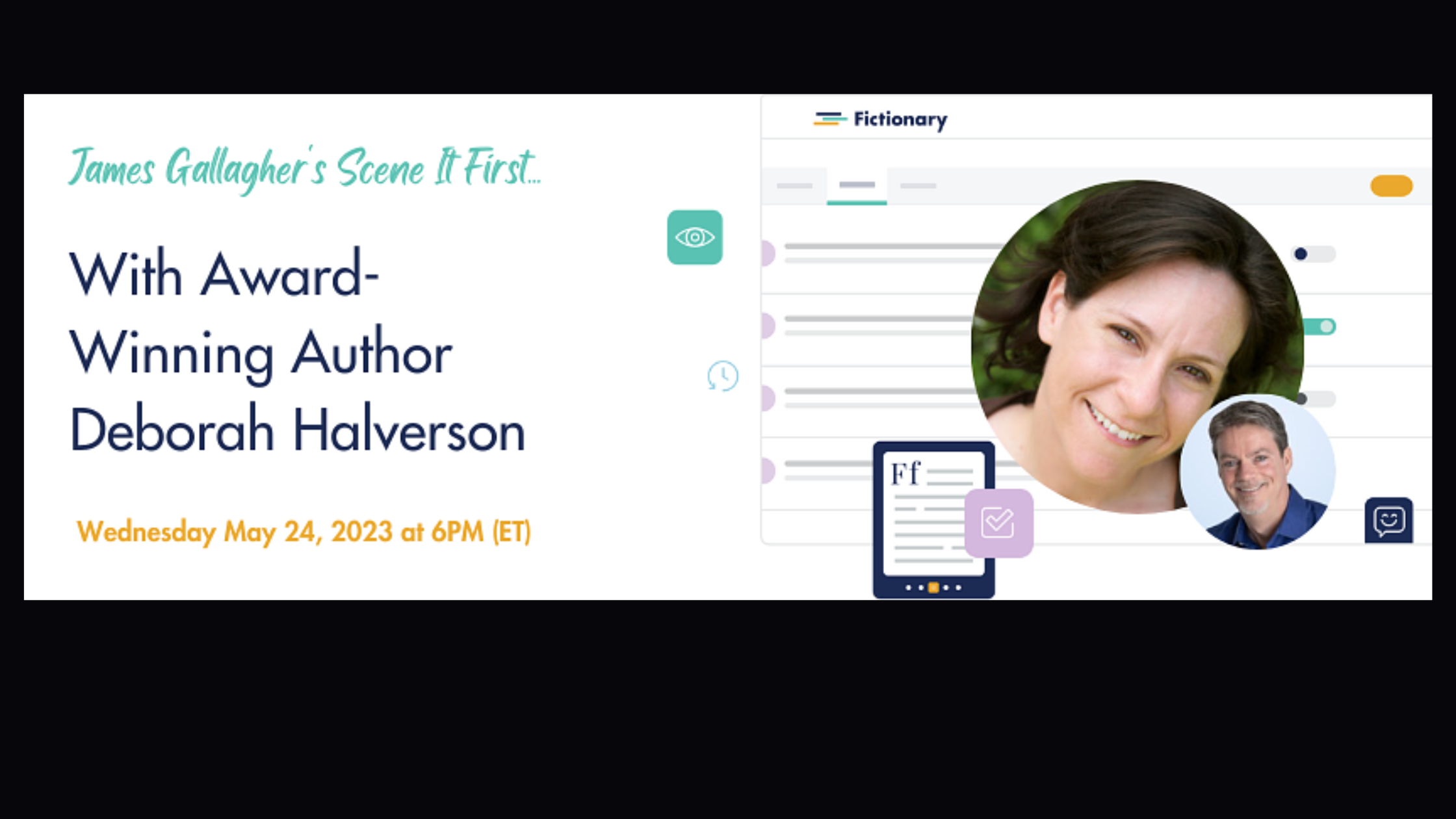
    On May 24, 2023, YA author Deborah Halverson joined me for the fifth episode of the Scene It First series, sponsored by Fictionary. In this series, I speak with bestselling, award-winning authors to talk about first scenes, share secrets of writing craft, and celebrate the stories that thrill and inspire us all.

    In this episode, Deborah talks about her book Writing Young Adult Fiction for Dummies and shares helpful insights on writing YA fiction. Later in the episode we look at the first scene from her novel Big Mouth and take questions from the audience.


    Upcoming interviews can be joined live by registered members of the Fictionary community, and it’s always free to register.

    In addition to hosting the Scene It First series, James Gallagher is the owner of Castle Walls Editing, a Fictionary-Certified StoryCoach Editor, and the copy editor of more than 250 books.

    About Deborah Halverson

    An editor at Harcourt Children’s Books for 10 years, Deborah is the author of Writing Young Adult Fiction for Dummies, Writing New Adult Fiction, the teen novels Honk If You Hate Me and Big Mouth, the picture book Letters to Santa, and three books in the Remix series for struggling readers.

    Armed with a master’s degree in American literature and a fascination with pop culture, she sculpts stories from extreme events and places—tattoo parlors, fast-food joints, and, perhaps most extreme of all, high schools.

    About Fictionary

    Fictionary is a story-editing software that allows writers and editors to glean insights and perform developmental edits on their works using Fictionary’s 38 story elements for character, plot, and setting.

    The software also provides attractive visual reports, including the story arc (showing location of the inciting incident, plot point 1, midpoint, plot point 2, and climax), as well as reports illustrating such items as the story map, character list, and word count per scene.

    More information can be found at Fictionary.co.

    The Fictionary community can be found here (free to register).

  • Editing Is a Conversation

    Editing Is a Conversation

    Too often people view editing as a one-way service in which the editor “corrects” the author’s prose. To get the most out of the author–editor relationship, however, it’s important to remember two things:

    • Editing is a conversation.
    • Edits are suggestions.

    (Though general principles still apply, the following is geared toward the relationship between indie authors and editors. In traditional publishing the author will usually not communicate directly with the copy editor or proofreader.)

    The Conversation: Working Together

    The author and editor are partners working in service of the reader. This relationship is laid out beautifully in one of my favorite books—The Subversive Copy Editor by Carol Fisher Saller. (I will never stop recommending this book!)

    The editor is there to help the author and to honor the author’s voice. As with any good conversation, this means that the editor must practice the art of listening so that they can hear that voice before they can edit effectively.

    Of course, editors also bring expertise that authors may not possess. This expertise includes adherence with style guides and dictionaries, awareness of inclusivity concerns, and knowledge of publishing standards.

    But, again, it’s important to remember that the author’s voice should always be honored, so if maintaining that voice and serving the audience means bending a guideline, then that’s what the editor will do. Style sheets exist in part to record exceptions to style so that they can be applied intelligently and consistently.

    If an author has a style preference, they should let their editor know, and authors should feel empowered to “push back” against their editor. I’ve put that phrase in quotes because, when pushing back, authors will usually be surprised by how little resistance they meet.

    Edits Are Suggestions

    Whether an author is reviewing a tracked change or a comment, the author does not have to accept that change or suggestion. The author is paying the editor for the service, so it’s advisable to consider the editor’s suggestions, but the author always has the power to reject an edit.

    If an author feels as though they’re fighting their editor every step of the way and arguing every change, then that’s probably a good sign either that they’re not ready for editing (which requires an openness to being edited) or that they’re working with the wrong editor.

    If the former, then the author may need to open themselves to being edited and remember that the editor is there to help. It’s easy to be defensive, but too much defensiveness can work against the reader.

    If the latter, then the author may need to rethink the relationship. A great author and great editor may not pair well for any number of reasons, and there’s nothing wrong with amicably parting ways.

    The Conversation

    Perhaps the most effective way to ensure that editing is a helpful conversation is to remember that it is a conversation. As with all conversations, politeness and respectfulness should be maintained at every stage, by both parties.

    Before Editing

    Sometimes an author–editor fit can be determined only by working through an edit, but authors can learn a lot about their editor by reviewing their website, social media posts, and listings in professional organizations.

    A sample edit shows an editor’s editing style (heavy, medium, or light), their ability to use basic markup functions, and their commenting style (a good comment should explain the issue, explain why it’s an issue, and offer a suggestion or resource).

    Email exchanges also indicate an editor’s professionalism, timeliness, and demeanor. Editors are sometimes open to video calls (though, of course, editors are notoriously introverted).

    During Editing

    The editor’s primary means of communication during editing is through tracked changes, comments, and the style sheet.

    While an editor will usually make silent edits to clean up such things as double spaces, spaces around returns, and straight quotes), these silent edits will be listed on the style sheet, and other edits will be tracked for the author’s review.

    This is part of the open conversation so that the author is fully aware of what the editor is doing and there are no surprises.

    Comments are essential for explaining edits, querying such things as continuity issues, and even offering the occasional “Well done!”

    Needless to say, an editor’s comments should never be condescending or mean spirited.

    The style sheet is a separate document that details general guidelines for editing, exceptions to style, a word list of proper nouns and manuscript-specific styles, a character list with character details (helpful to ensure such things as eye color don’t change during the course of the story!), setting details, and a timeline (a big aid for continuity concerns).

    After Editing

    When the editor returns the manuscript and style sheet, they will continue the conversation with an editorial letter (usually an email) covering the work. I’ve also been employing Loom to use video to add a personal touch and demonstrate such things as good practices for reviewing tracked changes.

    The conversation may continue if the editor will also be reconciling edits after the author’s review, and I always make it a point to encourage authors to send me any questions that arise while they’re reviewing the edits.

    The Ongoing Conversation

    It’s a beautiful thing when authors and editors work together to present readers with works that inspire, amaze, and take them to faraway places of wonder. Keep the conversation going, and make it a good one.

  • Book Review: The Ferryman by Justin Cronin

    Book Review: The Ferryman by Justin Cronin

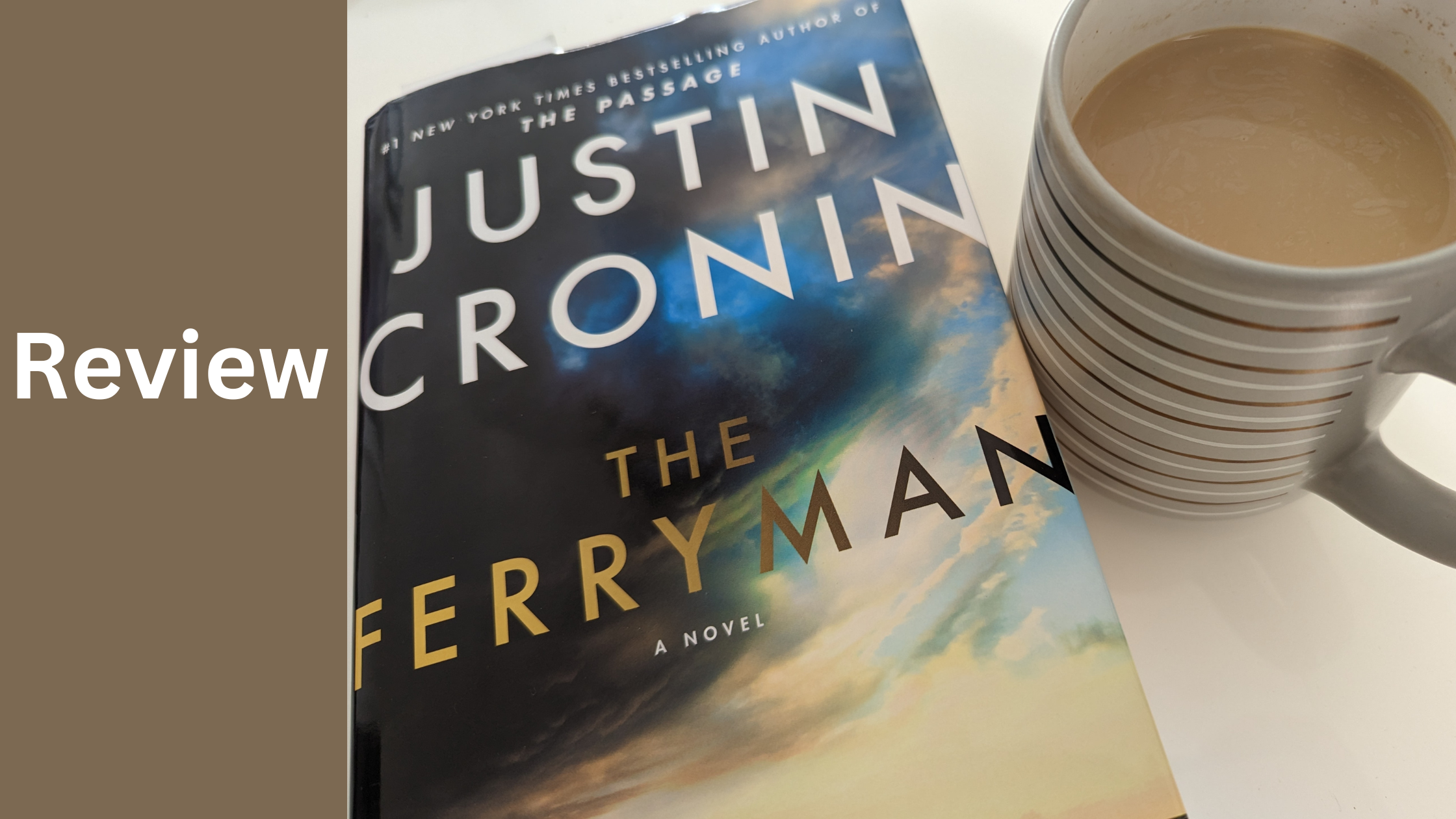
    Any Justin Cronin release is an event. The books of the Passage trilogy are among my favorites (oh, that first hundred pages), and The Ferryman shows the author at the top of his form with this stand-alone.

    His latest resonates with the motifs readers will recognize from his earlier works: falling, the wonder of stars, fathers and daughters, grief.

    Cronin’s work is often that of return and reevaluation, and these narrative echoes deepen his themes and their effect on the audience. The payoff of a specific sequence of foreshadowing, for example, had me in tears as it opened up my understanding of what he was orchestrating in the larger story.

    The Ferryman examines big existential questions, and Cronin is particularly adept at using the micro to suggest the macro, and vice versa. In a work that largely hinges on the characters’ attempts to understand their reality, it would have been easy to lose the grounding that keeps the reader invested, but the story never loses its narrative drive (and this with a protagonist who is necessarily not always likable).

    Cronin is a true prose stylist. The man flat-out knows his way around a semicolon, and the most startling element of the author’s craft is that you’d stop every other moment to admire his turns of phrase if you weren’t so consistently absorbed by the story.

  • Scene It First Interview with Marshall J. Moore (Ep. 4)

    Scene It First Interview with Marshall J. Moore (Ep. 4)

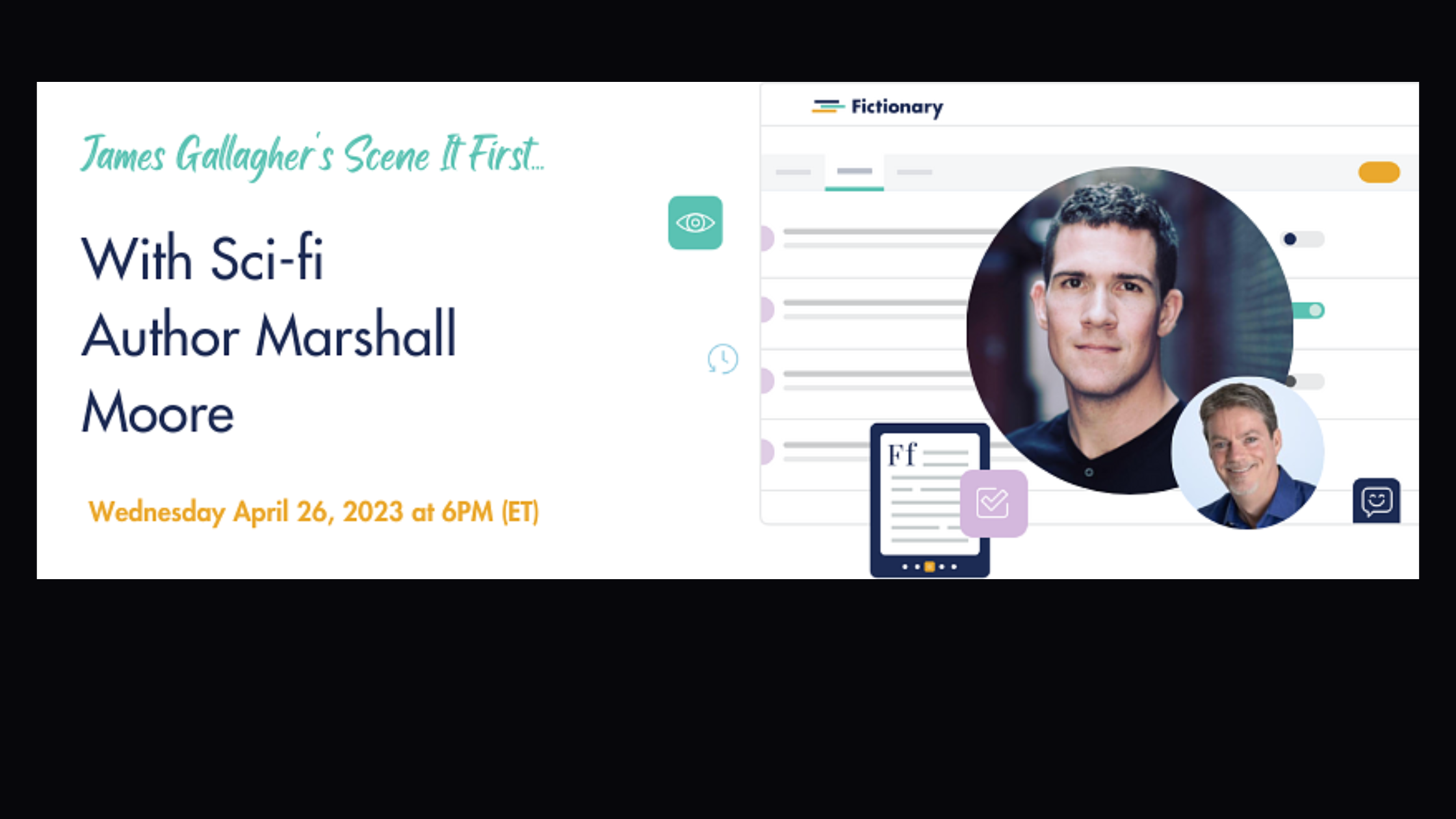
    On April 26, 2023, I was thrilled to welcome fantasy author Marshall J. Moore to the fourth episode of Fictionary‘s Scene It First series, in which we speak with bestselling, award-winning authors to talk about first scenes, share secrets of writing craft, and celebrate the stories that thrill and inspire us all.

    In this episode, Marshall talks about an encounter with Jackie Chan and his approach to writing fantasy, including his strategy for world-building and his incorporation of setting elements. Later in the episode we look at the first scene from his novel The Pale City and take questions from the audience.


    Upcoming interviews can be joined live by registered members of the Fictionary community, and it’s always free to register.

    In addition to hosting the Scene It First series, James Gallagher is the owner of Castle Walls Editing, a Fictionary-Certified StoryCoach Editor, and the copy editor of more than 250 books.

    About Marshall J. Moore

    Marshall J. Moore is a writer and martial artist who was born and raised on Kwajalein, a tiny Pacific island. He has trained a professional mercenary in unarmed combat, sold a thousand dollars’ worth of teapots to Jackie Chan, and was once tracked down by a bounty hunter for owing $300 in overdue fees to the Los Angeles Public Library. An active member of SFWA, Marshall has been published by the Escape Artists podcast network, Air and Nothingness Press, Mysterion, and many others. His short story “Red Lanterns” won second place in the 2022 Baen Fantasy Adventure Award. He lives in Atlanta, Georgia, with his wife, Megan, and their two cats.

    About Fictionary

    Fictionary is a story-editing software that allows writers and editors to glean insights and perform developmental edits on their works using Fictionary’s 38 story elements for character, plot, and setting.

    The software also provides attractive visual reports, including the story arc (showing location of the inciting incident, plot point 1, midpoint, plot point 2, and climax), as well as reports illustrating such items as the story map, character list, and word count per scene.

    More information can be found at Fictionary.co.

    The Fictionary community can be found here (free to register).

  • Fictionary Interview with Authenticity Reader Crystal Shelley

    Fictionary Interview with Authenticity Reader Crystal Shelley

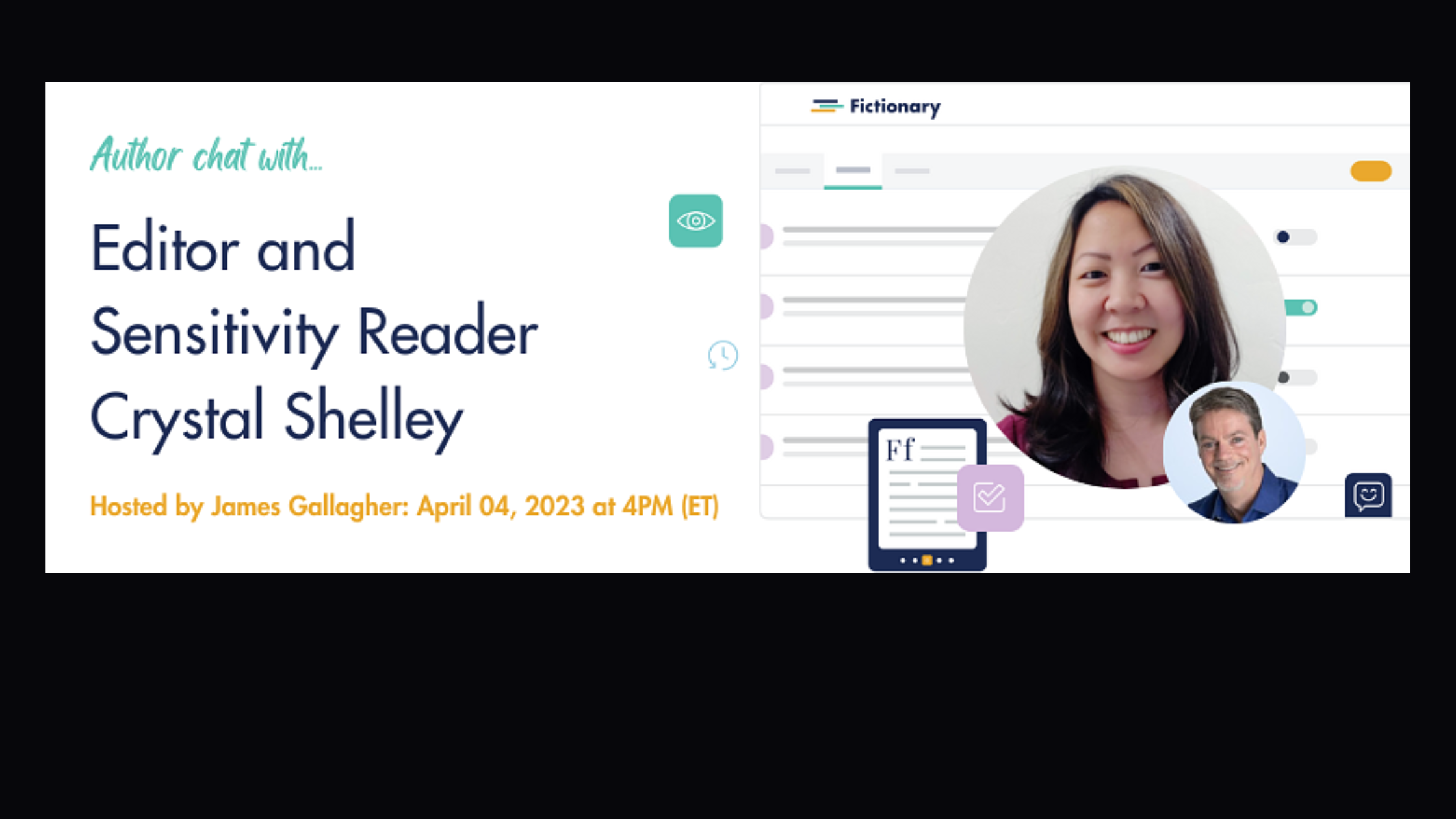
    On April 4, 2023, I was pleased to interview authenticity reader Crystal Shelley before a live audience in the Fictionary community. I’ve long benefited from the resources Crystal produces, and I have unending respect for her and for the way she approaches her work.

    In this informative interview Crystal sheds light on authenticity reading and her approach to language. We also talk about her Conscious Language Toolkit for writers and editors, and at the end of the presentation we give away a copy of that wonderful resource to one of our lucky attendees.


    Upcoming interviews can be joined live by registered members of the Fictionary community, and it’s always free to register.

    James Gallagher is the owner of Castle Walls Editing, a Fictionary-Certified StoryCoach, and the copy editor of more than 250 books.

    About Crystal Shelley

    Crystal Shelley is the owner of Rabbit with a Red Pen, where she provides editing and authenticity reading services to fiction authors. Drawing on her background as a social worker, she unites her love of language and her passion for social justice by advocating conscious language use and inclusive representation in her editorial work. She is the creator of the Conscious Language Toolkit for Editors and Writers and serves on the board of ACES: The Society for Editing.

    About Fictionary

    Fictionary is a story-editing software that allows writers and editors to glean insights and perform developmental edits on their works using Fictionary’s 38 story elements for character, plot, and setting.

    The software also provides attractive visual reports, including the story arc (showing location of the inciting incident, plot point 1, midpoint, plot point 2, and climax), as well as reports illustrating such items as the story map, character list, and word count per scene.

    More information can be found at Fictionary.co.

    The Fictionary community can be found here (free to register).