Author: James Gallagher

  • Surprising Connections Between Horror and Romance

    Surprising Connections Between Horror and Romance

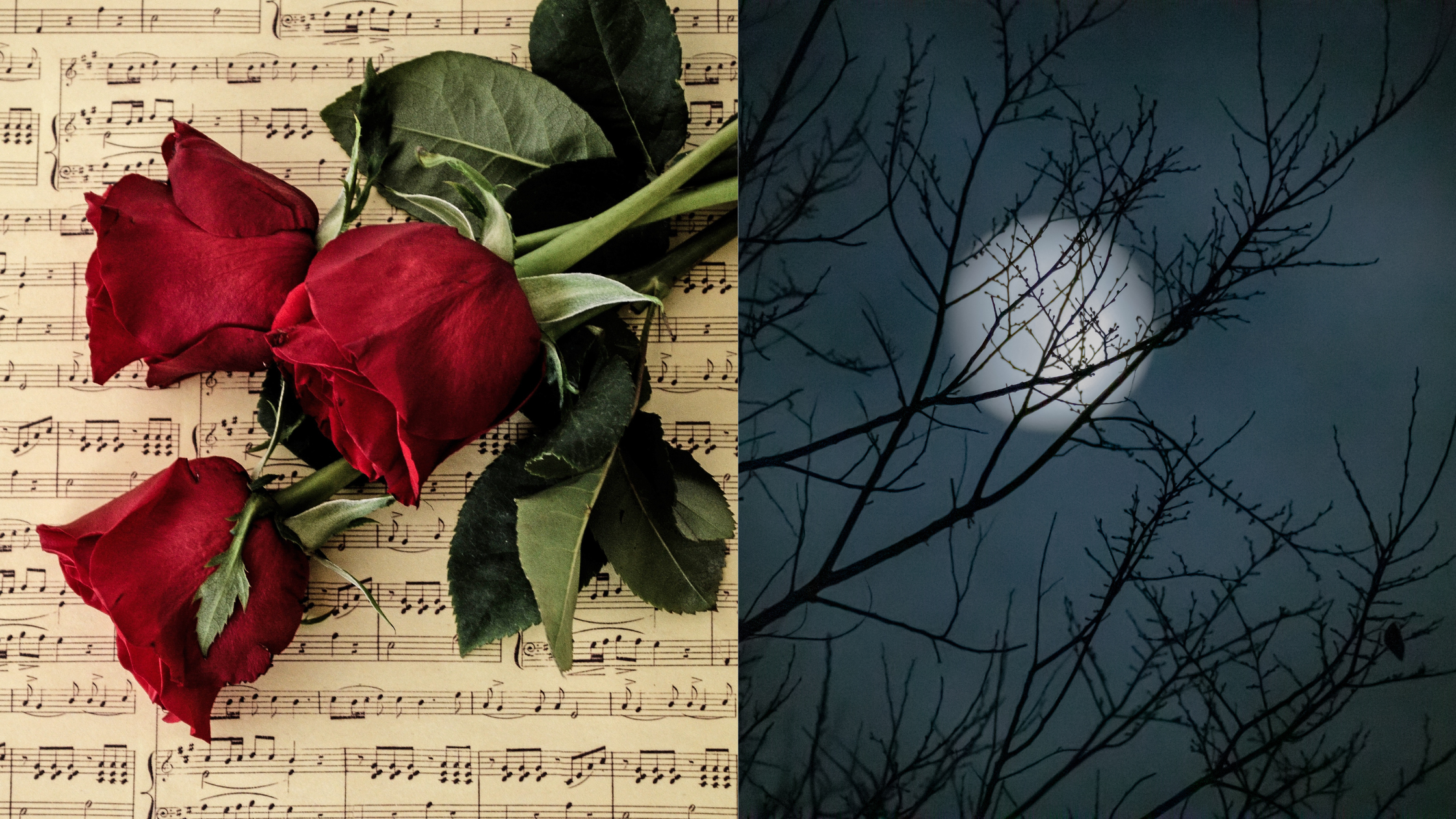
    At first blush, horror and romance might seem as far apart as two genres can be. But on closer inspection, the genres exhibit many similarities.

    Beyond the story-level connections, the readerships of these two genres share a protectiveness born from the feeling others look down on their genre of choice as being of low merit, of not being literary enough, of being trashy, even. Sometimes the reaction is just a dismissive curl of the lip.

    Horror and romance contain both purely entertaining page-turners and examples of high “literary” merit (the quotes here suggesting “whatever the hell that means” and “but that’s a topic for another day”).

    In my experience people will often look down on horror and romance in a way they wouldn’t about mysteries or suspense, so that sense of protectiveness is understandable. This snobbishness might be more true in the past, and both genres might be more widely accepted today than ever before, but the attitudes still seem to exist, at least on some level.

    Horror and romance are cherished by their readerships, and these stories help readers process their lives. They act as a salve in troubled times. Sometimes they simply entertain and are in fact trashy in the best way. And there’s nothing wrong with that.

    All About a Feeling

    It’s been said by Tananarive Due and others that horror is an emotion, and this defines the genre in a special way and in fact makes the genre hard to define (and also more expansive). Romance is certainly all about love and the associated emotions.

    So at the heart of both genres is the evocation of feeling in the characters, and not just feeling, but intense, life-altering feeling.

    In “Horror and Romance: Doppelgangers in Need,” horror writer L. Marie Wood talks about how need (want, desire, yearning) is essential to both genres, and it’s a fascinating piece.

    Which Genre Are We Talking About Again?

    If you think about a force that insinuates itself in people’s lives and begins to change them, begins to affect them in physical ways (raised heartbeat, shortness of breath), begins to draw them toward something close to an obsessive relationship, you might be excused if you aren’t sure whether we’re talking about horror or romance.

    This force might be evil in horror and love in romance, but in both it’s a force that cannot be shaken, that persists, that holds the promise of forever.

    HEA and HEN

    A romance without a happily ever after (or a happy for now) is not a romance. That’s part of the promise to the reader, and romance writers feel the heat if they break that promise.

    Horror contains something you might call a happily ever never. While a character might in the end triumph over the evil in question, that triumph often comes at a great cost, and there’s usually the sense that the evil hasn’t been truly vanquished, that it’s only been momentarily thwarted before it rises again.

    Meet-Cute and Meet-Brute

    A romance needs a meet-cute to introduce the love interests and set them on the path toward romance. Well-deserved praise to romance writers coming up with fun and innovative meet-cutes that go beyond the characters literally bumping into each other.

    In much the same way, the protagonist in a horror story needs a meet-brute (yeah, I don’t think this term has much chance of catching on, but thanks for humoring me) to expose characters to the presence of evil. In both romance and horror, characters’ first reactions are often to flee from this scary force (“I don’t have room in my life for a relationship!” or “I don’t want to be consumed by this demon!”).

    This is another good point to emphasize again the physical responses in horror and romance. In romance, the mere touch of a new love interest (and it might be the slightest brushing of hands) draws an outsize physical reaction from the character, who consciously acknowledges the reaction or tries desperately to dismiss it.

    In horror the racing pulse or shortness of breath at that first touch of evil is just as present, and it will only get worse. That’s also a promise to the reader.

    Isolation

    In horror characters are often isolated in ways that make them more vulnerable to evil and that connect them closely to primal childhood fears, such as being lost in a forest or shopping mall. The character may be physically stranded in a cabin or cave, or they may be emotionally stranded when no one around them believes that true evil is present.

    Romance also often isolates its love interests to make them more vulnerable to the force of love working its magic on them. They may, in fact, be snowed in at a cabin. Or they may be forced to share a bed. Or any number of other scenarios. But that isolation is often key.

    Teasing Out the Romance / Showing the Monster

    In one of my favorite podcasts about horror movies, Pod Mortem, the hosts talk about how part of the reason movies such as Nightmare on Elm Street and Child’s Play work so well (and specifically the first film in each series) is because the creators know to use Freddy and the evil doll sparingly, that giving them too much screen time, too early, spoils the fear.

    Similarly, romance often works best when the characters are kept from that full-fledge romance for as long as possible, because throwing them right together can spoil that delicious sense of tension and Will they or won’t they? (though of course we know they will).

    Don’t Go in the Basement: Tropes, Tropes, Tropes

    Horror and romance are often filled with tropes, conventions, and obligatory scenes, and each does well when it addresses these in new and interesting ways.

    Is there a compelling reason for the character to go into the basement when common sense is screaming to do anything but? Is the third-act breakup drawn from compelling character motivations or thrown in unrealistically because the author is at the 75 percent mark?

    The Grand Gesture / Sacrifice

    In romance a character often makes a grand gesture to win back their love interest after the aforementioned third-act breakup. This works best when the character gives up something they thought they needed because they’ve realized what it is they actually need.

    In horror a character will often need to make a great sacrifice, possibly their life or even their soul, to defeat evil. (And knowing that evil never dies we can say only, Hey, good luck with that.)

    I Love You / I’m Going to Tear Your Soul Apart

    Horror and romance might seem strange bedfellows, but thinking about the connections between the two is a lot of fun, and we didn’t even bring into the mix Gothic literature, which excels at entwining romance and dread. Are there any other connections that spring to your mind?


    Further Reading:

    Wood, L. Marie. “Horror and Romance: Doppelgangers in Need.” Chosen Realities 1 (Summer 2020).

  • Beyond Spell-Check: Ten Catches Copy Editors Make

    Beyond Spell-Check: Ten Catches Copy Editors Make

    [vc_row][vc_column][vc_column_text css=””]Spell-check will fail to catch an almost unlimited number of writing miscues. In addition to spelling, copy editors address grammar, punctuation, style (hello, Chicago Manual), clarity, and consistency.

    The following ten items will give you some idea of what spell-check won’t catch.

    (Also note that I’m not addressing punctuation here and that while Word’s Editor function features a grammar check that will occasionally offer good suggestions, the many false positives and sometimes downright bizarre suggestions mean that you cannot accept any of the suggestions without a high level of discernment.)

    1. Wrong homophone. I can’t bare to see another picture of a bare. (Read: I can’t bear to see another picture of a bear.)
    2. Missing words. I can’t bear see another picture of a bear. (Read: I can’t bear to see another picture of a bear.)
    3. Transposed words. I can’t bear see to another picture of a bear. (Read: I can’t bear to see another picture of a bear.)
    4. Repeated words. This one’s obvious, and while spell-check will flag repeated words, it can’t determine whether the repetition was intentional.
    5. Repeated endings. Our brains sometimes do a funny thing where they inappropriately repeat an ending while typing: They keeping walking toward … (Read: They keep walking toward …)
    6. Echoes. Words repeated in proximity can clang against the ear of the listener. Often words like up and back (two prime offenders) can be deleted or switched out when they repeat too closely.
    7. Danglers. Dangling participles and other modifiers can cause problems, especially at the beginning of a sentence: Running into the classroom, the trash can caused me to trip. (The trash can wasn’t running into the classroom, so the person needs to be the subject instead.)
    8. Noninclusive language. Copy editors can call authors’ attention to potentially problematic language. The Conscious Style Guide and Crystal Shelley’s Conscious Language Toolkit are two great resources.
    9. Continuity issues. If a character’s eyes change color halfway through a manuscript, there should probably be a reason. Copy editors will comment on a wide range of continuity issues that can occur in a manuscript.
    10. Inconsistently applied style. Writers face a host of decisions for how they will style such things as thoughts and the words on signs, buttons, and other objects. The copy editor will help maintain consistency, keeping in mind author preference and style guidance from the big style guides (hello again, Chicago Manual) and publisher house styles, if working with a publisher.


    These often seemingly easy catches pose problems because writers (and editors too!) have a difficult time editing their own work. They simply know their work too well and see what should be there rather than what is actually there.

    Another set of eyes does wonders![/vc_column_text][/vc_column][/vc_row]

  • My Webinar on Editing Horror

    My Webinar on Editing Horror

    The recording of my webinar on editing horror is now available for purchase at Club Ed at the following link:

    Editing Horror with James Gallagher 

    This one-hour webinar is for people interested in learning how to edit the horror genre. 

    The class covers the following:

    • What is horror?
    • Brief history of the genre
    • Subgenres
    • Horror beats and tropes
    • Character: protagonist v. the monster
    • Setting
    • Controlling theme: from life to death to damnation
    • The unknown
    • Reader immersion
    • Editorial concerns for problematic tropes


    I am a lifelong horror fan, and this webinar was a blast to prepare and present. Even better, I was able to do it over at Club Ed Freelancers, run by the great editor and editorial trainer Jennifer Lawler.

    I’ve taken numerous classes with Jennifer, and she and Club Ed have been an important part of my development as an editor.

    Long live horror!

  • Continuity, Part 1: Continuity Issues and Why They Pose Problems

    Continuity, Part 1: Continuity Issues and Why They Pose Problems

    “Only by thoughtful concentration on details can fiction be satisfactorily edited.”

    Words into Type

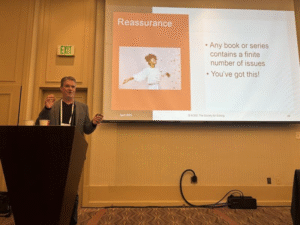
    [On April 4, 2025, I presented “The Case of Ever-Changing Eye Color: Tracking Continuity in Manuscripts” to a live audience at ACES 2025 in Salt Lake City. This series of posts is largely based on that presentation.]

    What Are Continuity Issues?

    Continuity issues refer to discrepancies among details an author has provided in their manuscript.

    Usually these issues relate to physical character traits, nonphysical character traits, plot events, and matters of time, place, and distance.

    When the author provides information about a character, that information should be consistent throughout the manuscript unless there’s a good reason (a character’s hair might change color because they’ve dyed it).

    Discrepancies in the passage of time, the physical properties of setting, and the distance between settings (and the time it would take to travel between places) all present innumerable opportunities to introduce continuity issues.

    Continuity issues are present when the reader asks questions such as the following:

    • Didn’t this character have blue eyes in chapter 3?
    • How is it Saturday when four days have passed since Thursday?
    • How did this character just enter the room when they were already in the room?

    Continuity issues may occur within scenes, across scenes and chapters, and across books in a series. So copy editors face a daunting task when helping authors maintain good, uninterrupted continuity in their stories.

    James Gallagher speaking behind a lectern at ACES 2025 in Salt Lake City

    Why Are Continuity Issues a Problem?

    Readers are savvy at picking up continuity issues—and they often aren’t shy about sharing them online. So it’s well worth it for authors and editors to do what they can to address continuity before a book makes its way into the world.

    Continuity gaffes can do the following:

    • Break the spell of an author’s storytelling and take the reader out of the work.
    • Diminish author authority and lessen the reader’s faith in the author.
    • Weaken the story.

    Depending on the reader and the magnitude of the continuity issue, reader response might range from indifference to mild amusement to slight irritation to a refusal to finish the book.

    For the author, the response might be embarrassment, awareness that they’ve taken a hit to their reputation, or irritation with their editor for not catching the issue.

    For the editor, the response might be mortification (no one is harder on the editor than that editor), awareness that they’ve taken a hit to their reputation, and even fear that they could lose their client.

    Next time we’ll look at why continuity issues occur, and we’ll explore how we can prevent them.

    Note: Presenting a session on continuity live and in person to a room of editors at a national conference is something I’ll never forget. Organizations such as ACES: The Society for Editing provide learning opportunities and access to an inspiring community of editors.

  • Castle Walls Update: New Edition of the Chicago Manual & Other News

    Castle Walls Update: New Edition of the Chicago Manual & Other News

    This fall is full of exciting happenings in my editing world!

    • Style alert! CMOS 18 hits the streets
    • My appearance on Club Ed Discussions
    • My upcoming course on editing horror
    • My upcoming presentation for ACES VCON24

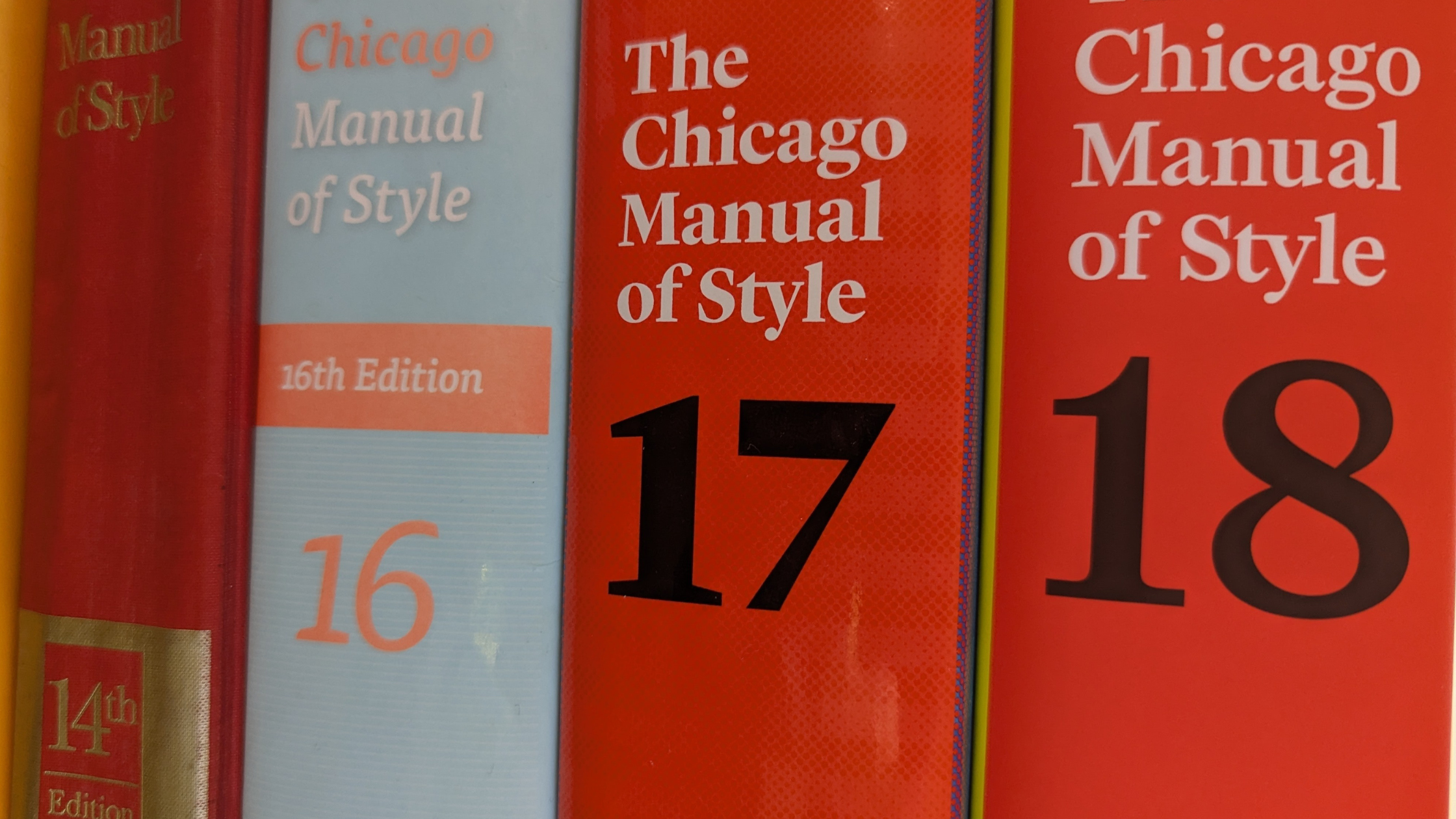
    The Chicago Manual of Style releases a new edition

    While the Associated Press frequently updates its style guide to accommodate the fast pace of delivering up-to-the-minute news, The Chicago Manual of Style is updated approximately every seven years in deference to the much longer development times for book-length projects.

    So the recent release of the style guide’s eighteenth edition is big news for editors, who are eagerly educating themselves on the style changes in the new edition.

    I have a subscription to the online edition, and generally that’s my go-to resource because of its search capabilities. But I couldn’t resist purchasing the print edition (and its strikingly yellow cover) to sit beside my print editions going back to the fourteenth (my first edition). With the number of years between editions, it’s a good investment, and it’s comforting to have it on my shelf.

    Some changes will take some getting used to (I’ve spent too many years avoiding numerals at the beginning of a sentence to not look askance). But most I’m on board with.

    Always use a capital letter for complete sentences after a colon? Sounds good to me. Check Merriam-Webster for capitalization of adjectives derived from proper nouns (think french fries or Dutch oven)? Even better.

    I talk horror, romance, and copyediting on Club Ed Discussions

    On August 13 I was thrilled to join Jennifer Lawler on Club Ed Discussions, a discussion series she hosts for editors in her Club Ed membership. While the discussions are recorded, they’re reserved for her members, so I can’t share the link here, but I had a blast talking about the similarities between horror and romance, working with authors and publishers, and other aspects of copyediting.

    Jennifer is one of my favorite people in the editing world, and taking her classes has been an important part of my editing journey. Through Club Ed, Jennifer offers classes, community, and other resources to support editors and help them deliver quality services to authors and publishers.

    I’m teaching a class on editing horror!

    Speaking of Club Ed, Jennifer Lawler has long wanted to add a horror course to her offerings but doesn’t herself edit horror. Knowing my love of the genre, Jennifer asked me to develop a course for her platform, and this October students will be able to participate in Editing Horror with James Gallagher.

    The class begins with a one-hour live webinar that will be available for later viewing and also includes an online forum and feedback on a sample chapter edit. I am beyond excited!

    I’ll be presenting a session for ACES VCON24

    ACES: The Society for Editing is hosting a virtual conference from September 25 to 27, and I’ll be presenting the session “How to Create an Annual Report for Your Editing Business.”

    Presenting before a national conference of my peers is a huge honor and will be one of my highlights for the year. I’m also looking forward to all the other informative sessions from the fantastic editors at the conference.

    Other news

    I’ll just add that I’ve been busy with copyediting, proofreading, and developmental editing work for indie authors and publishers. This year I’ve been pleased to add Hachette Book GroupPenguin Random House, and Catapult to my clientele.

    Happy writing!

  • Scene It First with Nikki Davenport

    Scene It First with Nikki Davenport

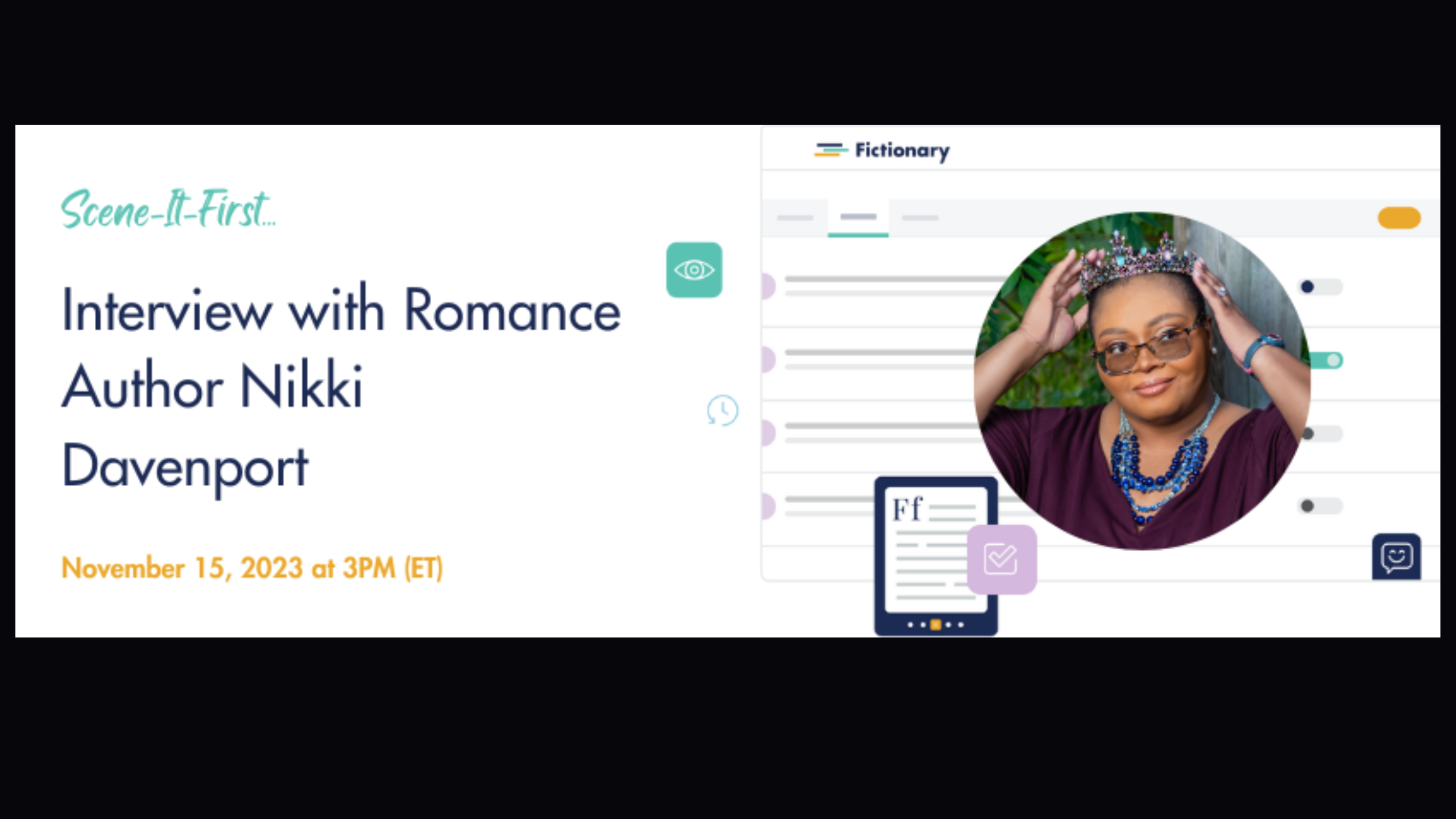
    On November 15, 2023, romance author Nikki Davenport joined me for a fascinating episode of the Scene It First series, sponsored by Fictionary. In this series, I speak with bestselling, award-winning authors to talk about first scenes, share secrets of writing craft, and celebrate the stories that thrill and inspire us all.

    In this episode, we celebrated the release of Nikki’s debut romance, International Incident, and then Nikki shared a wealth of information about writing romance and delved into all the excitement that comes with your debut year.

    In addition to hosting the Scene It First series, James Gallagher is the owner of Castle Walls Editing, a Fictionary-Certified StoryCoach Editor, and the copy editor, developmental editor, or proofreader of more than 300 books.

    About Nikki Davenport

    Nikki Davenport is the author of the Crown and Heart series and has been crafting stories about falling in love for as long as she can remember. She holds a BA in history and a master’s in social work. Paddling with a dragon boat racing team of fellow breast cancer survivors and working in the
    education field keep Nikki busy. She lives in Northern Virginia with her husband, two snarky teens, and a pair of spoiled feline overlords. She belongs to a fabulous book club and is almost always listening to an audiobook or podcast.

    To learn more about Nikki, visit www.nikkidavenport.com.

    About Fictionary

    Fictionary is a story-editing software that allows writers and editors to glean insights and perform developmental edits on their works using Fictionary’s 38 story elements for character, plot, and setting.

    The software also provides attractive visual reports, including the story arc (showing location of the inciting incident, plot point 1, midpoint, plot point 2, and climax), as well as reports illustrating such items as the story map, character list, and word count per scene.

    More information can be found at Fictionary.co.

    The Fictionary community can be found here (free to register).

  • Scene It First with Carol Fisher Saller

    Scene It First with Carol Fisher Saller

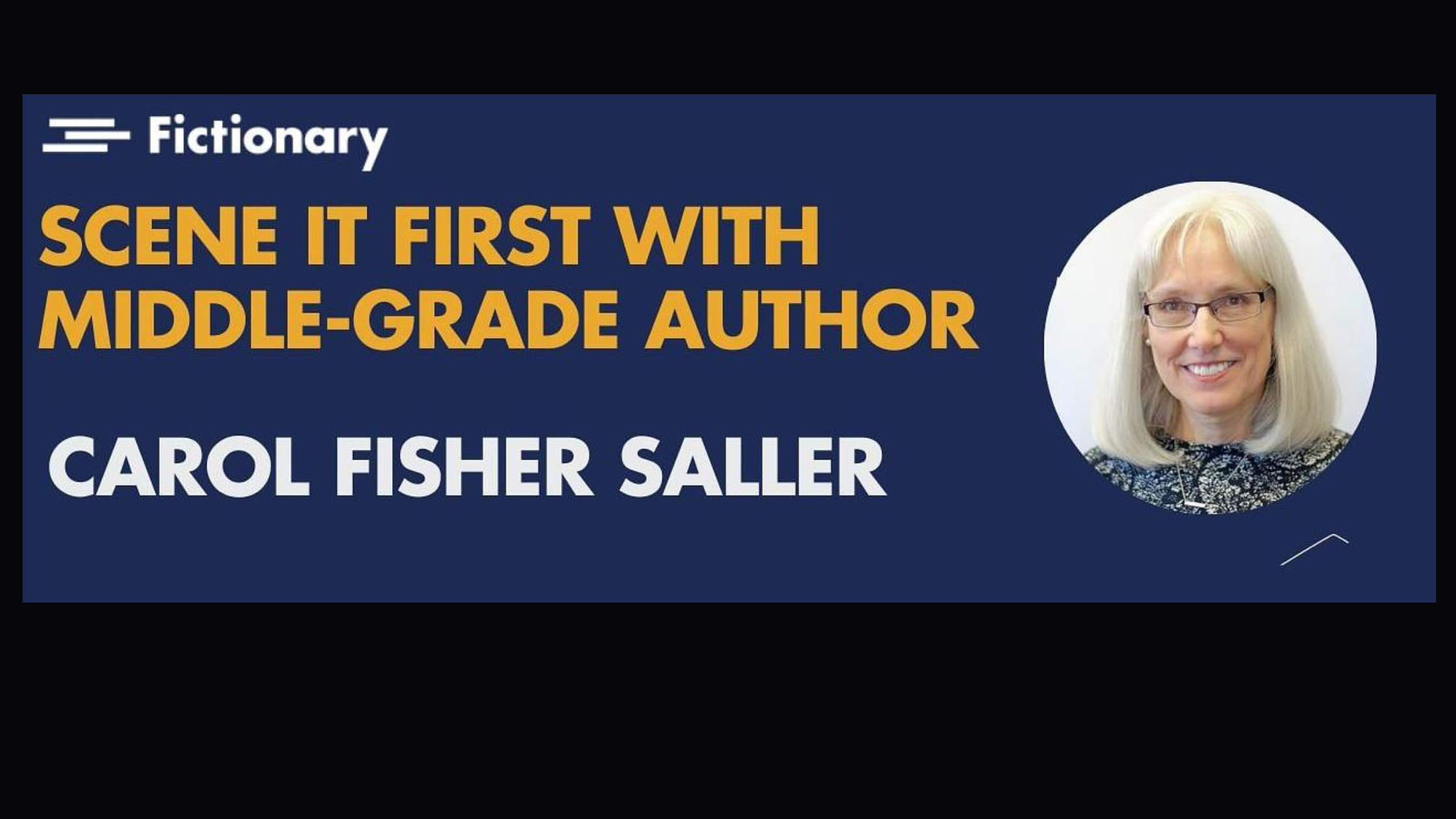
    On January 24, 2024, writer and editor Carol Fisher Saller joined me for a lively, information-packed episode of the Scene It First series, sponsored by Fictionary. In this series, I speak with bestselling, award-winning authors to talk about first scenes, share secrets of writing craft, and celebrate the stories that thrill and inspire us all.

    In this episode, Carol shared her insights into both traditional and indie publishing, as well as her experiences as the author of fiction and nonfiction books for children and adults.

    In addition to hosting the Scene It First series, James Gallagher is the owner of Castle Walls Editing, a Fictionary-Certified StoryCoach Editor, and the copy editor, developmental editor, or proofreader of more than 300 books.

    About Carol Fisher Saller

    Carol is a one-time children’s book editor and a long-time manuscript editor with an insider’s knowledge of book publishing from both the writer’s and the editor’s side of the desk. Her books include Eddie’s War, The Bridge Dancers, Maddie’s Ghost, and The Subversive Copy Editor.

    Website: www.carolsaller.com

    About Fictionary

    Fictionary is a story-editing software that allows writers and editors to glean insights and perform developmental edits on their works using Fictionary’s 38 story elements for character, plot, and setting.

    The software also provides attractive visual reports, including the story arc (showing location of the inciting incident, plot point 1, midpoint, plot point 2, and climax), as well as reports illustrating such items as the story map, character list, and word count per scene.

    More information can be found at Fictionary.co.

    The Fictionary community can be found here (free to register).

  • Scene It First with L. Marie Wood (Ep. 8)

    Scene It First with L. Marie Wood (Ep. 8)

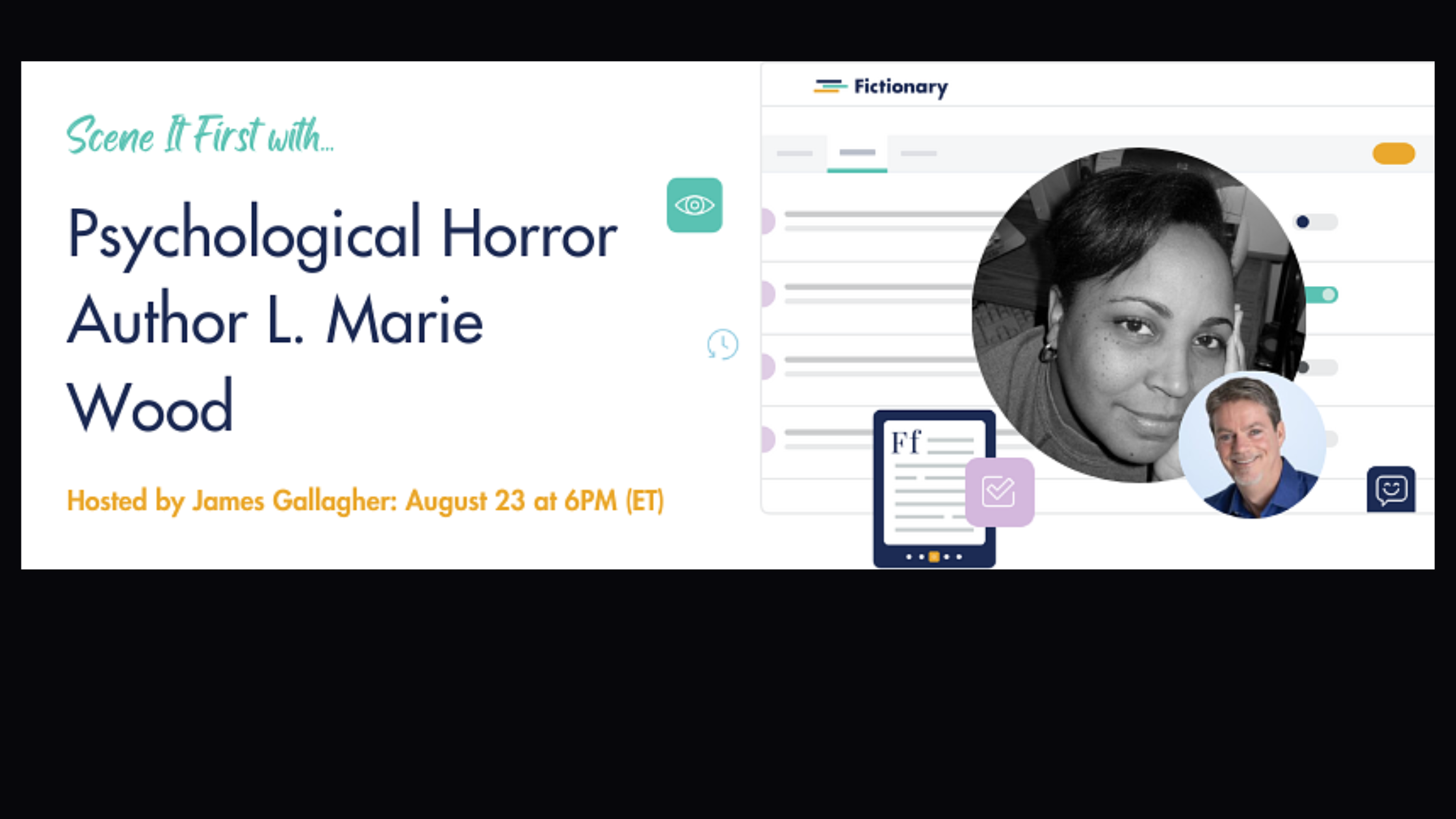
    On August 23, 2023, award-winning psychological horror author L. Marie Wood joined me for the eighth episode of the Scene It First series, sponsored by Fictionary. In this series, I speak with bestselling, award-winning authors to talk about first scenes, share secrets of writing craft, and celebrate the stories that thrill and inspire us all.

    In this episode, we talked about the similarities of horror and romance, psychological horror, Black women in horror, and the first scene of her novella Telecommuting. See more about Lisa below.

    Upcoming interviews can be joined live by registered members of the Fictionary community, and it’s always free to register.

    In addition to hosting the Scene It First series, James Gallagher is the owner of Castle Walls Editing, a Fictionary-Certified StoryCoach Editor, and the copy editor, developmental editor, or proofreader of more than 300 books.

    About L. Marie Wood

    Lisa has written six novels, 150 short stories, seven feature-length screenplays, and several short screenplays.

    Lisa’s novel The Promise Keeper won the Golden Stake Award for Literature at the International Vampire Film and Arts Festival. Lisa won Best Horror Screenplay at the NOVA International Film Festival, Best Afrofuturism/Horror/Sci-Fi Screenplay at Urban Media Makers Film Festival, and Best Short Screenplay Indo-Global International Film Festival.

    Lisa’s first novel and first short story collection were on the long list for the coveted Bram Stoker award. Her short story “The Ever After” was part of the Bram Stoker Finalist anthology Sycorax’s Daughters, and Lisa was recognized in The Mammoth Book of Best New Horror, Vol. 15 (2004) and as one of the 100+ Black Women in Horror Fiction (2018).

    Website: Lmariewood.com

    About Fictionary

    Fictionary is a story-editing software that allows writers and editors to glean insights and perform developmental edits on their works using Fictionary’s 38 story elements for character, plot, and setting.

    The software also provides attractive visual reports, including the story arc (showing location of the inciting incident, plot point 1, midpoint, plot point 2, and climax), as well as reports illustrating such items as the story map, character list, and word count per scene.

    More information can be found at Fictionary.co.

    The Fictionary community can be found here (free to register).

  • My Presentation on Copyediting for the Fictionary Loves Writers Conference

    My Presentation on Copyediting for the Fictionary Loves Writers Conference

    On February 12, 2023, I was honored to present this session on copyediting at the three-day Fictionary Loves Writers Conference.

    In this session, I addressed the following questions:

    • What are the levels of editing?
    • How do you prepare for a copyedit?
    • What is the editor’s process?
    • What do you do after the edit?

    Enjoy, and let me know if you have any questions or if I can help you with your manuscript!


  • Scene It First with Delancey Stewart, Marika Ray, Melanie Summers and Kelly Collins (Ep. 7)

    Scene It First with Delancey Stewart, Marika Ray, Melanie Summers and Kelly Collins (Ep. 7)

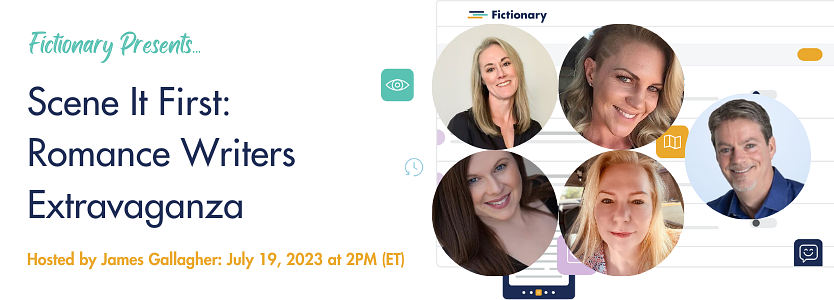
    On July 19, 2023, acclaimed romance authors Delancey Stewart, Marika Ray, Melanie Summers, and Kelly Collins joined me for the seventh episode of the Scene It First series, sponsored by Fictionary. In this series, I speak with bestselling, award-winning authors to talk about first scenes, share secrets of writing craft, and celebrate the stories that thrill and inspire us all.

    In this episode, we enjoyed a lively roundtable discussion of writing romance and of how these friends and writing partners each approach their craft. See more about each author below.

    Upcoming interviews can be joined live by registered members of the Fictionary community, and it’s always free to register.

    In addition to hosting the Scene It First series, James Gallagher is the owner of Castle Walls Editing, a Fictionary-Certified StoryCoach Editor, and the copy editor, developmental editor, or proofreader of more than 300 books.

    About Delancey Stewart

    USA Today bestselling author Delancey Stewart pens steamy, small-town rom-coms that run the gamut of settings and setups, but they always deliver humor, heart, and heat. It’s a guarantee.

    www.delanceystewart.com

    About Marika Ray

    Marika Ray is a USA Today bestselling author who writes steamy rom-coms to brighten your day. All her books come with a money-back guarantee you’ll laugh at least once with every story.

    www.marikaray.com

    About Melanie Summers

    Having sold more than a quarter of a million books around the globe, Melanie Summers has received a Silver Medal and two Bronze Medals at the Readers’ Favorite Awards in the Chick Lit Category.

    www.melaniesummersbooks.com

    About Kelly Collins

    The internationally bestselling author of over 30 novels, Kelly Collins incorporates real-life events to craft stories that lovers of contemporary romance, new adult, and romantic suspense will return to again and again.

    www.authorkellycollins.com

    About Fictionary

    Fictionary is a story-editing software that allows writers and editors to glean insights and perform developmental edits on their works using Fictionary’s 38 story elements for character, plot, and setting.

    The software also provides attractive visual reports, including the story arc (showing location of the inciting incident, plot point 1, midpoint, plot point 2, and climax), as well as reports illustrating such items as the story map, character list, and word count per scene.

    More information can be found at Fictionary.co.

    The Fictionary community can be found here (free to register).